HOSA NUTRITION PRACTICE EXAM
GUIDE QUESTIONS WITH CORRECT
ANSWERS
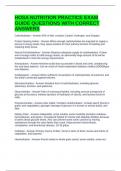
Carbohydrates - Answer-50% of diet, contains Carbon, Hydrogen, and Oxygen.
Protein Sparing Action - Answer-When enough carbohydrates are ingested to supply a
person's energy needs, they spare proteins for their primary function of building and
repairing body tissue.
Normal Fat Metabolism - Answer-Requires adequate supply of carbohydrates. If there
aren't enough carbs to fulfill energy needs, an abnormally large amount of fat will be
metabolized to meet the energy requirements.
Ketoacidosis - Answer-Ketones-acids that accumulate in blood and urine, unbalancing
the acid-base balance. Can be result of insulin-dependant diabetes mellitus [IDDM]/type
one diabetes.
Antiketogenic - Answer-When sufficient consumption of carbohydrates of practiced, and
the body is protected against ketones.
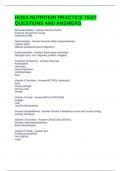
Monosaccharides - Answer-Simplest form of carbohydrates, including glucose
(dextrose), fructose, and galactose.
Disaccharides - Answer-Pairs of monosaccharides, including sucrose (compound of
glucose ad fructose), maltose (product of hydrolysis of starch), and lactose (found in
milk).
Polysaccharides - Answer-Also called "complex carbohydrates", include starch (found in
grains and vegetables), glycogen (storage of glucose in a human or animal body), and
fiber.
Dietary Fiber - Answer-Indigestible, some soluble, some insoluble (includes cellulose,
hemicellulose, and lignins. Considered helpful for clients with Diabetes Mellitus because
it lowers blood glucose levels. Also can prevent some colon cancers by moving
substances through the colon faster than usual. Helps prevent hemorrhoids,
constipation, and diverticular disease. 20-35 g/day.
Cellulose - Answer-Primary source of fiber, found in skins of fruits, leaves and stems of
vegetables, and legumes.
Hemicellulose - Answer-Found mainly in whole grain cereal, some soluble, some not.
GUIDE QUESTIONS WITH CORRECT
ANSWERS
Carbohydrates - Answer-50% of diet, contains Carbon, Hydrogen, and Oxygen.
Protein Sparing Action - Answer-When enough carbohydrates are ingested to supply a
person's energy needs, they spare proteins for their primary function of building and
repairing body tissue.
Normal Fat Metabolism - Answer-Requires adequate supply of carbohydrates. If there
aren't enough carbs to fulfill energy needs, an abnormally large amount of fat will be
metabolized to meet the energy requirements.
Ketoacidosis - Answer-Ketones-acids that accumulate in blood and urine, unbalancing
the acid-base balance. Can be result of insulin-dependant diabetes mellitus [IDDM]/type
one diabetes.
Antiketogenic - Answer-When sufficient consumption of carbohydrates of practiced, and
the body is protected against ketones.
Monosaccharides - Answer-Simplest form of carbohydrates, including glucose
(dextrose), fructose, and galactose.
Disaccharides - Answer-Pairs of monosaccharides, including sucrose (compound of
glucose ad fructose), maltose (product of hydrolysis of starch), and lactose (found in
milk).
Polysaccharides - Answer-Also called "complex carbohydrates", include starch (found in
grains and vegetables), glycogen (storage of glucose in a human or animal body), and
fiber.
Dietary Fiber - Answer-Indigestible, some soluble, some insoluble (includes cellulose,
hemicellulose, and lignins. Considered helpful for clients with Diabetes Mellitus because
it lowers blood glucose levels. Also can prevent some colon cancers by moving
substances through the colon faster than usual. Helps prevent hemorrhoids,
constipation, and diverticular disease. 20-35 g/day.
Cellulose - Answer-Primary source of fiber, found in skins of fruits, leaves and stems of
vegetables, and legumes.
Hemicellulose - Answer-Found mainly in whole grain cereal, some soluble, some not.