Greek & Roman Mythology - 2D03
Welcome
Topics:
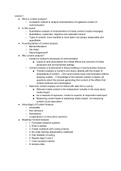
- Course Intro
- What is Mythology?
- Historical Background
3 Requests:
- Suspend 21st century beliefs (I may know more now and have better ration than the
greatest Greeks & Romans)
- Be imaginative (Put myself in their shoes)
- Have fun with it (Stories were meant to be entertaining, take them at face value)
Greeks & Romans share mythology but is not exactly the same
Why do we Study Mythology?
- Greek & Romans had a very interesting view of the world they live in and their place in it
- It’s our own intellectual ancestry which carried heavy influence that has since filled our
world
What is Classical Mythology?
Mythos: A story that is passed on my word of mouth
- Not necessarily a lie, just stories
- Humans tell these stories because they’re fun & entertaining, like campfire stories, which
is why they’re preserved
Logos: A rational account
- Expression + reasoning (for a purpose)
- A story that is always true
No one version of a single myth, they did not remain static as we are reviewing hundreds of
years worth of history, some may be completely contradictory
,Theoretical Approaches to Mythology
True Myth
- Story passed down through word of mouth
- In the first of time, not known when it was taken place
- Focus on relationship between gods & mortals
- A story that explains something eg. why is the sky blue
Eg. Cupid shooting Apollo
Legends
- In historical time, we know when they took place
- Heroic or historical characters
- Has a historical function
Eg. Croesus King of Lydia invading Persia
Folk Tales
- Far more playful
- Once upon a time kinda stuff
- Anti-heroes are common (not fitting a mold)
- Often feature monsters
- Usually entertaining or educational
Eg. Odysseus entering Polyphemus’ (Cyclops) cave and tricking him
Historical Background
Pelasgians
- Before there were Greeks in Greece (Neolithic period), inhabited by Pelasgians
- Indigenous population of Greece, no writing so very little knowledge of them, only
accounts from Greeks & Romans
- Potentially matriarchal (opposite of patriarchal)
- Around about 2000 BC (Neolithic → early bronze) there was a great migration into
Greece
- People coming from the north were called Achaeans, people coming from Lydia and
Crete area moved into the south were called Pelasgians
Acheans
- Spoke a language that would turn into ancient Greek
- Brought in the thought of multiple gods and Anthropomorphic ones (look like and have
human characteristics)
Over a long period of time these cultures merged creating Mycenaeans (1600-1100 BC)
,Minoans (1600-1400 BC)
- Migrated into Crete
- Bulls very iconic in culture
- Controlled the sea
- Lasted till about 1400 BC when they collapsed, evidence suggests an earthquake
followed by burning but it is not known why, theory is a volcano north to Crete but not
100%
- Civilization on Crete didn’t last much past that
Civilizations collapsed from about 1100 BC - 700 BC (roughly) and most mythology is from the
time before that collapse
Comparative Mythology: Conceiving the Divine
Sun
Hyperion (he who goes above)
Helios (some guy who rides a chariot that pulls the Sun)
How are these 2 myths fused? Helios is Hyperion’s son
Additionally, Helios’ sister rides a chariot that pulls the moon and his other sister Eos rides a
chariot that pulls dawn
In the Beginning…
Topics:
- Sources for Greek Mythology
- The Creation of the Universe
- The Creation of Humankind
ca. means about
Historical Background
Iron Age Collapse
- Minian civilization (ca. 1400)
- Trojan war (1184 BC)
- Mycenaean civilian (ca. 1100)
The Archaic Period (800-480 BC)
, - Greeks adopt Phoenician alphabet and start writing again after the last collapse of
civilization
- Homer (ca. 750 BC)
- Iliad
- Odyssey
- Epic poetry
- Unparalleled influence on Greek culture
- Not likely a real person but oral tradition
- Hesiod (ca. 750 BC)
- Works & Days
- Theogony
- Didactic epic (teaches a lesson)
- More narrative, less character driven
- More personal
- Ovid (43 BC - AD 17)
- Metamorphosis (8 AD)
- Roman
- Most important source for Greek & Roman myth after Homer
In the Beginning…
Ca. 5000 BC - Neolithic Age
Cosmology - A belief that the earth was created with a purpose by a god or deity.
Theogony - The birth of Gods.
To the Greeks/Romans, things are created through sex. To them the world was made through
birth. Gods followed.
Welcome
Topics:
- Course Intro
- What is Mythology?
- Historical Background
3 Requests:
- Suspend 21st century beliefs (I may know more now and have better ration than the
greatest Greeks & Romans)
- Be imaginative (Put myself in their shoes)
- Have fun with it (Stories were meant to be entertaining, take them at face value)
Greeks & Romans share mythology but is not exactly the same
Why do we Study Mythology?
- Greek & Romans had a very interesting view of the world they live in and their place in it
- It’s our own intellectual ancestry which carried heavy influence that has since filled our
world
What is Classical Mythology?
Mythos: A story that is passed on my word of mouth
- Not necessarily a lie, just stories
- Humans tell these stories because they’re fun & entertaining, like campfire stories, which
is why they’re preserved
Logos: A rational account
- Expression + reasoning (for a purpose)
- A story that is always true
No one version of a single myth, they did not remain static as we are reviewing hundreds of
years worth of history, some may be completely contradictory
,Theoretical Approaches to Mythology
True Myth
- Story passed down through word of mouth
- In the first of time, not known when it was taken place
- Focus on relationship between gods & mortals
- A story that explains something eg. why is the sky blue
Eg. Cupid shooting Apollo
Legends
- In historical time, we know when they took place
- Heroic or historical characters
- Has a historical function
Eg. Croesus King of Lydia invading Persia
Folk Tales
- Far more playful
- Once upon a time kinda stuff
- Anti-heroes are common (not fitting a mold)
- Often feature monsters
- Usually entertaining or educational
Eg. Odysseus entering Polyphemus’ (Cyclops) cave and tricking him
Historical Background
Pelasgians
- Before there were Greeks in Greece (Neolithic period), inhabited by Pelasgians
- Indigenous population of Greece, no writing so very little knowledge of them, only
accounts from Greeks & Romans
- Potentially matriarchal (opposite of patriarchal)
- Around about 2000 BC (Neolithic → early bronze) there was a great migration into
Greece
- People coming from the north were called Achaeans, people coming from Lydia and
Crete area moved into the south were called Pelasgians
Acheans
- Spoke a language that would turn into ancient Greek
- Brought in the thought of multiple gods and Anthropomorphic ones (look like and have
human characteristics)
Over a long period of time these cultures merged creating Mycenaeans (1600-1100 BC)
,Minoans (1600-1400 BC)
- Migrated into Crete
- Bulls very iconic in culture
- Controlled the sea
- Lasted till about 1400 BC when they collapsed, evidence suggests an earthquake
followed by burning but it is not known why, theory is a volcano north to Crete but not
100%
- Civilization on Crete didn’t last much past that
Civilizations collapsed from about 1100 BC - 700 BC (roughly) and most mythology is from the
time before that collapse
Comparative Mythology: Conceiving the Divine
Sun
Hyperion (he who goes above)
Helios (some guy who rides a chariot that pulls the Sun)
How are these 2 myths fused? Helios is Hyperion’s son
Additionally, Helios’ sister rides a chariot that pulls the moon and his other sister Eos rides a
chariot that pulls dawn
In the Beginning…
Topics:
- Sources for Greek Mythology
- The Creation of the Universe
- The Creation of Humankind
ca. means about
Historical Background
Iron Age Collapse
- Minian civilization (ca. 1400)
- Trojan war (1184 BC)
- Mycenaean civilian (ca. 1100)
The Archaic Period (800-480 BC)
, - Greeks adopt Phoenician alphabet and start writing again after the last collapse of
civilization
- Homer (ca. 750 BC)
- Iliad
- Odyssey
- Epic poetry
- Unparalleled influence on Greek culture
- Not likely a real person but oral tradition
- Hesiod (ca. 750 BC)
- Works & Days
- Theogony
- Didactic epic (teaches a lesson)
- More narrative, less character driven
- More personal
- Ovid (43 BC - AD 17)
- Metamorphosis (8 AD)
- Roman
- Most important source for Greek & Roman myth after Homer
In the Beginning…
Ca. 5000 BC - Neolithic Age
Cosmology - A belief that the earth was created with a purpose by a god or deity.
Theogony - The birth of Gods.
To the Greeks/Romans, things are created through sex. To them the world was made through
birth. Gods followed.