FCCN LEVEL 2 EXAM QUESTIONS
WITH CORRECT DETAILED
ANSWERS (GRADED A)
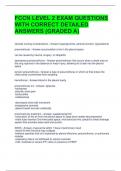
steroids nursing considerations - Answer-hyperglycemia, adrenal function, hypokalemia
pneumothorax - Answer-accumulation of air in the pleural space
can be caused by trauma, surgery, or idiopathic
spontaneous pneumothorax - Answer-pneumothorax that occurs when a weak area on
the lung ruptures in the absence of major injury, allowing air to leak into the pleural
space
tension pneumothorax - Answer-a type of pneumothorax in which air that enters the
chest cavity is prevented from escaping
hemothorax - Answer-blood in the pleural cavity
pneumothorax s/s - Answer--dyspnea
-tachypnea
-pleuritic chest pain
-tachycardia
-restlessness
-decreased chest wall movement
-progressive cyanosis
-absent breath sounds unilaterally
pneumothorax treatment - Answer--supplemental O2
-evacuation of the air from the pleural space w/ large bore needle decompression
-chest tube insertion 2nd intercostal space, mid-clavicular line. placed to chest drainage
system that provides water-seal and suction
ARDS - Answer--hypoxemia within 7 days of pulmonary insult
-alveoli fill with fluid and may collapse
-bilateral opacities that isn't explained by pleural effusions, pneumothorax, or pulmonary
nodules
-respiratory failure not attributed to volume overload
-mild, moderate or severe P/F ratios in presence of PEEP
,distinguish ARDS from CHF - Answer-check BNP and edema which may indicate CHF
is the cause
look at lung films and for a pulmonary insult within the last 7 days which may indicate
ARDS
ARDS severity - Answer-look at P/F ratio
mild: 200-300
moderate: 100-200
severe: <100
injury to alveoli - Answer--causes release of proinflammatory cytokines
-cytokines recruit neutrophils to the lungs
-neutrophils become active and release toxic mediators
-damage to capillary endothelium and alveolar epithelium
-proteins leak out from vascular space
-normal oncotic gradient, fluid doesn't stay where it should. gets into airways and
interstitial spaces
ARDS s/s - Answer--hypoxemia after pulmonary insult
-bilateral opacities
-crackly lungs
-diaphoresis
-chest pain
-cough
-accessory muscle use
-rapid deterioration
-increasing demand for supplemental oxygen
ARDS treatment - Answer--treat underlying cause
-prevent progression of lung injury
-promote gas exchange
-high pressure ventilation (PEEP)
-high level O2 therapy to keep PaO2 >60
-support tissue oxygenation
-prevent complications
ARDS management strategies - Answer--low tidal volume ventilation
-recruit PEEP
-monitor plateau pressure
-pulmonary vasodilatos
-neuromuscular blockers
-proning
-ECMO
, low tidal volume ventilation - Answer-goal is <6mL/kg to prevent over distending alveoli.
helps sustain surfactant production
recruiting PEEP - Answer-keeps alveoli open, improving oxygenation using lower FiO2.
this however can drop pt's BP due to decreased venous return and can also cause
barotrauma
plateau pressure - Answer-the pressure exerted on small airways and alveoli during
mechanical ventilation. measures compliance of the entire lung. keep below 30 to
prevent over distention of alveoli
pulmonary vasodilators - Answer-specifically dilate pulmonary blood vessels
ex:
-epoprostenol (continuous infusion)
-alprostadil (inhaled)
-nitric oxide (inhaled)
neuromuscular blockers - Answer-to paralyze our pt, which decreases O2 consumption
proning - Answer-optimizes ventilation and perfusion to lungs. improves gas exchange,
reduces pleural pressure, improves secretion removal. prone for 16hrs then supine for 8
risks: hemodynamic instability, skin breakdown, facial edema, emesis, unintentional
extubation
ECMO - Answer-extracorporeal membrane oxygenation. large-bore catheters are
inserted, blood is removed, oxygenated, CO2 is removed, and then returned to body
peripheral nerve stimulator - Answer-a battery-operated device used to assess the level
of neuromuscular blockade by causing muscle contractions
neuromuscular blockade - Answer-acute muscle paralysis and apnea, reserved for pts
with severe, refractory, or life threatening hypoxemia who are not responsive to other
sedatives or analgesics
classified as depolarizing or non-depolarizing
goal is to deliver minimum amount of medication to achieve desired effect
NMB agents indications - Answer--facilitate short procedures
-facilitate mechanical ventilation
-reduce muscle oxygen consumption
-prevent respiratory or other movements
-treat increased muscle activity
WITH CORRECT DETAILED
ANSWERS (GRADED A)
steroids nursing considerations - Answer-hyperglycemia, adrenal function, hypokalemia
pneumothorax - Answer-accumulation of air in the pleural space
can be caused by trauma, surgery, or idiopathic
spontaneous pneumothorax - Answer-pneumothorax that occurs when a weak area on
the lung ruptures in the absence of major injury, allowing air to leak into the pleural
space
tension pneumothorax - Answer-a type of pneumothorax in which air that enters the
chest cavity is prevented from escaping
hemothorax - Answer-blood in the pleural cavity
pneumothorax s/s - Answer--dyspnea
-tachypnea
-pleuritic chest pain
-tachycardia
-restlessness
-decreased chest wall movement
-progressive cyanosis
-absent breath sounds unilaterally
pneumothorax treatment - Answer--supplemental O2
-evacuation of the air from the pleural space w/ large bore needle decompression
-chest tube insertion 2nd intercostal space, mid-clavicular line. placed to chest drainage
system that provides water-seal and suction
ARDS - Answer--hypoxemia within 7 days of pulmonary insult
-alveoli fill with fluid and may collapse
-bilateral opacities that isn't explained by pleural effusions, pneumothorax, or pulmonary
nodules
-respiratory failure not attributed to volume overload
-mild, moderate or severe P/F ratios in presence of PEEP
,distinguish ARDS from CHF - Answer-check BNP and edema which may indicate CHF
is the cause
look at lung films and for a pulmonary insult within the last 7 days which may indicate
ARDS
ARDS severity - Answer-look at P/F ratio
mild: 200-300
moderate: 100-200
severe: <100
injury to alveoli - Answer--causes release of proinflammatory cytokines
-cytokines recruit neutrophils to the lungs
-neutrophils become active and release toxic mediators
-damage to capillary endothelium and alveolar epithelium
-proteins leak out from vascular space
-normal oncotic gradient, fluid doesn't stay where it should. gets into airways and
interstitial spaces
ARDS s/s - Answer--hypoxemia after pulmonary insult
-bilateral opacities
-crackly lungs
-diaphoresis
-chest pain
-cough
-accessory muscle use
-rapid deterioration
-increasing demand for supplemental oxygen
ARDS treatment - Answer--treat underlying cause
-prevent progression of lung injury
-promote gas exchange
-high pressure ventilation (PEEP)
-high level O2 therapy to keep PaO2 >60
-support tissue oxygenation
-prevent complications
ARDS management strategies - Answer--low tidal volume ventilation
-recruit PEEP
-monitor plateau pressure
-pulmonary vasodilatos
-neuromuscular blockers
-proning
-ECMO
, low tidal volume ventilation - Answer-goal is <6mL/kg to prevent over distending alveoli.
helps sustain surfactant production
recruiting PEEP - Answer-keeps alveoli open, improving oxygenation using lower FiO2.
this however can drop pt's BP due to decreased venous return and can also cause
barotrauma
plateau pressure - Answer-the pressure exerted on small airways and alveoli during
mechanical ventilation. measures compliance of the entire lung. keep below 30 to
prevent over distention of alveoli
pulmonary vasodilators - Answer-specifically dilate pulmonary blood vessels
ex:
-epoprostenol (continuous infusion)
-alprostadil (inhaled)
-nitric oxide (inhaled)
neuromuscular blockers - Answer-to paralyze our pt, which decreases O2 consumption
proning - Answer-optimizes ventilation and perfusion to lungs. improves gas exchange,
reduces pleural pressure, improves secretion removal. prone for 16hrs then supine for 8
risks: hemodynamic instability, skin breakdown, facial edema, emesis, unintentional
extubation
ECMO - Answer-extracorporeal membrane oxygenation. large-bore catheters are
inserted, blood is removed, oxygenated, CO2 is removed, and then returned to body
peripheral nerve stimulator - Answer-a battery-operated device used to assess the level
of neuromuscular blockade by causing muscle contractions
neuromuscular blockade - Answer-acute muscle paralysis and apnea, reserved for pts
with severe, refractory, or life threatening hypoxemia who are not responsive to other
sedatives or analgesics
classified as depolarizing or non-depolarizing
goal is to deliver minimum amount of medication to achieve desired effect
NMB agents indications - Answer--facilitate short procedures
-facilitate mechanical ventilation
-reduce muscle oxygen consumption
-prevent respiratory or other movements
-treat increased muscle activity