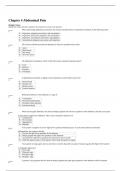
Chapter 4 Abdominal Pain
Multiple Choice
Identify the choice that best completes the statement or answers the question.
When performing abdominal assessment, the clinician should perform examination techniques in the following order:
1.
A. Inspection, palpation, percussion, and auscultation
B. Inspection, percussion, palpation, and auscultation
C. Inspection, auscultation, percussion, and palpation
D. Auscultation, palpation, percussion, and inspection
The clinician should auscultate the abdomen to listen for possible bruits of the:
2.
A. Aorta
B. Renal artery
C. Iliac artery
D. All of the above
On abdominal examination, which of the following is assessed using percussion?
3.
A. Liver
B. Kidneys
C. Pancreas
D. Esophagus
In abdominal assessment, a digital rectal examination is performed to assess for:
4.
A. Hemorrhoids
B. Prostate size
C. Blood in stool
D. Ureteral stenosis
Rebound tenderness of the abdomen is a sign of:
5.
A. Constipation
B. Peritoneal inflammation
C. Elevated venous pressure
D. Peritoneal edema
While assessing the abdomen, the clinician deeply palpates the left lower quadrant of the abdomen, and this causes pain
6.
in the patient’s right lower abdomen. This is most commonly indicative of:
A. Constipation
B. Diverticulitis
C. Appendicitis
D. Hepatitis
Your patient complains of severe right lower quadrant abdominal pain. To assess the patient for peritoneal
7.
inflammation, the examiner should:
A. Percuss the right lower quadrant of the abdomen
B. Deeply palpate the right lower quadrant of the abdomen
C. Auscultate the right lower quadrant for hyperactive bowel sounds
D. Strike the plantar surface of the patient’s heel while the patient is supine
Your patient is lying supine and you ask him to raise his leg while you place resistance against the thigh. The examiner
8.
is testing the patient for:
A. Psoas sign
B. Obturator sign
C. Rovsing’s sign
D. Murphys’ sign
A patient is lying supine and the clinician deeply palpates the right upper quadrant of the abdomen while the patient
9.
, inhales. The examiner is testing the patient for:
A. Psoas sign
B. Obturator sign
C. Rovsing’s sign
, D. Murphys’ sign
Your patient has abdominal pain, and it is worsened when the examiner rotates the patient’s right hip inward with the
10.
knee bent and the obturator internus muscle is stretched. This is a sign of:
A. Diverticulitis
B. Cholecystitis
C. Appendicitis
D. Mesenteric adenitis
On abdominal examination as the clinician presses on the right upper quadrant to assess liver size, jugular vein
11.
distension becomes obvious. Hepatojugular reflux is indicative of:
Multiple Choice
Identify the choice that best completes the statement or answers the question.
When performing abdominal assessment, the clinician should perform examination techniques in the following order:
1.
A. Inspection, palpation, percussion, and auscultation
B. Inspection, percussion, palpation, and auscultation
C. Inspection, auscultation, percussion, and palpation
D. Auscultation, palpation, percussion, and inspection
The clinician should auscultate the abdomen to listen for possible bruits of the:
2.
A. Aorta
B. Renal artery
C. Iliac artery
D. All of the above
On abdominal examination, which of the following is assessed using percussion?
3.
A. Liver
B. Kidneys
C. Pancreas
D. Esophagus
In abdominal assessment, a digital rectal examination is performed to assess for:
4.
A. Hemorrhoids
B. Prostate size
C. Blood in stool
D. Ureteral stenosis
Rebound tenderness of the abdomen is a sign of:
5.
A. Constipation
B. Peritoneal inflammation
C. Elevated venous pressure
D. Peritoneal edema
While assessing the abdomen, the clinician deeply palpates the left lower quadrant of the abdomen, and this causes pain
6.
in the patient’s right lower abdomen. This is most commonly indicative of:
A. Constipation
B. Diverticulitis
C. Appendicitis
D. Hepatitis
Your patient complains of severe right lower quadrant abdominal pain. To assess the patient for peritoneal
7.
inflammation, the examiner should:
A. Percuss the right lower quadrant of the abdomen
B. Deeply palpate the right lower quadrant of the abdomen
C. Auscultate the right lower quadrant for hyperactive bowel sounds
D. Strike the plantar surface of the patient’s heel while the patient is supine
Your patient is lying supine and you ask him to raise his leg while you place resistance against the thigh. The examiner
8.
is testing the patient for:
A. Psoas sign
B. Obturator sign
C. Rovsing’s sign
D. Murphys’ sign
A patient is lying supine and the clinician deeply palpates the right upper quadrant of the abdomen while the patient
9.
, inhales. The examiner is testing the patient for:
A. Psoas sign
B. Obturator sign
C. Rovsing’s sign
, D. Murphys’ sign
Your patient has abdominal pain, and it is worsened when the examiner rotates the patient’s right hip inward with the
10.
knee bent and the obturator internus muscle is stretched. This is a sign of:
A. Diverticulitis
B. Cholecystitis
C. Appendicitis
D. Mesenteric adenitis
On abdominal examination as the clinician presses on the right upper quadrant to assess liver size, jugular vein
11.
distension becomes obvious. Hepatojugular reflux is indicative of: