Lecture 1
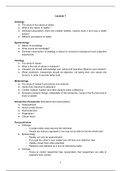
Ontology
● The study of the nature of reality
● What is the nature of reality?
● Dominant assumption: there are multiple realities, experts study it and have a better
answer
● Different perceptions of reality
Epistemology
● Nature of knowledge
● What counts as knowledge?
● Dominant assumption: knowledge is based on someone’s background and subjective
experiences
Axiology
● The study of values
● What is the role of values in research?
● Creswell: you should acknowledge your values and how they influence your research
● (Post) positivism: researchers should be objective, not taking their own values into
account, in order to provide better data
Methodology
● The study of research procedures and methods
● Varies from inductive to deductive
● Context matters: location and other aspects make a difference
● Emergent research design: adaptability of the researcher, trying to find the best way to
study a subject
Interpretive frameworks (theoretical and social justice)
● Postpositivism
● Social constructivism
● Postmodernism
● Pragmatism
● Critical theory
Post positivism
● Ontology
○ A single reality exists beyond the individual
○ People are trying to approach it, but may not be able to find the whole truth
● Epistemology
○ Reality can only be approximated
○ If you get too close to your subject you will lose your objective view
○ Validity comes from other scientists
○ Research and statistics as a tool for replicating reality
● Axiology
○ Trying to control researcher bias (assumption that researchers are able to
suppress their values)
1
, ● Methodology
○ Deduction on the basis of theory (to control bias)
Social constructivism
● Ontology
○ Multiple realities based on our experiences and interactions
● Epistemology
○ Evaluating how reality is constructed, beyond facts (because people don’t
behave on the basis of facts)
○ Knowledge about reality co-created between researcher and subject
● Axiology
○ Different values are important for research
○ Acknowledging different values and respecting them
● Methodology
○ Mostly inductive
○ Reconstructing meanings and experiences (reality)
Postmodernism
● Ontology
○ There are multiple realities
○ Reality created by our own concepts, so there is no single reality
● Epistemology
○ Knowledge defined by concepts and position within society (power structures)
○ There are multiple ways of knowing
● Axiology
○ Multiple value systems need to be evaluated
● Methodology
○ Questioning the ability of methodology to interpret of reality
○ ‘Anything goes’ in terms of methods
lecture 2
Pragmatism (AKA the most hard-core logical theory)
● Ontology
○ The point is whether you can interpret reality (answer a research question)
through tools and methods
○ It’s all about being effective in answering a research question
● Epistemology
○ Diverse, so if they study something that’s more logical, then they take a more
post positivist view (if they are working with more theory or something social
then they might be more post modernistic)
○ Using only methods that fit within a situation or the framework of the research
● Axiology
○ They only discuss values if they think they’ve had an effect on the research
○ They discuss values if they are part of the data/research
● Methodology
○ Mixed methods to fit research
2
Ontology
● The study of the nature of reality
● What is the nature of reality?
● Dominant assumption: there are multiple realities, experts study it and have a better
answer
● Different perceptions of reality
Epistemology
● Nature of knowledge
● What counts as knowledge?
● Dominant assumption: knowledge is based on someone’s background and subjective
experiences
Axiology
● The study of values
● What is the role of values in research?
● Creswell: you should acknowledge your values and how they influence your research
● (Post) positivism: researchers should be objective, not taking their own values into
account, in order to provide better data
Methodology
● The study of research procedures and methods
● Varies from inductive to deductive
● Context matters: location and other aspects make a difference
● Emergent research design: adaptability of the researcher, trying to find the best way to
study a subject
Interpretive frameworks (theoretical and social justice)
● Postpositivism
● Social constructivism
● Postmodernism
● Pragmatism
● Critical theory
Post positivism
● Ontology
○ A single reality exists beyond the individual
○ People are trying to approach it, but may not be able to find the whole truth
● Epistemology
○ Reality can only be approximated
○ If you get too close to your subject you will lose your objective view
○ Validity comes from other scientists
○ Research and statistics as a tool for replicating reality
● Axiology
○ Trying to control researcher bias (assumption that researchers are able to
suppress their values)
1
, ● Methodology
○ Deduction on the basis of theory (to control bias)
Social constructivism
● Ontology
○ Multiple realities based on our experiences and interactions
● Epistemology
○ Evaluating how reality is constructed, beyond facts (because people don’t
behave on the basis of facts)
○ Knowledge about reality co-created between researcher and subject
● Axiology
○ Different values are important for research
○ Acknowledging different values and respecting them
● Methodology
○ Mostly inductive
○ Reconstructing meanings and experiences (reality)
Postmodernism
● Ontology
○ There are multiple realities
○ Reality created by our own concepts, so there is no single reality
● Epistemology
○ Knowledge defined by concepts and position within society (power structures)
○ There are multiple ways of knowing
● Axiology
○ Multiple value systems need to be evaluated
● Methodology
○ Questioning the ability of methodology to interpret of reality
○ ‘Anything goes’ in terms of methods
lecture 2
Pragmatism (AKA the most hard-core logical theory)
● Ontology
○ The point is whether you can interpret reality (answer a research question)
through tools and methods
○ It’s all about being effective in answering a research question
● Epistemology
○ Diverse, so if they study something that’s more logical, then they take a more
post positivist view (if they are working with more theory or something social
then they might be more post modernistic)
○ Using only methods that fit within a situation or the framework of the research
● Axiology
○ They only discuss values if they think they’ve had an effect on the research
○ They discuss values if they are part of the data/research
● Methodology
○ Mixed methods to fit research
2