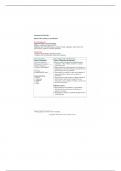
eNursing Care Plan 45-1
Patient with a Urinary Tract Infection
Nursing Diagnosis*
Impaired Urinary System Function
Etiology: Urinary tract infection (UTI)
Supporting data: Pain and burning on urination; flank, suprapubic, and/or lower back
pain; urgency; frequency; nocturia; hematuria
Patient Goals
1. Reports normal urinary elimination patterns
2. Reports relief of bothersome urinary tract symptoms
Outcomes (NOC) Interventions (NIC) and Rationales
Urinary Elimination Urinary Elimination Management
Pain with urination _____ Monitor urinary elimination including frequency,
Burning with urination _____ consistency, odor, volume, and color to evaluate
Urinary frequency _____ elimination status.
Urgency with urination Obtain midstream voided specimen for urinalysis (as
_____ appropriate) to determine pathogen causing UTI or to
Nocturia _____ monitor effectiveness of treatment.
Visible blood in urine _____ Teach patient to monitor for signs and symptoms of
urinary infection to obtain early treatment of
Measurement Scale recurrence.
1 = Severe Teach patient to drink 8 ounces of liquid with meals,
2 = Substantial between meals, and in early evening to prevent
3 = Moderate dehydration, relieve bladder irritability, and decrease
4 = Mild bacterial colonization.
5 = None
Infection Control
Teach patient to take antibiotics as prescribed to
alleviate infection and prevent development of
antibiotic resistance.
Teach patient, caregiver, and family members how to
avoid infections.
*Nursing diagnoses listed in order of priority.
Copyright © 2020 by Elsevier, Inc. All rights reserved.
, eNursing Care Plan 45-2
Nursing Diagnosis
Lack of Knowledge
Etiology: Urinary tract infection
Supporting data: States desire to manage treatment of illness and prevent recurrence
Patient Goals
1. States knowledge of treatment regimen
2. Expresses intent to carry out treatment regimen
Outcomes (NOC) Interventions (NIC) and Rationales
Knowledge: Treatment Teaching: Disease Process
Regimen Appraise patient’s current level of knowledge related
Specific disease process to specific disease process to plan individualized
_____ teaching.
Benefits of treatment _____ Explain pathophysiology of the infection and how it
Self-care responsibilities for relates to anatomy and physiology.
ongoing treatment _____ Describe reason behind
Expected effects of treatment management/therapy/treatment recommendations to
_____ promote compliance with treatment.
Prescribed medication Describe possible chronic complications to emphasize
regimen _____ the need for completion of treatment.
Measurement Scale Teaching: Prescribed Medication
1 = No knowledge Teach patient the purpose and action of each
2 = Limited knowledge medication.
3 = Moderate knowledge Teach patient the possible adverse effects of each
4 = Substantial knowledge
medication so patient can identify problems.
5 = Extensive knowledge
Teach patient appropriate actions to take if adverse
effects occur to prevent serious problems.
Collaborative Problems
Potential Complication
Urosepsis (bacteriuria and bacteremia) related to systemic extension of UTI
Nursing Goals Interventions and Rationales
Anticipate potential for Monitor vital signs and watch for changes in mental
urosepsis in patients at risk status in patients at risk (immunocompromised,
Report deviations from elderly, those with frequent urinary system
acceptable parameters instrumentation or anatomic abnormalities) to detect
Carry out appropriate medical inadequate tissue perfusion.
and nursing interventions Report abnormalities such as hyperthermia or
hypothermia; decreasing blood pressure; rapid pulse
and respirations; and warm, flushed skin as indicators
of septic shock resulting from urosepsis.
Copyright © 2020 by Elsevier, Inc. All rights reserved.
Patient with a Urinary Tract Infection
Nursing Diagnosis*
Impaired Urinary System Function
Etiology: Urinary tract infection (UTI)
Supporting data: Pain and burning on urination; flank, suprapubic, and/or lower back
pain; urgency; frequency; nocturia; hematuria
Patient Goals
1. Reports normal urinary elimination patterns
2. Reports relief of bothersome urinary tract symptoms
Outcomes (NOC) Interventions (NIC) and Rationales
Urinary Elimination Urinary Elimination Management
Pain with urination _____ Monitor urinary elimination including frequency,
Burning with urination _____ consistency, odor, volume, and color to evaluate
Urinary frequency _____ elimination status.
Urgency with urination Obtain midstream voided specimen for urinalysis (as
_____ appropriate) to determine pathogen causing UTI or to
Nocturia _____ monitor effectiveness of treatment.
Visible blood in urine _____ Teach patient to monitor for signs and symptoms of
urinary infection to obtain early treatment of
Measurement Scale recurrence.
1 = Severe Teach patient to drink 8 ounces of liquid with meals,
2 = Substantial between meals, and in early evening to prevent
3 = Moderate dehydration, relieve bladder irritability, and decrease
4 = Mild bacterial colonization.
5 = None
Infection Control
Teach patient to take antibiotics as prescribed to
alleviate infection and prevent development of
antibiotic resistance.
Teach patient, caregiver, and family members how to
avoid infections.
*Nursing diagnoses listed in order of priority.
Copyright © 2020 by Elsevier, Inc. All rights reserved.
, eNursing Care Plan 45-2
Nursing Diagnosis
Lack of Knowledge
Etiology: Urinary tract infection
Supporting data: States desire to manage treatment of illness and prevent recurrence
Patient Goals
1. States knowledge of treatment regimen
2. Expresses intent to carry out treatment regimen
Outcomes (NOC) Interventions (NIC) and Rationales
Knowledge: Treatment Teaching: Disease Process
Regimen Appraise patient’s current level of knowledge related
Specific disease process to specific disease process to plan individualized
_____ teaching.
Benefits of treatment _____ Explain pathophysiology of the infection and how it
Self-care responsibilities for relates to anatomy and physiology.
ongoing treatment _____ Describe reason behind
Expected effects of treatment management/therapy/treatment recommendations to
_____ promote compliance with treatment.
Prescribed medication Describe possible chronic complications to emphasize
regimen _____ the need for completion of treatment.
Measurement Scale Teaching: Prescribed Medication
1 = No knowledge Teach patient the purpose and action of each
2 = Limited knowledge medication.
3 = Moderate knowledge Teach patient the possible adverse effects of each
4 = Substantial knowledge
medication so patient can identify problems.
5 = Extensive knowledge
Teach patient appropriate actions to take if adverse
effects occur to prevent serious problems.
Collaborative Problems
Potential Complication
Urosepsis (bacteriuria and bacteremia) related to systemic extension of UTI
Nursing Goals Interventions and Rationales
Anticipate potential for Monitor vital signs and watch for changes in mental
urosepsis in patients at risk status in patients at risk (immunocompromised,
Report deviations from elderly, those with frequent urinary system
acceptable parameters instrumentation or anatomic abnormalities) to detect
Carry out appropriate medical inadequate tissue perfusion.
and nursing interventions Report abnormalities such as hyperthermia or
hypothermia; decreasing blood pressure; rapid pulse
and respirations; and warm, flushed skin as indicators
of septic shock resulting from urosepsis.
Copyright © 2020 by Elsevier, Inc. All rights reserved.