

100% satisfaction guarantee Immediately available after payment Both online and in PDF No strings attached 4.6 TrustPilot
logo-home
Exam (elaborations)

Patho PC 705 Module 4

Rating
-
Sold
-
Pages
4
Grade
A+
Uploaded on
12-11-2024
Written in
2024/2025

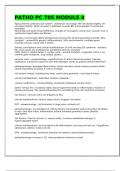
Aging and the cardiovascular system - answerCO- no change, HR- decreased slightly, SV- increased slightly, Slight increase in afterload (systolic BP) and prolonged lt ventricular relaxation. Myocardial and blood vessel stiffening, changes in neurogenic control over vascular tone, lt ventricular hypertrophy and fibrosis genetics, environment affect development and severity of atherosclerosis and CAD. Why complex? - answer50% genetic (inflammation), 50% environmental. multiple genes involved. primary cause CAD is athero. Genetic contributions and clinical manifestations of a fib and long QT syndrome - answera fib- most causes are multifactoral, sometimes d/t K ion channels LQTS- delay in repolarization in cardiac cycle... private mutation. congenital- 87% k+ ion channel gene mutations. drug related causes. varicose veins - answeretiology- superficial vein in which blood has pooled. Typically saphenous. Caused by trauma to vein that damages vavles or gradual veinous distention pathophysiology- damaged blood valves cannot maintain normal venous pressure which causes hydrostatic pressure in vein to increase risk factors- female, standing long time, constricting garments, cross legs at knees, clinical manifestations- distended, tortuous, palpable venous insufficiency - answeretiology- Sustained inadequate venous return patho- venous htn, circulatory statis, tissue hypoxemia leads to inflammatory reaction in vessels and tissue. this causes fibroschlerotic remodeling of the skin and then ulceration risk factors- varicose veins can progress to this. clinical manifestations- venous status ulcers, sluggish circulation DVT - answeretiology- clot formation in large veins, primarily LE pathophysiology- accumulation of clotting factors and platelets lead to thrombus formation in vein, ofen near valve, inflammation around thrombus promotes further platelet aggregation. risk factors- Triad of virchow- 1- venous statis, 2-venous endothelial damage, 3- hypercoaguable states clinical manifestations- local symptoms d/t inflammation, but may not have s/s. if significant obstrustion, edema. d-dimer LE US HTN - answeretiology- consistent elevation of systemic arterial blood pressure pathophysiology-increase in CO, total peripheral resistance or both risk factors- most primary HTN (no known cause)- genetic and environmental. risk factors: family hx of htn, increasing age, men <55, women >70, black, high Na+ diet, DM, cigarette smoking, obesity, heavy alcohol consumption, low dietary K, calcium, and magnesium. clinical manifestations- pre-htn: 120-139/80-90, htn- 140/90 complications- isolated systolic htn (wide pulse pressure)- major risk factor for cardiovascular and cerebrovascular events. all htn risk for target organ damage (kidney disease, MI, stroke) arterial thrombosis - answertend to develop wherever intravascular conditions promote activation of the coagulation or clotting cascade. (intimal irritation, roughening, inflammation, traumatic injury, infection, low BP or obstructions that cause blood statis and pooling.)- atherosclerosis. invasion of the tunica intima by infectious agents diagnose by doppler US and angiography embolism - answerobstruction of vessel by an embolus. source of embolus determines where it will lodge (pulmonary or systemic). Pulmonary from venous circulation. arterial emboli commonly from lt heart and associated with thrmobi after MI, valvular disease, lt heart failure, endocarditis, arrhythmia thromboembolism - answervascular obstruction resulting from dislodged thrombus. most common source of arterial thromboemboli to systemic circulation is heart. . mitral and aortic valve disease air embolism - answerroom air that enters venous circulation (IV lines). chest trauma. amniotic fluid embolism - answergreat intra-abdominal pressures generated during labor and delivery may force amniotic fluid into mothers blood stream through vascular uterine wall. Amniotic fluid displaces blood and introduces antigens, cells, protein aggregates-> inflammation, coagulation, immune response. Capillary beds usually affected, especially lungs and kidneys bacterial embolism - answerisolated bacteria in bloodstream don't cause embolism, but aggregates. Commonly from sub-acute bacterial endocarditis during which clumps of vegitation are dislodged from infected cardiac valves and ejected into the bloodstream. fat embolism - answertrauma to long bones (usually to lungs). trauma to bones initiates defective fat metabolism-> globules of fat-> platelets adhere. OR fat globules released from bone marrow-> platelets adhere foreign matter embolism - answertrauma or through IV.. particles initiate coagulation cascade Atherosclerosis - answerEtiology- atherosclerosis form of arteriosclerosis-> thickening and hardening or vessels caused by accumulation of lipid-laden macrophages within arterial wall, leading to plaque formation. Leading cause of CAD patho- inflammatory disease develops and proceeds in presence of elevated plasma cholesterol levels. Progress from endothelial injury and dysfunction to fatty streak to fibrotic plaque to compicated lesion. clinical manifestations- s/s r/t inadequate tissue perfusion. partial obstruction- transient ischemic events associated with stress or exercise. risk factors- endothelial injury- smoking, htn, dm, increased LDL and decreased HDL,

Show more Read less
Institution
Patho PC 705 Module 4
Course
Patho PC 705 Module 4


Whoops! We can’t load your doc right now. Try again or contact support.

Written for

Institution
Patho PC 705 Module 4
Course
Patho PC 705 Module 4

Document information

Uploaded on
November 12, 2024
Number of pages
4
Written in
2024/2025
Type
Exam (elaborations)
Contains
Questions & answers

Content preview

PATHO PC 705 MODULE 4
Aging and the cardiovascular system - answerCO- no change, HR- decreased slightly, SV-
increased slightly, Slight increase in afterload (systolic BP) and prolonged lt ventricular
relaxation.
Myocardial and blood vessel stiffening, changes in neurogenic control over vascular tone, lt
ventricular hypertrophy and fibrosis

genetics, environment affect development and severity of atherosclerosis and CAD. Why
complex? - answer50% genetic (inflammation), 50% environmental. multiple genes
involved. primary cause CAD is athero.

Genetic contributions and clinical manifestations of a fib and long QT syndrome - answera
fib- most causes are multifactoral, sometimes d/t K ion channels
LQTS- delay in repolarization in cardiac cycle... private mutation. congenital- 87% k+ ion
channel gene mutations. drug related causes.

varicose veins - answeretiology- superficial vein in which blood has pooled. Typically
saphenous. Caused by trauma to vein that damages vavles or gradual veinous distention

pathophysiology- damaged blood valves cannot maintain normal venous pressure which
causes hydrostatic pressure in vein to increase

risk factors- female, standing long time, constricting garments, cross legs at knees,

clinical manifestations- distended, tortuous, palpable

venous insufficiency - answeretiology- Sustained inadequate venous return

patho- venous htn, circulatory statis, tissue hypoxemia leads to inflammatory reaction in
vessels and tissue. this causes fibroschlerotic remodeling of the skin and then ulceration

risk factors- varicose veins can progress to this.

clinical manifestations- venous status ulcers, sluggish circulation

DVT - answeretiology- clot formation in large veins, primarily LE

pathophysiology- accumulation of clotting factors and platelets lead to thrombus formation
in vein, ofen near valve, inflammation around thrombus promotes further platelet
aggregation.

risk factors- Triad of virchow- 1- venous statis, 2-venous endothelial damage, 3-
hypercoaguable states

clinical manifestations- local symptoms d/t inflammation, but may not have s/s. if significant
obstrustion, edema. d-dimer LE US

HTN - answeretiology- consistent elevation of systemic arterial blood pressure

pathophysiology-increase in CO, total peripheral resistance or both

Get to know the seller

Seller avatar
Reputation scores are based on the amount of documents a seller has sold for a fee and the reviews they have received for those documents. There are three levels: Bronze, Silver and Gold. The better the reputation, the more your can rely on the quality of the sellers work.
TOPDOCTOR Abacus College, Oxford
View profile
Follow You need to be logged in order to follow users or courses
Sold
10
Member since
2 year
Number of followers
5
Documents
3396
Last sold
3 months ago
TOPGRADER!!

Looking for relevant and updated study material to help you ace your exams? TOPTIERGRADES has your back!!! I have essential exams, test-banks, study bites, assignments all graded A+, Have Complete solutions, and are updated regularly. Please feel free to message me if you are looking for a specific test bank that is not listed on my profile or want a test bank or exam sent to you directly as google doc link. In the event that any of the materials have an issue, please let me know and I\'ll do my best to resolve it or provide an alternative. Thank You & All The Very BEST!!!!!

Read more Read less
5.0

1 reviews

5
1
4
0
3
0
2
0
1
0

Recently viewed by you

Why students choose Stuvia

Created by fellow students, verified by reviews

Quality you can trust: written by students who passed their tests and reviewed by others who've used these notes.

Didn't get what you expected? Choose another document

No worries! You can instantly pick a different document that better fits what you're looking for.

Pay as you like, start learning right away

No subscription, no commitments. Pay the way you're used to via credit card and download your PDF document instantly.

Student with book image

“Bought, downloaded, and aced it. It really can be that simple.”

Alisha Student

Frequently asked questions
