Intro Tourism Summary Short
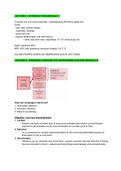
Demand:
Traveller
Supply:
Destination
Intermediaries:
Industry, for example Airbnb and travel agencies.
Tourism:
A multidisciplinary subject rather than a discipline in its own right because other subject study
and contribute to it. No core body of knowledge that is distinct, unique and not modified from
other disciplines such as geography, marketing or economics.
Post-Communist countries:
States in Eastern Europe which gained independence from the former USSR after the Berlin
Wall was removes in 1989.
Government:
The people who rule a country of state (regering).
Ailing economies:
Bad economies, (noodlijdende economie)
Globalization:
Global process of change and development of tourism.
Domestic tourism:
Binnenlandse reizen.
Tourism Satellite Accounts (TSAs):
Economic tool used to measure the inpunts and outputs in the tourism system of one
country.
Multidisciplinary:
The combination of different subject areas in academic areas to explore a common issue,
such as tourism.
Terminology:
There is a wide range of jargon (vorm van taalgebruik binnen een vakgebied) used.
Example: researcher need to understand which people are tourists, as a beach may be
populated by tourists, residents and day trippers.
System approach:
A method of examining how the different components of something fir together and interact.
Leiper’s Tourism system:
A framework which embodies the entire tourist experience of travelling. It enabled one to
understand the overall process of tourist travel.
, World Tourism Organisation (WTO):
A global organisation based in Madrid, funded by the United Nations to collate tourism
statistics and to provide policy advice and planning guidance to member countries and
organisations.
International tourism:
Consist of inbound tourism, visits to a country by non-residents, and outbound tourism,
residents of a country visiting another country.
Internal tourism:
Residents of a country visiting their own country.
Domestic tourism:
Refers to tourists travelling form their normal domicile to other areas within a country. Internal
tourism plus inbound tourism (the tourism market of accommodation facilities and attractions
within a country).
National tourism:
Internal tourism plus outbound tourism.
Traveller, visitor or tourist:
A person travelling ot and staying in a place away from their home for more than one night
but less than one year. For leisure, business or other purposes.
Long haul:
Travel which involves long distance (over 1000 miles).
Short haul:
Travel which involves short distance (250-1000 miles).
Inbound:
Visits to a country by non-residents (importation of overseas currency).
Outbound:
Visits by residents of one country to another country.
Excursionist or same-day visitors:
Visitors who begin and end their visit from the same base (home or holiday base) within the
same 24-hour period.
Difference domestic tourism and international tourism:
Domestic refers to tourists travelling within a country, international tourism refers a tourist
leaving their country.
Medical Tourism (MT):
A concept that has re-emerged in recent years and has been part of a growing trend in
developed countries for travel to enhance one’s health. (travelling for cosmetic surgery,
operations etc.).
Transnational hotel chains:
Company that operates hotels in more than one country.
Demand:
Traveller
Supply:
Destination
Intermediaries:
Industry, for example Airbnb and travel agencies.
Tourism:
A multidisciplinary subject rather than a discipline in its own right because other subject study
and contribute to it. No core body of knowledge that is distinct, unique and not modified from
other disciplines such as geography, marketing or economics.
Post-Communist countries:
States in Eastern Europe which gained independence from the former USSR after the Berlin
Wall was removes in 1989.
Government:
The people who rule a country of state (regering).
Ailing economies:
Bad economies, (noodlijdende economie)
Globalization:
Global process of change and development of tourism.
Domestic tourism:
Binnenlandse reizen.
Tourism Satellite Accounts (TSAs):
Economic tool used to measure the inpunts and outputs in the tourism system of one
country.
Multidisciplinary:
The combination of different subject areas in academic areas to explore a common issue,
such as tourism.
Terminology:
There is a wide range of jargon (vorm van taalgebruik binnen een vakgebied) used.
Example: researcher need to understand which people are tourists, as a beach may be
populated by tourists, residents and day trippers.
System approach:
A method of examining how the different components of something fir together and interact.
Leiper’s Tourism system:
A framework which embodies the entire tourist experience of travelling. It enabled one to
understand the overall process of tourist travel.
, World Tourism Organisation (WTO):
A global organisation based in Madrid, funded by the United Nations to collate tourism
statistics and to provide policy advice and planning guidance to member countries and
organisations.
International tourism:
Consist of inbound tourism, visits to a country by non-residents, and outbound tourism,
residents of a country visiting another country.
Internal tourism:
Residents of a country visiting their own country.
Domestic tourism:
Refers to tourists travelling form their normal domicile to other areas within a country. Internal
tourism plus inbound tourism (the tourism market of accommodation facilities and attractions
within a country).
National tourism:
Internal tourism plus outbound tourism.
Traveller, visitor or tourist:
A person travelling ot and staying in a place away from their home for more than one night
but less than one year. For leisure, business or other purposes.
Long haul:
Travel which involves long distance (over 1000 miles).
Short haul:
Travel which involves short distance (250-1000 miles).
Inbound:
Visits to a country by non-residents (importation of overseas currency).
Outbound:
Visits by residents of one country to another country.
Excursionist or same-day visitors:
Visitors who begin and end their visit from the same base (home or holiday base) within the
same 24-hour period.
Difference domestic tourism and international tourism:
Domestic refers to tourists travelling within a country, international tourism refers a tourist
leaving their country.
Medical Tourism (MT):
A concept that has re-emerged in recent years and has been part of a growing trend in
developed countries for travel to enhance one’s health. (travelling for cosmetic surgery,
operations etc.).
Transnational hotel chains:
Company that operates hotels in more than one country.