Federalism and State Powers Exam With Complete Verified
Solutions Latest Update
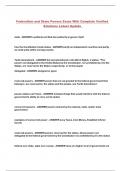
state - ANSWER a political unit that has authority to govern itself
how the Constitution treats states - ANSWER partly as independent countries and partly
as small units within one big country
Tenth Amendment - ANSWER the last amendment in the Bill of Rights, it states: "The
powers not delegated to the United States by the Constitution, nor prohibited by it to the
States, are reserved to the States respectively, or to the people
delegated - ANSWER assigned or given
reserved powers - ANSWER power that are not granted to the federal government that
belong to -are reserved to- the states and the people, see Tenth Amendment
powers states can't have - ANSWER includes things that would interfere with the federal
government's ability to carry out its duties
concurrent powers - ANSWER powers shared by the national, state, and/or local
government
examples of concurrent power - ANSWER Levy Taxes, Coin Money, Establish Inferior
Courts
reserved powers - ANSWER powers reserved for the states--those powers not
delegated to the federal government by the Constitution nor prohibited by it to the states
federal over state, state over county - ANSWER laws at a higher level of government are
Solutions Latest Update
state - ANSWER a political unit that has authority to govern itself
how the Constitution treats states - ANSWER partly as independent countries and partly
as small units within one big country
Tenth Amendment - ANSWER the last amendment in the Bill of Rights, it states: "The
powers not delegated to the United States by the Constitution, nor prohibited by it to the
States, are reserved to the States respectively, or to the people
delegated - ANSWER assigned or given
reserved powers - ANSWER power that are not granted to the federal government that
belong to -are reserved to- the states and the people, see Tenth Amendment
powers states can't have - ANSWER includes things that would interfere with the federal
government's ability to carry out its duties
concurrent powers - ANSWER powers shared by the national, state, and/or local
government
examples of concurrent power - ANSWER Levy Taxes, Coin Money, Establish Inferior
Courts
reserved powers - ANSWER powers reserved for the states--those powers not
delegated to the federal government by the Constitution nor prohibited by it to the states
federal over state, state over county - ANSWER laws at a higher level of government are