,Contents
Chapter 1: Introduction to Financial Accounting Theory..........................3
Chapter 2: Accounting Under Ideal Conditions........................................3
Chapter 3: The Decision Usefulness Approach to Financial Reporting.....3
Chapter 4: Efficient Securities Markets...................................................4
Chapter 5: The Value Relevance of Accounting Information....................4
Chapter 6: The Measurement Approach..................................................5
Chapter 7: Economic Consequences of Accounting Policy Choice...........5
Chapter 8: An Analysis of Conflict...........................................................6
Chapter 9: Accounting and Auditing........................................................6
Chapter 10: Standard Setting: Economic Issues......................................7
Chapter 11: Agency Theory and Financial Reporting...............................7
Chapter 12: Earnings Management.........................................................8
Chapter 13: Behavioral Research in Accounting......................................8
Chapter 14: Financial Statement Analysis...............................................9
Chapter 15: Ethical Considerations in Accounting.................................10
Chapter 16: Accounting Theory and Capital Markets............................10
Chapter 17: Positive Accounting Theory (PAT) and Managerial Incentives
...............................................................................................................12
Chapter 18: Fair Value Accounting and Market Efficiency.....................12
Chapter 19: Contracting Theory and Accounting Choices.....................13
Chapter 20: Empirical Research in Accounting......................................14
Chapter 21: Information Asymmetry and Disclosure.............................15
Chapter 22: Conservatism and Its Role in Financial Reporting..............16
Chapter 23: Future Directions and Challenges in Accounting Theory....17
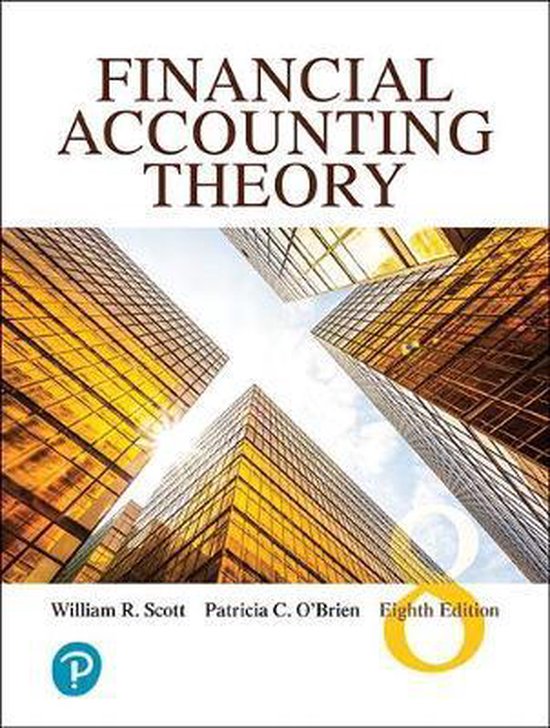
, 100 detailed questions and answers on *Financial Accounting Theory* by
William R. Scott (8th edition)
Chapter 1: Introduction to Financial Accounting Theory
1. Q: What is the primary purpose of financial accounting theory?
- A: Financial accounting theory aims to understand the assumptions,
concepts, and frameworks underlying financial accounting practices and
to explore why financial information is presented in particular ways.
2. Q: What is positive accounting theory (PAT)?
- A: PAT explains and predicts accounting practices, emphasizing how
economic factors influence managers' choices in financial reporting.
3. Q: Define the difference between normative and positive accounting
theories
- A: Normative theories prescribe how accounting should be done, while
positive theories describe and predict actual accounting practices.
Chapter 2: Accounting Under Ideal Conditions
4. Q: What does “accounting under ideal conditions” refer to?
- A: It considers financial accounting in a hypothetical environment
where markets are perfect, information is complete, and future events are
known, allowing for “perfect” financial statements.
5. Q: Why study accounting under ideal conditions?
- A: It helps to understand theoretical models of value and the
limitations in real-world accounting, highlighting the effect of imperfect
information and uncertainty.
Chapter 3: The Decision Usefulness Approach to
Financial Reporting
6. Q: What is the decision usefulness approach?
Chapter 1: Introduction to Financial Accounting Theory..........................3
Chapter 2: Accounting Under Ideal Conditions........................................3
Chapter 3: The Decision Usefulness Approach to Financial Reporting.....3
Chapter 4: Efficient Securities Markets...................................................4
Chapter 5: The Value Relevance of Accounting Information....................4
Chapter 6: The Measurement Approach..................................................5
Chapter 7: Economic Consequences of Accounting Policy Choice...........5
Chapter 8: An Analysis of Conflict...........................................................6
Chapter 9: Accounting and Auditing........................................................6
Chapter 10: Standard Setting: Economic Issues......................................7
Chapter 11: Agency Theory and Financial Reporting...............................7
Chapter 12: Earnings Management.........................................................8
Chapter 13: Behavioral Research in Accounting......................................8
Chapter 14: Financial Statement Analysis...............................................9
Chapter 15: Ethical Considerations in Accounting.................................10
Chapter 16: Accounting Theory and Capital Markets............................10
Chapter 17: Positive Accounting Theory (PAT) and Managerial Incentives
...............................................................................................................12
Chapter 18: Fair Value Accounting and Market Efficiency.....................12
Chapter 19: Contracting Theory and Accounting Choices.....................13
Chapter 20: Empirical Research in Accounting......................................14
Chapter 21: Information Asymmetry and Disclosure.............................15
Chapter 22: Conservatism and Its Role in Financial Reporting..............16
Chapter 23: Future Directions and Challenges in Accounting Theory....17
, 100 detailed questions and answers on *Financial Accounting Theory* by
William R. Scott (8th edition)
Chapter 1: Introduction to Financial Accounting Theory
1. Q: What is the primary purpose of financial accounting theory?
- A: Financial accounting theory aims to understand the assumptions,
concepts, and frameworks underlying financial accounting practices and
to explore why financial information is presented in particular ways.
2. Q: What is positive accounting theory (PAT)?
- A: PAT explains and predicts accounting practices, emphasizing how
economic factors influence managers' choices in financial reporting.
3. Q: Define the difference between normative and positive accounting
theories
- A: Normative theories prescribe how accounting should be done, while
positive theories describe and predict actual accounting practices.
Chapter 2: Accounting Under Ideal Conditions
4. Q: What does “accounting under ideal conditions” refer to?
- A: It considers financial accounting in a hypothetical environment
where markets are perfect, information is complete, and future events are
known, allowing for “perfect” financial statements.
5. Q: Why study accounting under ideal conditions?
- A: It helps to understand theoretical models of value and the
limitations in real-world accounting, highlighting the effect of imperfect
information and uncertainty.
Chapter 3: The Decision Usefulness Approach to
Financial Reporting
6. Q: What is the decision usefulness approach?