🌲
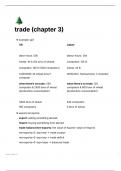
trade (chapter 3)
example: ppf
US: Japan:
labor hours: 50k labour hours: 30k
wheat: 10 lh (5k tons of wheat) computers: 125 lh
computers: 100 lh (500 computers) wheat: 25 lh
5,000/500=10 wheat tons/ 1 1200/240= 5wheat tons/ 1 computer
computer
when there’s no trade: 250 when there’s no trade: 120
computers & 2500 tons of wheat computers & 600 tons of wheat
(production=consumption) (production=consumption)
3400 tons of wheat 240 computers
160 computers 0 tons of wheat
exports & imports:
export: selling something abroad
import: buying something from abroad
trade-balance/net-exports: the value of exports-value of imports
net exports>0: exp>imp → trade surplus
net exports<0: exp<imp → trade deficit
net exports=0: exp=impo → balanced trade
trade (chapter 3) 1
, example:
US exp: 700 tons of wheat Japan exp: 110 computers
US imp: 110 computers Japan imp: 700 tons of wheat
productions numbers- 240(produced)-110(exp)=130
exports+import consumers (amount consumed)
110 (imp) +160 (produced) =270 0(produced)+700(imp)=700 tons
computers (amount consumed) of wheat (amount consumed)
3400(produced) - 700 (exported)
=2700 tons of wheat (amount
Japan is exporting computers to
consumed the US since the cost of production
has an absolute advantage in is lower (lower opportunity cost to
producing wheat (only 10 hl) do so), although the US has an
absolute advantage in computer
goods as well
absolute advantage theory: the ability to produce a good using fewer inputs
than another producer
specialize (make more of it) → export
doesn’t fully explain the gains of trade
include opportunity cost
comparative advantage: the ability to produce a good at a lower opportunity
cost than another producer
opportunity cost in US: 100(labor hrs of computers)/10(labor hrs of wheat
= 10 tons of wheat
opportunity cost in Japan: 125(labor hrs of computers)/25(labor hrs of
wheat) = 5 tons of wheat
opportunity cost in Japan < opportunity cost in US, therefore Japan has a
comparative advantage in computers and the US has the comparative
trade (chapter 3) 2
trade (chapter 3)
example: ppf
US: Japan:
labor hours: 50k labour hours: 30k
wheat: 10 lh (5k tons of wheat) computers: 125 lh
computers: 100 lh (500 computers) wheat: 25 lh
5,000/500=10 wheat tons/ 1 1200/240= 5wheat tons/ 1 computer
computer
when there’s no trade: 250 when there’s no trade: 120
computers & 2500 tons of wheat computers & 600 tons of wheat
(production=consumption) (production=consumption)
3400 tons of wheat 240 computers
160 computers 0 tons of wheat
exports & imports:
export: selling something abroad
import: buying something from abroad
trade-balance/net-exports: the value of exports-value of imports
net exports>0: exp>imp → trade surplus
net exports<0: exp<imp → trade deficit
net exports=0: exp=impo → balanced trade
trade (chapter 3) 1
, example:
US exp: 700 tons of wheat Japan exp: 110 computers
US imp: 110 computers Japan imp: 700 tons of wheat
productions numbers- 240(produced)-110(exp)=130
exports+import consumers (amount consumed)
110 (imp) +160 (produced) =270 0(produced)+700(imp)=700 tons
computers (amount consumed) of wheat (amount consumed)
3400(produced) - 700 (exported)
=2700 tons of wheat (amount
Japan is exporting computers to
consumed the US since the cost of production
has an absolute advantage in is lower (lower opportunity cost to
producing wheat (only 10 hl) do so), although the US has an
absolute advantage in computer
goods as well
absolute advantage theory: the ability to produce a good using fewer inputs
than another producer
specialize (make more of it) → export
doesn’t fully explain the gains of trade
include opportunity cost
comparative advantage: the ability to produce a good at a lower opportunity
cost than another producer
opportunity cost in US: 100(labor hrs of computers)/10(labor hrs of wheat
= 10 tons of wheat
opportunity cost in Japan: 125(labor hrs of computers)/25(labor hrs of
wheat) = 5 tons of wheat
opportunity cost in Japan < opportunity cost in US, therefore Japan has a
comparative advantage in computers and the US has the comparative
trade (chapter 3) 2