ATLS Module 1- Initial assessment and
Mgmt
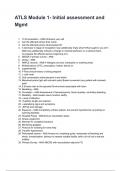
1. 10 2d evaluation - ANS-Introduce your self
2. Ask the affected person their name
3. Ask the affected person what passed off
4. A decrease in stage of recognition may additionally imply what? What ought to you do? -
ANS-may additionally indicate a change in cerebral perfusion or a cerebral harm,
re-evaluate the affected person beginning at A.
5. ABCDE if primary survey - ANS-
6. airway - ANS-
7. AMPLE records - ANS-A Allergies (to food, medication or anything else)
8. M Medications (OTC, prescription, herbal, leisure or
9. supplemental)
10. P Past clinical history or being pregnant
11. L Last meal:
12. Oral consumption (what became it and while)
13. Menstrual period (girl with stomach pain) Bowel movement (any patient with stomach
pain)
14. E Events main to the episode/ Environment associated with harm
15. Breathing - ANS-
16. Circulation - ANS-Assessment of hemodynamics, blood quantity, controlling bleeding.
17. Disability - ANS-Assess neuro function swiftly
18. -Level of attention
19. -Pupillary length and reaction
20. -Lateralizing signs and symptoms
21. -SPinal wire damage
22. Exposure - ANS-Completely undress patient, but prevent hypothermia via putting on
warming blankets
23. Hospital Phase - ANS-Ensure resusitation place
24. Airway equipment
25. Warmed IV crystalloid solutions
26. Monitoring gadgets
27. Protocol for soliciting for extra help
28. Transfer Agreements
29. Prehospital section - ANS-Airway mx, breathing guide, manipulate of bleeding and
shock, immbolization, delivery to nearest suitable facility (with a bit of luck a trauma
middle)
30. Primary Survey - ANS-ABCDE with resuscitation adjuncts FG
Mgmt
1. 10 2d evaluation - ANS-Introduce your self
2. Ask the affected person their name
3. Ask the affected person what passed off
4. A decrease in stage of recognition may additionally imply what? What ought to you do? -
ANS-may additionally indicate a change in cerebral perfusion or a cerebral harm,
re-evaluate the affected person beginning at A.
5. ABCDE if primary survey - ANS-
6. airway - ANS-
7. AMPLE records - ANS-A Allergies (to food, medication or anything else)
8. M Medications (OTC, prescription, herbal, leisure or
9. supplemental)
10. P Past clinical history or being pregnant
11. L Last meal:
12. Oral consumption (what became it and while)
13. Menstrual period (girl with stomach pain) Bowel movement (any patient with stomach
pain)
14. E Events main to the episode/ Environment associated with harm
15. Breathing - ANS-
16. Circulation - ANS-Assessment of hemodynamics, blood quantity, controlling bleeding.
17. Disability - ANS-Assess neuro function swiftly
18. -Level of attention
19. -Pupillary length and reaction
20. -Lateralizing signs and symptoms
21. -SPinal wire damage
22. Exposure - ANS-Completely undress patient, but prevent hypothermia via putting on
warming blankets
23. Hospital Phase - ANS-Ensure resusitation place
24. Airway equipment
25. Warmed IV crystalloid solutions
26. Monitoring gadgets
27. Protocol for soliciting for extra help
28. Transfer Agreements
29. Prehospital section - ANS-Airway mx, breathing guide, manipulate of bleeding and
shock, immbolization, delivery to nearest suitable facility (with a bit of luck a trauma
middle)
30. Primary Survey - ANS-ABCDE with resuscitation adjuncts FG