ANCC NON-CLINICAL QUESTIONS AND ANSWERS WITH SOLUTIONS 2024/25
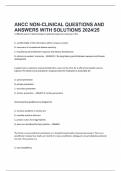
ANCC NON-CLINICAL QUESTIONS AND ANSWERS WITH SOLUTIONS 2024/25 A difficult aspect of determining occupational exposure to disease is the: A. confidentiality of the information within company records. B. inaccuracy of occupational disease reporting. C. long latency period between exposure and disease development. D. reliance on workers' memories. - ANSWER C. the long latency period between exposure and disease development A patient who sustained a myocardial infarction comes to the clinic for a refill of atorvastatin calcium (Lipitor). The family nurse practitioner recognizes that the medication is prescribed for: A. cancer prevention B. primary prevention C. secondary prevention D. tertiary prevention. - ANSWER D. tertiary prevention Clinical practice guidelines are designed to: A. increase variations in clinical care B. mandate practice decisions C. protect nurses from legal liability D. serve as a handbook for best practice. - ANSWER The family nurse practitioner participates in a hospital-based quality improvement project. The nurse practitioner reviews four charts per month of a nurse practitioner colleague to ensure diabetes protocols are met. This process is a: A. core competency B. force field analysis C. peer review D. risk analysis - ANSWER C. Peer review A 55-year-old male patient who is Chinese has a follow-up appointment after cardiac bypass surgery. The patient brings his father with him into the examination room. How does the family nurse practitioner provide culturally sensitive care? A. Asks the patient's father first if he has any questions regarding his son's care B. Asks the patient's father to leave the room due to confidentiality issues C. Performs the examination without speaking to the patient's father D. Provides the patient's father an informational packet to read while performing the examination - ANSWER A. Asks the patient's father first if he has any questions regarding his son's care The family nurse practitioner observes an increase in chlamydia diagnoses in a small rural community and suspects patients are not notifying their partners of their diagnosis and, thereby, delaying treatment. The nurse practitioner decides to conduct a small research study. Which type of hypothesis does the nurse practitioner apply? a. Complex hypothesis B. Deductive hypothesis C. Inductive hypothesis D. Non-directional hypothesis. - ANSWER C. Inductive hypothesis The family nurse practitioner exhibits professional leadership by: A. adding clinical protocols to the nurse practitioner scope of practice B. comparing the workplace roles of the registered nurse and the nurse practitioner C. creating a task force to address scope-of-practice concerns D. lobbying to eliminate continuing education requirements. - ANSWER C. creating a task force to address scope-of-practice concerns To comply with regulations for third-party payor reimbursement and documentation, the family nurse practitioner correlates: A. evaluation and management codes with history, examination, and medical decision-making B. health outcomes with physical examination findings and plans of care C. medication orders and treatment plans with electronic billing D. patient privacy with informed consent. - ANSWER A. evaluation and management codes with history, examination, and medical decision-making
Written for
- Institution
- FNP
- Course
- FNP
Document information
- Uploaded on
- October 30, 2024
- Number of pages
- 11
- Written in
- 2024/2025
- Type
- Exam (elaborations)
- Contains
- Questions & answers
Subjects
-
ancc non clinical questions and answers with solut

Also available in package deal