Straighterline Communication 101 Chapters 5-6 Test Bank Solution Manual Latest Update 2024
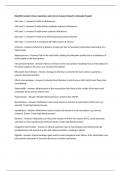
hearing - Answers the act of receiving sound
listening - Answers the active process of receiving, constructing mean ing from, and responding to
spoken or nonverbal messages
active listening - Answers involved listening with a purpose
feedback - Answers verbal and nonverbal responses to a speaker and the speaker's message
empathic listening - Answers attempting to understand the perspective of another person
critical listening - Answers challenging the speaker's message by evaluating its accuracy, meaningfulness
and utility
listening for enjoyment - Answers Occurs in situations that are relaxing, fun, or emotionally stimulating
selective attention - Answers the sustained focus we give to things that are important
automatic attention - Answers the instinctive focus we give to important things we experience in our
surroundings
working memory - Answers the part of our consciousness that interprets and assigns meaning to stimuli
we pay attention to
short term memory - Answers a temporary storage place for information
long-term memory - Answers a permanent storage place for information
schemas - Answers organizational filing systems for thoughts held in long-term memory
critical thinking - Answers analyzing the speaker, the situation and the speaker's ideas to make critical
judgments about the message being presented
source credibility - Answers the extent to which the speaker is perceived as competent and trustworthy
data - Answers what facts or evidence are agreed upon by both speaker and listener?
claim - Answers what is the overall point or conclusion of the argument made by the speaker?
warrant - Answers what is the reasoning used by the speaker to move from the data to the claim?
Stephen Toulmin Model - Answers data, claim, warrant
information literacy - Answers having the ability to recognize when information is needed and the ability
to locate, evaluate, and use effectively the information needed
hearing - Answers the act of receiving sound
listening - Answers the active process of receiving, constructing mean ing from, and responding to
spoken or nonverbal messages
active listening - Answers involved listening with a purpose
feedback - Answers verbal and nonverbal responses to a speaker and the speaker's message
empathic listening - Answers attempting to understand the perspective of another person
critical listening - Answers challenging the speaker's message by evaluating its accuracy, meaningfulness
and utility
listening for enjoyment - Answers Occurs in situations that are relaxing, fun, or emotionally stimulating
selective attention - Answers the sustained focus we give to things that are important
automatic attention - Answers the instinctive focus we give to important things we experience in our
surroundings
working memory - Answers the part of our consciousness that interprets and assigns meaning to stimuli
we pay attention to
short term memory - Answers a temporary storage place for information
long-term memory - Answers a permanent storage place for information
schemas - Answers organizational filing systems for thoughts held in long-term memory
critical thinking - Answers analyzing the speaker, the situation and the speaker's ideas to make critical
judgments about the message being presented
source credibility - Answers the extent to which the speaker is perceived as competent and trustworthy
data - Answers what facts or evidence are agreed upon by both speaker and listener?
claim - Answers what is the overall point or conclusion of the argument made by the speaker?
warrant - Answers what is the reasoning used by the speaker to move from the data to the claim?
Stephen Toulmin Model - Answers data, claim, warrant
information literacy - Answers having the ability to recognize when information is needed and the ability
to locate, evaluate, and use effectively the information needed