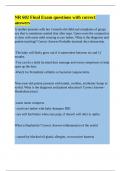
NR 511 Final Exam Graded A 2024
Mesenteric infarction - Patient presents with mid epigastric pain, LUQ radiating to back, mild to very severe pain. Also has associated nausea and vomiting diaphoresis, pain is worse with lying supine. Physical assessment shows diminished bowel sounds and abdominal arteriogram. Urinary stones/kidney stones - Patient presents with a colicky flank pain progressing to constant and severe radiating to the groin in both lower quadrant, patient has associated nausea vomiting fever chills and abdominal distention. Costovertebral angle tenderness hematuria; do urinalysis IVP and US Intestinal perforation - Patient presents with severe, parietal, diffuse pain; has associated guarding, rebound tenderness, pain is relieved while lying still. Physical exam shows decreased bowel sounds, guarding, rebound tenderness; get abdominal x-ray Intestinal obstruction - Patient presents with colicky right lower quadrant and left lower quadrant pain; has associated nausea vomiting, Anorexia, obstipation; physical exam shows hyperactive high-pitched bowel sounds are hypo active bowel sounds, get an abdominal x-ray Pancreatitis - Patient presents with severe, visceral, diffuse pain. Has associated hypotension tachycardia; pain is relieved by leaning forward. Physical exam shows abdominal distention, diminished bowel sounds, diffuse rebound tenderness; will have elevated amylase levels Ectopic pregnancy - Patient will present with persistent right lower quadrant pain or left lower quadrant pain. May have vaginal bleeding. Physical exam will show tender adnexal mass and will have a positive hcg test. Dissection or Rupture of Aortic Aneurysm - Patient will present with ripping, tearing, intense pain in chest, abdomen, lower back. Will have associated hypotension, feelings of doom, shock. Physical exam will show shock, diminished femoral pulses; get x-ray and CT scan Peptic Ulcer Disease (PUD) - Patient presents with annoying pain in epigastric region radiating to the back, right shoulder, or side. Associated nausea, hunger; worse with empty stomach, alcohol, nsaids, ASA; relieved with food and antacids. Will have epigastric tenderness to palpation. Studies done is endoscopy and barium swallow Gastroesophageal reflux disease (GERD) - Patient will present with epigastric, retrosternal pain. This pain will be intermittent. Patient may have sour taste, low- grade bleeding, hoarseness, pharyngitis; worse with bending at the waist, nsaids, ASA, alcohol, caffeine, recumbency; relieved with antacids. Test are barium swallow, upper G.I., esophageal endoscopy with biopsy Gastritis - Patient will present with epigastric pain that is constant. May have associated nausea, vomiting, diarrhea, fever, hemorrhage; worse with alcohol, nsaids, aspirin; is rarely worse with food Salpingitis - Patient will present with right lower quadrant and or left lower quadrant pain. Pain will be worse around menstruation and when ascending stairs. There will be cervical motion and adnexal tenderness Irritable bowel syndrome (IBS) - Patient will present with left lower quadrant pain right lower quadrant pain the pain will be intermittent and recurrent. Will have associated diarrhea, mucus in store; worse with stress and eating; often relieved by defecation. There will be: tender to palpation; small bowel follow through to rule out other causes Inflammatory bowel disease (Crohn's disease, ulcerative colitis) - Patient will present with pain in the right lower quadrant and left lower quadrant; may have diarrhea, weight loss, rectal bleeding, tenesmus, fever; worse with stress. Physical exam will show tenderness in the right lower quadrant left lower quadrant; order CBC with differential small bowel follow through (crohns) and a colonoscopy (UC) Gastroenteritis - This pain will be diffuse. May have associated nausea, vomiting, diarrhea, fever, chills; worse with food; relieved with vomiting or defecation. Physical exam will show hyperactive bowel sounds; stool ova and parasites, stool culture Diverticulitis - Patient will present with left lower quadrant intermittent pain. May have associated constipation, diarrhea, fever. Physical assessment Michelle left lower quadrant mass, mild tenderness in the left iliac fossa; laparoscopy will diagnose; other labs are normal Cholecystitis/Cholelithiasis - Patient will present with right upper quadrant pain radiating to the infrascapular region, also mid at the gastric pain; starts as visceral progressing to parietal. May have associated nausea, vomiting, jaundice, dark urine, light colored stools, fever, chills; worse with high fat foods, estrogen containing medication, cholestyramine. Order ultrasound, CBC with differential, liver function test, amylase Appendicitis - Patient will present with epigastrium or Peri umbilical pain later may turn into right lower quadrant pain. Pain starts as a cute visceral progressing to parietal. May present with vomiting, fever, constipation; pain is worse with movement and coughing, relieved by lying still. Physical exam will show right lower quadrant guarding and rebound tenderness; order CBC with differential, ultrasound, CT Functional constipation - Generally results from a diet that is low in fiber, sedentary lifestyle, holding stool Disordered motility constipation - Most often seen an older adults and is caused by slowed transit time Secondary constipation - Often is a result of medication such as opioids, anal Jesus, calcium channel blockers, antidepressants, anti-Parkinson drugs, cough medicine, aluminum antacids What is the management of simple constipation - Patient should be instructed to slowly increase the amount of dietary fiber to 25 to 35 g per day at least 12 to 15 g at breakfast. Mild exercise in the morning is often helpful. Uninterrupted toilet time in the morning is also helpful. Patient needs to be instructed about adequate hydration and should be encouraged to drink at least 64 ounces of fluid daily Management of diarrhea - Increase fluid intake with electrolytes, if afebrile then use loperamide or Imodium or Pepto-Bismol empirical treatment with antibiotics is not recommended Heartburn - occasionally described as extreme pain, and this makes it difficult to distinguish heartburn pain from angina pectoris or myocardial infarction. Patients sometimes describe heartburn as a pain that radiates to the back, arms, or jaw. Dyspepsia (indigestion) - Symptoms of this include epigastric discomfort, postprandial fullness, early satiety, anorexia, belching, nausea, heartburn, vomiting, bloating, dysphasia, and abdominal burning The main principle of management for prostatitis is to treat the patient on an outpatient basis if he is afebrile. All of the following antibiotics are recommended in the pharmacologic treatment in men with bacterial prostatitis except - Penicillin A 72-year-old and married sexually active white man presents to your clinic with complaints of hesitancy, urgency and occasional uncontrolled dribbling. Although the nurse practitioner suspects BPH, what else should be the differential diagnosis - Urethral stricture A bladder tumor antigen test may be positive with - Symptomatic sexually transmitted disease The action of a five alpha reductase inhibitor in the treatment of BPH is to - Reduce action of androgens in the prostate What is the medical terminologies for inflammation of the glands and prepuce - balanoposthitis A patient is being treated for erectile dysfunction. The patient is morbidly obese and has been treated for cardiovascular disease and coagulopathy. Which of the following medication's would be contraindicated - Alprostadil (Caverjet) A patient's chief complaint is heaviness in the scrotum the nurse practitioner assesses the swelling of the testes, along with warm scrotal skin. What differential diagnosis is most probable - Orchitis Harris age 68 is complaining of crooked painful directions. He has palpable, nontender, hard Plex just beneath the skin of his penis. Based on the chief complaint in assessment what is the most likely differential diagnosis - Peyronie's disease Morris, age 52, is in a new relationship and is not sure whether his erectile dysfunction is caused bus stress about his performance or is organic. What simple test could you suggest To determine if he has the ability to have an erection - A nocturnal penile tumescence and rigidity test What bio chemical markers would be ordered and analyzed for disease progression or remission after treatment of testicular cancer - Human chorionic Gonadotropin(HCG), alpha-fetoprotein(AFP), lactate dehydrogenase(LDH) What is the most common cause of gross hematuria in the male population - Bladder infection 72-year-old male presents to the clinic with complaints of a weak urine stream, hesitancy, painful ejaculation. On digital rectal exam you know that the prostate is boggy. The most common cause of his symptoms is - Chronic bacterial prostatitis What is the most common type of hernia in the male population - Indirect inguinal hernia Which blood test is nonspecific method and most helpful for evaluating the severity and course of an inflammatory process - C-reactive protein (CRP) Miss Thomas was seen in the office complaining of pain point tenderness in the area of her elbow. The pain has increased following a day gardening one week ago. I physical finding that differentiates a diagnosis and is most consistent with lateral epicondylitis or tennis elbow is - Pain at the elbow with restricted movement at the wrist and forearm Which of the following statements concerning the musculoskeletal examination is true - The uninvolved side should be examined initially and then compared to the involved side A 25-year-old patient possessed to the clinic with fatigue, cold intolerance, weight gain, and constipation for the fat past three months. I'm physical examination the clinician nose is Santa spray to Cardia, muscle stiffness, course dry hair and a delay in relaxation of deep tendon reflexes. Which of the following test should be order next - Calcium TSH Which of the following medication's for type two diabetes mellitus should not be prescribed during pregnancy - Glucotrol During a digital rectal exam on a 75-year-old man, the clinician suspects the patient has prostate cancer. Which finding should make the clinician suspicious - An enlarged rubbery gland
Written for
- Institution
-
Maryville College
- Course
-
NURS 612
Document information
- Uploaded on
- October 30, 2024
- Number of pages
- 10
- Written in
- 2024/2025
- Type
- Exam (elaborations)
- Contains
- Questions & answers
Subjects
- nr 511
- nr 511 final exam
-
nr 511 final exam graded a 2024