

Chapter 12: Nutrition in Infancy, Childhood, and
Adolescence
Growth and Development
Life cycle growth pattern
I. Infancy: first year of life
II. Childhood: between infancy and adolescence
III. Adolescence: onset of puberty
IV. Adulthood: physical maturity
Measuring childhood growth
I. Individual growth rates
II. Physical growth measurement
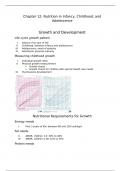
Growth charts
Growth charts for children with special health care needs
III. Psychosocial development
Nutritional Requirements for Growth
Energy needs
I. First 3 years of life: between 80 and 120 kcal/kg/d
Fat needs
II. AMDR, children 1-3: 30% to 40%
III. AMDR, children 4-18: 25% to 35%
Protein needs
, I. First 6 months: 1.52 g/kg
Water requirements
I. Metabolic needs, especially during periods of rapid growth
II. Infants require more water per unit of body weight than do adults
Minerals and vitamins
I. Calcium: critical in early life for skeleton, bones, and teeth
II. Iron: essential for hemoglobin and cognitive development in early years
III. Vitamin supplements: K and D
Nutrition Requirements During Infancy
Infant classifications
I. Maturity
Term infants: born between 37 and 42 weeks’ gestation
Premature infants: born before 37 weeks’ gestation
II. Weight classification
Low birth weight (LBW): less than 2500 g (5 lb. 8 oz.)
Very low birth weight (VLBW): less than 1500 g (3 lb. 5 oz.)
Extremely low birth weight (ELBW): less than 1000 g (2 lb. 3 oz.)
Infant classifications
I. Size for gestational age classification
Appropriate for gestational age (AGA)
Large for gestational age (LGA)
Small for gestational age (SGA)
Considerations regarding feeding premature infants
I. Physiologic delays relevant to feeding
II. Milk content for premature infants
III. Methods of milk delivery
Adolescence
Growth and Development
Life cycle growth pattern
I. Infancy: first year of life
II. Childhood: between infancy and adolescence
III. Adolescence: onset of puberty
IV. Adulthood: physical maturity
Measuring childhood growth
I. Individual growth rates
II. Physical growth measurement
Growth charts
Growth charts for children with special health care needs
III. Psychosocial development
Nutritional Requirements for Growth
Energy needs
I. First 3 years of life: between 80 and 120 kcal/kg/d
Fat needs
II. AMDR, children 1-3: 30% to 40%
III. AMDR, children 4-18: 25% to 35%
Protein needs
, I. First 6 months: 1.52 g/kg
Water requirements
I. Metabolic needs, especially during periods of rapid growth
II. Infants require more water per unit of body weight than do adults
Minerals and vitamins
I. Calcium: critical in early life for skeleton, bones, and teeth
II. Iron: essential for hemoglobin and cognitive development in early years
III. Vitamin supplements: K and D
Nutrition Requirements During Infancy
Infant classifications
I. Maturity
Term infants: born between 37 and 42 weeks’ gestation
Premature infants: born before 37 weeks’ gestation
II. Weight classification
Low birth weight (LBW): less than 2500 g (5 lb. 8 oz.)
Very low birth weight (VLBW): less than 1500 g (3 lb. 5 oz.)
Extremely low birth weight (ELBW): less than 1000 g (2 lb. 3 oz.)
Infant classifications
I. Size for gestational age classification
Appropriate for gestational age (AGA)
Large for gestational age (LGA)
Small for gestational age (SGA)
Considerations regarding feeding premature infants
I. Physiologic delays relevant to feeding
II. Milk content for premature infants
III. Methods of milk delivery


