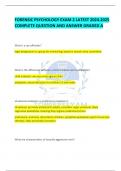
FORENSIC PSYCHOLOGY EXAM 1
LATEST 2024.2025 COMPLETE
QUESTION AND ANSWER GRADED
A
using polygraphs to determine truthfulness
logic: lying causes anxiety + fear, manifests as physiological arousal
weaknesses: countermeasures, lack of standardization in result reading,
poor specificity of ANS response, differential reaction of person being
tested (confounding variables)
polygraph countermeasures
potential ways to "beat" a polygraph test
constrict bunghole or think exciting thoughts to raise blood pressure on
control questions, do nothing for relevant questions
would I consent to a polygraph
,prolly not. estimated at 70-90% accurate, jurors find results extremely
persuasive, so in the chance that my polygraph said I was guilty, kinda
screwed
what percent of suspects incriminate themselves?
68%
Miranda warning
a statement by law enforcement officers informing a person arrested or
subject to interrogation of his or her rights; 4 statements followed by a
question "do you understand the rights I have just read to you?"
do people waive their Miranda rights?
YES, 80% of suspects waive their rights by talking to police.
this could be because: police delivery was rushed, suspect may be
upset/lack the ability to think clearly and understand rights are being
waived, may believe they'll look guilty if they refuse to speak to police
officers
, totality of circumstances
judges consider totality of circumstances to determine admissibility of
confession - environment, breaks, food/water, age, intellectual ability,
medical. concerns, psychological functioning
relating to Miranda rights: in cases of vulnerable individuals, court
considers factors + circumstance before accepting confession
reid technique
modern interrogation style; accusatorial approach using psychological
leverage (assuming guilt)
custody + isolation -> confrontation -> minimize (empathize w subject) -
> generate oral/written confession
reid technique psychological strategies
social isolation, loss of control, certainly of guilt (evidence ploys),
exculpatory scenarios (allowing suspect to relieve themselves of blame)
factors contributing to false confessions
LATEST 2024.2025 COMPLETE
QUESTION AND ANSWER GRADED
A
using polygraphs to determine truthfulness
logic: lying causes anxiety + fear, manifests as physiological arousal
weaknesses: countermeasures, lack of standardization in result reading,
poor specificity of ANS response, differential reaction of person being
tested (confounding variables)
polygraph countermeasures
potential ways to "beat" a polygraph test
constrict bunghole or think exciting thoughts to raise blood pressure on
control questions, do nothing for relevant questions
would I consent to a polygraph
,prolly not. estimated at 70-90% accurate, jurors find results extremely
persuasive, so in the chance that my polygraph said I was guilty, kinda
screwed
what percent of suspects incriminate themselves?
68%
Miranda warning
a statement by law enforcement officers informing a person arrested or
subject to interrogation of his or her rights; 4 statements followed by a
question "do you understand the rights I have just read to you?"
do people waive their Miranda rights?
YES, 80% of suspects waive their rights by talking to police.
this could be because: police delivery was rushed, suspect may be
upset/lack the ability to think clearly and understand rights are being
waived, may believe they'll look guilty if they refuse to speak to police
officers
, totality of circumstances
judges consider totality of circumstances to determine admissibility of
confession - environment, breaks, food/water, age, intellectual ability,
medical. concerns, psychological functioning
relating to Miranda rights: in cases of vulnerable individuals, court
considers factors + circumstance before accepting confession
reid technique
modern interrogation style; accusatorial approach using psychological
leverage (assuming guilt)
custody + isolation -> confrontation -> minimize (empathize w subject) -
> generate oral/written confession
reid technique psychological strategies
social isolation, loss of control, certainly of guilt (evidence ploys),
exculpatory scenarios (allowing suspect to relieve themselves of blame)
factors contributing to false confessions