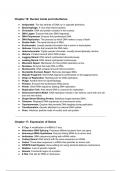
Chapter 16: Nucleic Acids and Inheritance
● Antiparallel: The two strands of DNA run in opposite directions.
● Bacteriophage: A virus that infects bacteria.
● Chromatin: DNA and protein complex in the nucleus.
● DNA Ligase: Enzyme that joins DNA fragments.
● DNA Polymerase: Enzyme that synthesizes DNA.
● DNA Replication: The process by which DNA makes a copy of itself.
● Double Helix: The spiral structure of DNA.
● Euchromatin: Loosely packed chromatin that is active in transcription.
● Helicase: Enzyme that unwinds the DNA helix.
● Heterochromatin: Tightly packed chromatin, usually transcriptionally inactive.
● Histone: Proteins around which DNA wraps.
● Lagging Strand: DNA strand synthesized discontinuously.
● Leading Strand: DNA strand synthesized continuously.
● Mismatch Repair: Mechanism for fixing DNA replication errors.
● Nuclease: Enzyme that cuts DNA or RNA.
● Nucleosome: DNA wrapped around histone proteins.
● Nucleotide Excision Repair: Removes damaged DNA.
● Okazaki Fragment: Short DNA fragments synthesized on the lagging strand.
● Origin of Replication: Starting point for DNA replication.
● Phage: Another term for bacteriophage.
● Primase: Enzyme that synthesizes RNA primer.
● Primer: Short RNA sequence starting DNA replication.
● Replication Fork: Area where DNA is unwound for replication.
● Semiconservative Model: DNA replication results in two helices, each with one old
and one new strand.
● Single-Strand Binding Protein: Stabilizes single-stranded DNA.
● Telomere: Repeated DNA sequences at chromosome ends.
● Topoisomerase: Enzyme that prevents DNA tangling during replication.
● Transformation: Genetic alteration by external DNA uptake.
● Virus: Infectious particle made of nucleic acid and protein.
Chapter 17: Expression of Genes
● 5′ Cap: A modification of mRNA’s 5′ end.
● Alternative RNA Splicing: Produces different proteins from one gene.
● Aminoacyl-tRNA Synthetase: Enzyme linking tRNA to its amino acid.
● Anticodon: tRNA sequence pairing with mRNA codon.
● Coding Strand: DNA strand with the same sequence as mRNA.
● Codon: Three-base sequence in mRNA that specifies an amino acid.
● CRISPR-Cas9 System: Gene-editing tool using bacterial defense mechanisms.
● Deletion: Loss of genetic material.
● Domain: Functional region of a protein.
● E Site: Exit site for tRNA in ribosomes.
, ● Exon: Coding region of a gene.
● Frameshift Mutation: Mutation that shifts the reading frame.
● Gene Editing: Modifying genes directly.
● Gene Expression: Process of transcribing and translating a gene into a protein.
● Insertion: Addition of genetic material.
● Intron: Non-coding gene sequence.
● Messenger RNA (mRNA): Conveys genetic information from DNA to ribosomes.
● Missense Mutation: Change in one DNA base resulting in a different amino acid.
● Mutagen: Agent causing mutations.
● Mutation: Change in DNA sequence.
● Nonsense Mutation: Mutation that creates a premature stop codon.
● Nucleotide-Pair Substitution: Replacement of one base pair with another.
● Point Mutation: Single base-pair change in DNA.
● Poly-A Tail: Added to the 3′ end of mRNA for stability.
● Polyribosome (Polysome): Group of ribosomes reading an mRNA.
● Primary Transcript: Initial RNA product from transcription.
● Promoter: DNA region initiating transcription.
● P Site: Holds tRNA carrying the growing polypeptide chain.
● Reading Frame: Division of mRNA into codons.
● Ribosomal RNA (rRNA): Forms ribosomes.
● Ribosome: Cellular structure that synthesizes proteins.
● Ribozyme: RNA molecule with enzymatic activity.
● RNA Polymerase: Enzyme that synthesizes RNA.
● RNA Processing: Modification of RNA before it leaves the nucleus.
● RNA Splicing: Removal of introns from RNA.
● Signal Peptide: Directs proteins to specific locations.
● Signal-Recognition Particle (SRP): Directs ribosomes to the endoplasmic
reticulum.
● Silent Mutation: Mutation that does not change the amino acid sequence.
● Spliceosome: Complex removing introns from RNA.
● Start Point: Where transcription begins.
● TATA Box: DNA sequence in promoters recognized by transcription factors.
● Template Strand: DNA strand used for mRNA synthesis.
● Terminator: DNA sequence ending transcription.
● Transcription: Synthesis of RNA from DNA.
● Transcription Factor: Protein aiding RNA polymerase binding.
● Transcription Initiation Complex: Assembly required for transcription.
● Transcription Unit: DNA region transcribed into RNA.
● Transfer RNA (tRNA): Transfers amino acids during protein synthesis.
● Translation: Protein synthesis from mRNA.
● Triplet Code: Three-nucleotide sequences code for amino acids.
● Wobble: Flexibility in base pairing at the third codon position.
Chapter 18: Control of Gene Expression
● Activator: Protein increasing gene expression.
● Antiparallel: The two strands of DNA run in opposite directions.
● Bacteriophage: A virus that infects bacteria.
● Chromatin: DNA and protein complex in the nucleus.
● DNA Ligase: Enzyme that joins DNA fragments.
● DNA Polymerase: Enzyme that synthesizes DNA.
● DNA Replication: The process by which DNA makes a copy of itself.
● Double Helix: The spiral structure of DNA.
● Euchromatin: Loosely packed chromatin that is active in transcription.
● Helicase: Enzyme that unwinds the DNA helix.
● Heterochromatin: Tightly packed chromatin, usually transcriptionally inactive.
● Histone: Proteins around which DNA wraps.
● Lagging Strand: DNA strand synthesized discontinuously.
● Leading Strand: DNA strand synthesized continuously.
● Mismatch Repair: Mechanism for fixing DNA replication errors.
● Nuclease: Enzyme that cuts DNA or RNA.
● Nucleosome: DNA wrapped around histone proteins.
● Nucleotide Excision Repair: Removes damaged DNA.
● Okazaki Fragment: Short DNA fragments synthesized on the lagging strand.
● Origin of Replication: Starting point for DNA replication.
● Phage: Another term for bacteriophage.
● Primase: Enzyme that synthesizes RNA primer.
● Primer: Short RNA sequence starting DNA replication.
● Replication Fork: Area where DNA is unwound for replication.
● Semiconservative Model: DNA replication results in two helices, each with one old
and one new strand.
● Single-Strand Binding Protein: Stabilizes single-stranded DNA.
● Telomere: Repeated DNA sequences at chromosome ends.
● Topoisomerase: Enzyme that prevents DNA tangling during replication.
● Transformation: Genetic alteration by external DNA uptake.
● Virus: Infectious particle made of nucleic acid and protein.
Chapter 17: Expression of Genes
● 5′ Cap: A modification of mRNA’s 5′ end.
● Alternative RNA Splicing: Produces different proteins from one gene.
● Aminoacyl-tRNA Synthetase: Enzyme linking tRNA to its amino acid.
● Anticodon: tRNA sequence pairing with mRNA codon.
● Coding Strand: DNA strand with the same sequence as mRNA.
● Codon: Three-base sequence in mRNA that specifies an amino acid.
● CRISPR-Cas9 System: Gene-editing tool using bacterial defense mechanisms.
● Deletion: Loss of genetic material.
● Domain: Functional region of a protein.
● E Site: Exit site for tRNA in ribosomes.
, ● Exon: Coding region of a gene.
● Frameshift Mutation: Mutation that shifts the reading frame.
● Gene Editing: Modifying genes directly.
● Gene Expression: Process of transcribing and translating a gene into a protein.
● Insertion: Addition of genetic material.
● Intron: Non-coding gene sequence.
● Messenger RNA (mRNA): Conveys genetic information from DNA to ribosomes.
● Missense Mutation: Change in one DNA base resulting in a different amino acid.
● Mutagen: Agent causing mutations.
● Mutation: Change in DNA sequence.
● Nonsense Mutation: Mutation that creates a premature stop codon.
● Nucleotide-Pair Substitution: Replacement of one base pair with another.
● Point Mutation: Single base-pair change in DNA.
● Poly-A Tail: Added to the 3′ end of mRNA for stability.
● Polyribosome (Polysome): Group of ribosomes reading an mRNA.
● Primary Transcript: Initial RNA product from transcription.
● Promoter: DNA region initiating transcription.
● P Site: Holds tRNA carrying the growing polypeptide chain.
● Reading Frame: Division of mRNA into codons.
● Ribosomal RNA (rRNA): Forms ribosomes.
● Ribosome: Cellular structure that synthesizes proteins.
● Ribozyme: RNA molecule with enzymatic activity.
● RNA Polymerase: Enzyme that synthesizes RNA.
● RNA Processing: Modification of RNA before it leaves the nucleus.
● RNA Splicing: Removal of introns from RNA.
● Signal Peptide: Directs proteins to specific locations.
● Signal-Recognition Particle (SRP): Directs ribosomes to the endoplasmic
reticulum.
● Silent Mutation: Mutation that does not change the amino acid sequence.
● Spliceosome: Complex removing introns from RNA.
● Start Point: Where transcription begins.
● TATA Box: DNA sequence in promoters recognized by transcription factors.
● Template Strand: DNA strand used for mRNA synthesis.
● Terminator: DNA sequence ending transcription.
● Transcription: Synthesis of RNA from DNA.
● Transcription Factor: Protein aiding RNA polymerase binding.
● Transcription Initiation Complex: Assembly required for transcription.
● Transcription Unit: DNA region transcribed into RNA.
● Transfer RNA (tRNA): Transfers amino acids during protein synthesis.
● Translation: Protein synthesis from mRNA.
● Triplet Code: Three-nucleotide sequences code for amino acids.
● Wobble: Flexibility in base pairing at the third codon position.
Chapter 18: Control of Gene Expression
● Activator: Protein increasing gene expression.