Literature introduction to violence studies
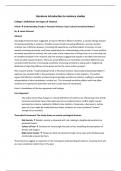
College 1 Definitions and types of violence
Article → Understanding Trends in Personal Violence: Does Cultural Sensitivity Matter?
By → Janne Kivivuori
Abstract
Sociological theorists have suggested, at least in Western affluent societies, a societal change toward
increasing sensitivity to violence. Possible causes include increasing affluence, security, medical
victories over infectious diseases, increasing life expectancy, and feminization of society. A trend
toward increasing sensitivity could have implications for understanding crime trends. If some conflicts
are newly perceived as violence, this can create a false impression of rising crime, or a crime drop can
be rendered invisible. Prior research and new analyses suggest that people in the West have become
more sensitive toward violence. There are social differences in sensitivity, and these differences are
consistent with theories of increasing sensitivity. Increasing sensitivity is expressed in heightened
likelihood of reporting offenses to the police and to the crime victim surveyors.
This research article, "Understanding Trends in Personal Violence: Does Cultural Sensitivity Matter?",
explores how societal shifts in the perception of violence influence crime statistics. The author
argues that Western societies are becoming increasingly sensitive to violence, leading to a broader
interpretation of what constitutes a violent act. This increased sensitivity affects both how often
incidents are reported to authorities and how survey data are interpreted.
Here's a breakdown of the key arguments and findings:
Core Argument
- The author posits that changes in cultural definitions of violence are influencing crime trends.
Increased sensitivity means that what was once considered minor conflict might now be
perceived as violence, leading to inflated crime statistics. Conversely, a decrease in certain
types of crime might be masked because fewer incidents are now considered "violent"
enough to be recorded.
Theoretical Framework: The study draws on several sociological theories
- Risk Society → Modern society is obsessed with risk, leading to heightened sensitivity to
potential threats.
- Culture of Fear → Societies are increasingly focused on fear, amplifying the perception of
threats and dangers.
- High-Crime Society → People are both accustomed to high crime rates and simultaneously
emotionally aroused by them.
These theories suggest an expansion in the conceptual understanding of violence, meaning more acts
are now considered violent than in the past.
,Methodology: The study uses a mixed-methods approach
Review of Existing Literature → Examines existing sociological theories and relevant research on
violence perception.
Quantitative Analysis → Uses data from Finnish crime statistics and victim surveys to explore
changes in reporting rates and perceptions of violence across various demographics (age, gender,
education, etc.). The analysis compares changes in different types of crime, some more susceptible
to variations in cultural sensitivity than others (homicide vs. less serious violent acts).
Qualitative Insights → Discusses how cultural changes and institutional policies influence what
counts as violence.
Key Findings
- Sensitivity is increasing → Evidence suggests a growing intolerance of conflicts and a greater
tendency to define them as violent.
- Social Factors Matter → Education level and female gender are strongly associated with
greater sensitivity to defining incidents as violent acts. Age, immigration status, and prior
victimization also show correlations with violence perception.
- Reporting Propensity → Increased sensitivity leads to higher reporting to both the police
and in victim surveys. However, the relationship is complex and influenced by factors beyond
cultural sensitivity (e.g., improved reporting mechanisms, increased trust in law
enforcement).
- Crime Statistics → Crime statistics alone do not provide a complete picture of violence
trends. Increases in reported crime could be due to heightened reporting as much as an
actual rise in violent incidents, while declines might be masking a real increase in violent
events.
Conclusion
The study concludes that understanding crime trends necessitates considering the evolving cultural
definitions of violence and associated variations in reporting rates across different social groups.
Crime statistics need to be interpreted carefully, acknowledging the influence of cultural sensitivity,
and more research is needed using longitudinal data and more nuanced measures of violence
perception to better understand this dynamic.
,College 2 Researching violence
Book → Researching violence: Essay on methodology and measurement
By → Lewis. R et al.
No summary
Article → Reintegration Among High-Profile Ex-Offenders
By → Marieke Liem
Abstract
Purpose The reintegration of high-profile ex-offenders—including homicide offenders, pedophiles,
and terrorists—frequently receives great political and public attention. This raises several important
questions: how do such offenders reintegrate into society after their release? What is the impact of
their prison sentence and media attention on life domains post-release? And, given their presence in
the public eye, how do current life course theories account for desistance among this special group?
Methods Based on in-depth life course interviews with ten Dutch high-profile exoffenders and
interviews with 17 professionals involved in their reintegration, this study seeks to address a
significant gap in academic literature on the role of public attention on reentry and desistance.
Results While none of the subjects reengaged in criminal behavior, all of them significantly struggled
in the domains of family relations, parenthood, intimate partner relationships, employment, and
housing post-release. This poses challenges in terms of explaining their desistance through life course
theory alone. They are frequently in the public eye, which—combined with strict supervision—
inhibits them from rebuilding relationships that may act as informal social controls. Conclusions
Findings emphasize the significance of the broader social context of highprofile offenders as well as
factors such as time and age, for gaining an understanding of their lived experiences and desistance.
Study Purpose
- The study examines the reintegration of high-profile ex-offenders (those convicted of
homicide, sex offenses, or terrorism) into society, focusing on the impact of their prison
sentence, media attention, and the applicability of life course theories to their desistance.
Methodology
- The researchers conducted in-depth life course interviews with 10 Dutch high-profile ex-
offenders and 17 professionals involved in their reintegration.
, Key Findings
- Desistance None of the ex-offenders in the study re-offended. However, their desistance
wasn't easily explained by life course theory alone. Significant challenges were observed
across various life domains.
Life Domain
- All participants struggled significantly in family relations, parenthood, intimate partner
relationships, employment, and housing post-release. Public attention and strict supervision
hindered their ability to rebuild social support networks.
Life Course Theory
- The study highlights limitations of traditional life course theories in explaining desistance for
high-profile offenders. The broader social context (public attention, stigma), time, and age
are crucial factors to consider.
Challenges: High-profile offenders face unique challenges
Intimate Relationships
- Many lost partners due to the nature of their crimes and media attention. Maintaining
existing relationships was also difficult.
Parenthood
- Many struggled to maintain parental roles due to incarceration length and impact on family
relationships.
Employment
- Finding employment proved extremely difficult due to stigma, public attention, and limited
support from reintegration organizations.
Housing
- Returning to their old homes was often impossible, and finding new housing was hampered
by stigma and limited assistance.
Conclusions
The study emphasizes the importance of considering the broader social context, time, and age when
understanding the reintegration and desistance of high-profile offenders. Traditional life course
theories alone are insufficient to explain these experiences. The researchers suggest exploring
alternative approaches and strategies, possibly involving behavioral contracting and less intense
supervision, to facilitate successful reintegration for this unique group. The impact of public
attention and stigma are significant barriers to rebuilding lives.
College 1 Definitions and types of violence
Article → Understanding Trends in Personal Violence: Does Cultural Sensitivity Matter?
By → Janne Kivivuori
Abstract
Sociological theorists have suggested, at least in Western affluent societies, a societal change toward
increasing sensitivity to violence. Possible causes include increasing affluence, security, medical
victories over infectious diseases, increasing life expectancy, and feminization of society. A trend
toward increasing sensitivity could have implications for understanding crime trends. If some conflicts
are newly perceived as violence, this can create a false impression of rising crime, or a crime drop can
be rendered invisible. Prior research and new analyses suggest that people in the West have become
more sensitive toward violence. There are social differences in sensitivity, and these differences are
consistent with theories of increasing sensitivity. Increasing sensitivity is expressed in heightened
likelihood of reporting offenses to the police and to the crime victim surveyors.
This research article, "Understanding Trends in Personal Violence: Does Cultural Sensitivity Matter?",
explores how societal shifts in the perception of violence influence crime statistics. The author
argues that Western societies are becoming increasingly sensitive to violence, leading to a broader
interpretation of what constitutes a violent act. This increased sensitivity affects both how often
incidents are reported to authorities and how survey data are interpreted.
Here's a breakdown of the key arguments and findings:
Core Argument
- The author posits that changes in cultural definitions of violence are influencing crime trends.
Increased sensitivity means that what was once considered minor conflict might now be
perceived as violence, leading to inflated crime statistics. Conversely, a decrease in certain
types of crime might be masked because fewer incidents are now considered "violent"
enough to be recorded.
Theoretical Framework: The study draws on several sociological theories
- Risk Society → Modern society is obsessed with risk, leading to heightened sensitivity to
potential threats.
- Culture of Fear → Societies are increasingly focused on fear, amplifying the perception of
threats and dangers.
- High-Crime Society → People are both accustomed to high crime rates and simultaneously
emotionally aroused by them.
These theories suggest an expansion in the conceptual understanding of violence, meaning more acts
are now considered violent than in the past.
,Methodology: The study uses a mixed-methods approach
Review of Existing Literature → Examines existing sociological theories and relevant research on
violence perception.
Quantitative Analysis → Uses data from Finnish crime statistics and victim surveys to explore
changes in reporting rates and perceptions of violence across various demographics (age, gender,
education, etc.). The analysis compares changes in different types of crime, some more susceptible
to variations in cultural sensitivity than others (homicide vs. less serious violent acts).
Qualitative Insights → Discusses how cultural changes and institutional policies influence what
counts as violence.
Key Findings
- Sensitivity is increasing → Evidence suggests a growing intolerance of conflicts and a greater
tendency to define them as violent.
- Social Factors Matter → Education level and female gender are strongly associated with
greater sensitivity to defining incidents as violent acts. Age, immigration status, and prior
victimization also show correlations with violence perception.
- Reporting Propensity → Increased sensitivity leads to higher reporting to both the police
and in victim surveys. However, the relationship is complex and influenced by factors beyond
cultural sensitivity (e.g., improved reporting mechanisms, increased trust in law
enforcement).
- Crime Statistics → Crime statistics alone do not provide a complete picture of violence
trends. Increases in reported crime could be due to heightened reporting as much as an
actual rise in violent incidents, while declines might be masking a real increase in violent
events.
Conclusion
The study concludes that understanding crime trends necessitates considering the evolving cultural
definitions of violence and associated variations in reporting rates across different social groups.
Crime statistics need to be interpreted carefully, acknowledging the influence of cultural sensitivity,
and more research is needed using longitudinal data and more nuanced measures of violence
perception to better understand this dynamic.
,College 2 Researching violence
Book → Researching violence: Essay on methodology and measurement
By → Lewis. R et al.
No summary
Article → Reintegration Among High-Profile Ex-Offenders
By → Marieke Liem
Abstract
Purpose The reintegration of high-profile ex-offenders—including homicide offenders, pedophiles,
and terrorists—frequently receives great political and public attention. This raises several important
questions: how do such offenders reintegrate into society after their release? What is the impact of
their prison sentence and media attention on life domains post-release? And, given their presence in
the public eye, how do current life course theories account for desistance among this special group?
Methods Based on in-depth life course interviews with ten Dutch high-profile exoffenders and
interviews with 17 professionals involved in their reintegration, this study seeks to address a
significant gap in academic literature on the role of public attention on reentry and desistance.
Results While none of the subjects reengaged in criminal behavior, all of them significantly struggled
in the domains of family relations, parenthood, intimate partner relationships, employment, and
housing post-release. This poses challenges in terms of explaining their desistance through life course
theory alone. They are frequently in the public eye, which—combined with strict supervision—
inhibits them from rebuilding relationships that may act as informal social controls. Conclusions
Findings emphasize the significance of the broader social context of highprofile offenders as well as
factors such as time and age, for gaining an understanding of their lived experiences and desistance.
Study Purpose
- The study examines the reintegration of high-profile ex-offenders (those convicted of
homicide, sex offenses, or terrorism) into society, focusing on the impact of their prison
sentence, media attention, and the applicability of life course theories to their desistance.
Methodology
- The researchers conducted in-depth life course interviews with 10 Dutch high-profile ex-
offenders and 17 professionals involved in their reintegration.
, Key Findings
- Desistance None of the ex-offenders in the study re-offended. However, their desistance
wasn't easily explained by life course theory alone. Significant challenges were observed
across various life domains.
Life Domain
- All participants struggled significantly in family relations, parenthood, intimate partner
relationships, employment, and housing post-release. Public attention and strict supervision
hindered their ability to rebuild social support networks.
Life Course Theory
- The study highlights limitations of traditional life course theories in explaining desistance for
high-profile offenders. The broader social context (public attention, stigma), time, and age
are crucial factors to consider.
Challenges: High-profile offenders face unique challenges
Intimate Relationships
- Many lost partners due to the nature of their crimes and media attention. Maintaining
existing relationships was also difficult.
Parenthood
- Many struggled to maintain parental roles due to incarceration length and impact on family
relationships.
Employment
- Finding employment proved extremely difficult due to stigma, public attention, and limited
support from reintegration organizations.
Housing
- Returning to their old homes was often impossible, and finding new housing was hampered
by stigma and limited assistance.
Conclusions
The study emphasizes the importance of considering the broader social context, time, and age when
understanding the reintegration and desistance of high-profile offenders. Traditional life course
theories alone are insufficient to explain these experiences. The researchers suggest exploring
alternative approaches and strategies, possibly involving behavioral contracting and less intense
supervision, to facilitate successful reintegration for this unique group. The impact of public
attention and stigma are significant barriers to rebuilding lives.