Exercise Phys Exam 2
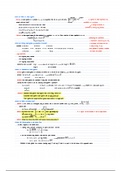
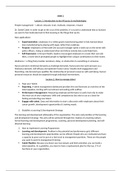
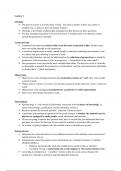
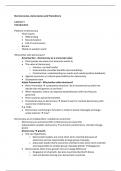
• Initial signal to "drive" cardiovascular system comes from higher brain centers due to centrally generated motor signaling, fine tuned by feedback from - heart mechanoreceptors - muscle chemo receptors - muscle mechanoreceptors -Baroreceptors • Muscle mechanoreceptors sensitive to muscle metabolites (K+, lactic acid) -Exercise pressor reflex • Muscle mechanoreceptors sensitive to force & speed of motor movement • Baroreceptors detect changes in blood pressure • sudden cardiac death during exercise is uncommon, 1/200,00 youth athletes - caused by abnormal, lethal heart rhythms, children due to genetic abnormalities of coronary arteries, cardiomyopathy, myocarditis, in adults, coronary artery diseases, cardiomyopathy • In prolonged exercise cardiac output is maintained -gradual decrease in stroke volume, due to dehydration& reduced plasma volume -gradual increase in heart rate during prolonged exercise (particularly in heat)= cardio muscular drift • Heavy intensity intermittent exercise near maximal HR values are possible • Recovery of heart rate and blood pressure between bouts depend on: (intermittent exercise) -fitness level -Temp & humidity -duration & intensity of exercise • arm vs leg exercise At the same oxygen uptake, arm work results in higher: Heart rate Due to higher sympathetic stimulation Blood pressure Due to vasoconstriction of large inactive muscle mass • With incremental Exercise heart rate & cardiac output - increases linearly w increasing work rate -reacts plateaus at 100% VO2 max Blood pressure -mean arterial pressure increases linearly -systolic Bp increase, diastolic remains constant • double product (rate-pressure product) • Increases linearly with exercise intensity Indicates the work of the heart double product=HR x systolic Bp • During recovery • Decrease in HR, SV, and cardiac output toward resting levels Depends on: Duration and intensity of exercise Training state of subject • At the onset of exercise • Rapid increase in HR, SV, cardiac output Plateau in submaximal (below lactate threshold) exercise • Elevated HR & BP in emotionally charged environment • due to increases in SNS activity - can increase pre-exercise HR & BP does not increase peak HR or BP during exercise • Cardiac pressure & ventricular volumes change dramatically during exercise • SV is elevated because of increased EDV, decreased ESV - time reductions in the cardiac cycle mean that intraventricular contractions are faster - Intraventricular pressures are also increased due to elevated afterload during exercise • Changes in the heart rate & blood pressure depend on • type, intensity & duration of exercise - arm versus leg exercise environmental condition - hot/humid vs cool • Vasoactive regulators & factors • Regulators- Nitric oxide, prostaglandins, ATP, adenosine, endothelial derived hyperpolarizing factor, etc Factors- Produced in endothelium or arteries - promotes smooth muscle relaxation -results in vasodilation & increased blood flow • Vasoconstriction to visceral organs & inactive tissues - SNS vasoconstriction -Blood flow reduced to 20% to 50 % of resting values • Skeletal Muscle vasodilation • Autoregulation Blood flow increased to meet metabolic demands of tissue Due to changes in O2 tension, CO2 tension, nitric oxide, potassium, adenosine, and pH • Redistribution of blood flow during exercise • Increased blood flow to working skeletal muscle At rest, 15-20% of cardiac output to muscle Increases to 80-85% during maximal exercise Decreased blood flow to less active organs Liver, kidneys, GI tract Redistribution depends on metabolic rate Exercise intensity • Fick equation • Relationship between cardiac output (Q), a-vO2 difference, and VO2 VO2 = Q x a-vO2 difference • Stroke volume reacts a plateau at 10% to 60% VO2 max in untrained subjects • at high HR filling time is decreased -decrease in EDV and SV Stroke volume does not plateau in trained subjects - improved ventricular filling -increase in EDV & SV at high HR • Cardiac output increases during exercise due to • increased HR: linear increase to MAX - for adults: MAX HR = 220-age (yrs) - for children: MAX HR = 208 - 0.7 x age (yrs) B) increased SV - increase then plateau @ 40-60% VO2 MAX -NO plateau in highly trained subjects • Oxygen delivery during exercise - Oxygen demand by muscles during exercise is 15-25x greater than at rest - Increased O2 delivery accomplished by: - Increased cardiac output - Redistribution of blood flow - From inactive organs to working skeletal muscle • Sources of vascular resilience (hemodynamics) • -MAP decreases throughout the systemic circulation - largest BP drop occurs across the arteries - arteries are called " resistance vessels" • Resistance depends on (hemodynamics) • Length of the vessel Viscosity of the blood Radius of the vessel (greatest influence) resistance= (length x viscosity)/ radius • Blood flow • -Directly proportional to the pressure difference between the two ends of the system -Inversely proportional to resistance blood flow = pressure/ resistance pressure- proportional tp the difference between MAP & right arterial blood pressure • Cells • Red blood cells -contain hemoglobin to carry oxygen white blood cells - important in preventing infection platelets - important in blood clotting hematocrit- % of blood composed of cells 42% • Plasma • Liquid part of blood -contains, ions, proteins, hormones • Venous return increased by • Venoconstriction - Via SNS Skeletal muscle pump - Rhythmic skeletal muscle contractions force blood in the extremities toward the heart - One-way valves in veins prevent backflow of blood Respiratory pump - Changes in thoracic pressure pull blood toward heart • Frank-Starling Mechanism ( end diastolic volume) • Greater EDV results in a more forceful contraction Due to stretch of ventricles Dependent on venous return • Regulation of stroke volume - end-diastolic volume (EDV) • volume of blood in the ventricles at the end of diastole *("preload") - average aortic blood pressure • pressure the heart must pump against to eject blood *("afterload") • mean arterial pressure - strength of the ventricular contraction *(contractility) • enhanced by: • circulating epinephrine and norepinephrine • direct sympathetic stimulation of heart • heart variability • The time between heart beats - standard deviation of the R-R interval Balance between SNS & PNS - sympathovagal balance Wide variation in HRV is considered "Healthy" Low HRV is a predictor of cardiovascular morbitlity& mortality w patients w existing cardiovascular disease • Beta- adrenergic drugs (beta blockers) • -compete w epinephrine & norepinephrine for beta adrenergic receptors in the heart -reduce heart rate &contractility -lower the myocardial oxygen demand prescribed for patients w coronary disease & hypertension -will lower heart rate during submaximal & maximal exercise • Low resting HR due to parasympathetic tone and increase in HR at the onset of exercise • Initial increase due to parasympathetic withdrawal - up tp approximately 100 beats/min - later increase due to increased SNS flow • sympathetic nervous system - via cardiac accelerator nerves - increases HR by stimulating SA & AV node • parasympathetic nervous system • -via vagus nerve -slows HR by inhibiting SA & AV node • Cardiac output • the amount of blood pumped by the heart per minute - product of heart rate & stroke volume heart rate= beats per min stroke volume= amount of blood ejected in each beat Q= HRxSV depends on training and sex • ST segment depression • myocardial ischemia • Atherosclerosis • Fatty Plaque that narrows coronary artery walls - reduces blood flow to myocardium -myocardial ischemia • The relationship between intraventricular pressure & ECG link • electrical activity to mechanical pumping of blood -QRS occurs at the beginning of systole -The T wave occurs at the beginning of diastole * heart sounds reflect on changes in intraventricular pressure & opening/closing of the heart valves • Electrocardiogram (ECG) • Pwave- atrial depolarization QRS complex- ventricular depolarization & atrial repolarization Twave- ventricular repolarization ECG abnormalities may indicate coronary heart disease - ST segment depression can indicated myocardial ischemia • Contraction of the heart depends on electrical stimulation of the myocardial form • SA node- pacemaker, initiates depolarization AV node- passes depolarization to ventricles - brief delay to allow ventricular filling Bundle Branches- Connect atria to left & right ventricles Purkinjie fibers-spread wave of depolarization throughout ventricles • Factors that influence arterial blood pressure • MAP- Cardiac output x total vascular resistance short term regulation- sympathetic nervous system - barorecptors maorta & carotid arteires increase in bp= decrease SNS activity decrease in Bp= increased SNS activity long term regulation- kidneys via control of blood volume • Hypertension • blood pressure above 130/80 mmHg Primary hypertension - caused multifactorial -90-95% of hypertension Secondary hypertension - some other disease present risk factor for - left ventricular hypertrophy, atherosclerosis & heart attacks, kidney damage, stroke • Mean Arterial Pressure (MAP) • average pressure in the arteries - MAP= DBR + 0.33(SBP-DBP) • Pulse pressure • difference between systolic & diastolic • Diastolic pressure • pressure in the arteries during cardiac relaxation • Systolic pressure • Blood pressure in the arteries during contraction of the ventricles. • Pressure changes during cardiac cycle in systolic • -pressure in ventricles rises - blood ejected in pulmonary & systemic circulation - semilunar valves open when ventricular P aortic P • Pressure changes during the cardiac cycle in diastole • -pressure in ventricles is low -filling w blood from atria - AV valves open when ventricular P atrial P • Heart sounds • Lub-dub. 1st- AV valves close. 2nd- aortic and pulmonary valves close • Systole - first sounds - contraction phase - ejection of blood - approximately 2/3 blood is ejected from ventricles per beat - at rest systolic time is shorter than diastolic time - both are shorter during exercise • Diastole - relaxation phase - filling w blood (second sound) - at rest diastolic time is longer than systolic time - during exercise both systole & diastole are shorter • Exercise reduced the amount of myocardial damage from heart attack • -improves in hearts antioxidant capacity -improved function of ATP-sensitive potassium channels • Regular exercise is cardioprotective - reduces incidence of heart attacks - improves survival from heart attack • endocardium • endothelial tissue & a thick subendothelial layer of elastic & collagenous fibers - serves as protective inner lining of the chambers & valves • Myocardium • Cardiac muscle tissue separated by connective tissues and including blood capillaries, lymph capillaries, and nerve fibers Contracts to pump blood from the heart chambers • Epicardium • serous membrane including, blood, capillaries, lymph capillaries, & nerve fibers - serves as lubricative outer covering • myocardial infarction (MI) • blockage in coronary blood flow results in cell damage/death - exercise training protects against heart damage during MI • The myocardium receives blood supply via • coronary arteries -high demand for oxygen & nutrients • the heart wall is made up of • epicardium, myocardium, endocardium • systemic circuit • left side of heart; supplies oxygenated blood to all tissues of the body via arteries and returns deoxygenated blood to the right side of the heart via veins • Pulmonary circuit • Right side of the heart Pumps deoxygenated blood to the lungs via pulmonary arteries Returns oxygenated blood to the left side of the heart via pulmonary veins • veins & venules • carry blood toward the heart • capillaries • Exchange of O2, CO2, and nutrients with tissues • arteries and arterioles • carry blood away from the heart • heart • creates pressure to pump blood • organization of the circulatory system • heart, capillaries, veins & venules, arteries & arterioles • works w the pulmonary system • cardiopulmonary or cardio respiratory system • Two major adjustments of blood flow during exercise • increased cardiac output redistribution of blood flow from inactive organs to active muscle • Purposes of the cardio respiratory system • Transport O2 and nutrients to tissues Removal of CO2 wastes from tissues Regulation of body temperature • energy for muscle contraction • -ATP required for muscle contraction -release energy from ATP hydrolysis provides energy required for power stroke - myosin ATPase breaks down ATP as fiber contracts - ATP, ADP+Pi • Sarcolemma • muscle cell membrane • Basement membrane • just below endomysium • sliding filament of muscle contraction • also called the swinging lever-arm model -muscle shortening occurs due to the movement of actin filament over the myosin filament -formations of cross-bridges between actin & myosin filaments- power stroke * reduction in the distance between 2 lines of the sarcomere • Neuromuscular Junction • -junction between neuron & muscle fiber motor unit- motor neuron & all fibers it innervates - Motor end plate= pocket formed around motor neuron by sarcolemma Neuromuscular (synaptic) cleft - short gap between neuron & muscle fiber Acetylcholine is released from the motor neuron - causes an endplate potential (EPP) - Depolarization of muscle fiber • trasverse tubules • extend from sarcolemma to sarcoplasmic reticulum • Sarcoplasmic reticulum • Storage sites for calcium Terminal cisternae • Sacromere • Includes Z line, M line, H zone, A band, I band • endomysium • Surrounds individual muscle fibers • human body contains over • 600 skeletal muscles 40-50% of total body weight • Perimysium • -surrounds bundles of muscle fibers -fascicles • Epimysium • surrounds entire muscle • connective tissue • Epimysium, perimysium, endomysium, basement membrane, sarcolemma • extendors • increase angle of joint • flexors • decrease joint angle • Functions of skeletal muscle • -Force production for locomotion & breathing - force production for postural support - heat production during cold stress • Mechanisms responsible for muscle fatigue (1 to 10 min) (very heavy) • -causes of fatigue are multifunctional -range from decreased late release from SR to accommodation of metabolites that inhibit myofilament sensitivity to CA+2 binding & contraction -Both Pi & radicals modify cross bridge head & reduces # of cross bridges bound to actin • Causes of fatigue • decreased Ca+2 release from SR accumulation of metabolites that inhibit myofilament sensitivity to CA+2 • Mechanisms of fatigue during moderate intensity exercise ( 60 min) • -increased radical production & glycogen depletion - accommodation of Pi and H+ in muscles do not contribute to fatigue during moderate-intensity exercise - radical accommodation in muscle fibers modifies cross bridge head & reduces # of cross- bridge burned to actin (force production reduced) - depletion of muscle glycogen reduces TCA cycle intermediates & decreases ATP production via oxidative phosphorylation • Muscle cramps • spasmodic, involuntary muscle contractions often associated with prolonged, high-intensity exercise - most exercise-associated cramps not caused by an electrolyte or dehydration balance - due to hyperactive motor neurons in spinal cords • Rigorous exercise can alter • muscle spindle & Golgi tendon organ function resulting in increased excitatory activity of muscle spindles & reduced inhibitory effect of the Golgi tendon organ - passive stretching often relives this type of muscle cramp • Dehydration & electrolyte imbalance theory • Exercise induced dehydration & electrolyte loss -electrolyte imbalance - interstitial space - discharge of acetylcholine at motor endplate -spasmodic involuntary muscle contracting • Contractile properties • maximal specific force production - speed of contraction ( v max) -regulated by myosin ATPase activiity Maximal power output= force x shortening velocity - high force, fast fibers produce high power output - Fatigue resistance - muscle fiber efficiency - lower amount of ATP used to generate force • Determination of Muscle fibers types (muscle biopsy) • -small piece of muscle removed -ma not be representative of entire body • Determination of Muscle fiber types ( Immunohistochemical staning) • -selective antibody binds to unique myosin isoforms -fiber types differentiated by differences in color • Determination of muscle fiver types ( gel electrophoresis) • Identify myosin isoforms by separating myosin isoforms on gel - type 1, 2a, 2x (2b) • Type 2x characteristics ( fast fiber) • # of mitochondria- low resistance to fatigue - low predominant energy - anaerobic system ATPase activity- highest Vmax ( speed of shortening - highest efficiency- low specific tension- high • Type 2a characteristics (fast fiber) • # of mitochondria - high moderate resistance to fatigue- high/moderate predominate energy system- combination ATPase activity- high Vmax (speed of shortening)- high efficiency- high specific tension- high • Myofibrils • Contain contractile proteins Actin (thin filament) Myosin (thick filament) • Satellite cells • -key role in muscle growth & repair -during muscle growth, satellite cells increase # of nuclei in mature muscle fibers - during exercise satellite cells become active & divide thus increasing # of muscle nuclei (myonuclei) * more nuclei allow for greater protein synthesis • Type 1 characteristics • #of mitochondria- high resistance fatigue- high Predominant energy system- Aerobic ATPase activity- low Vmax (speed of shortening)- low Efficiency- High Specific tension- moderate • Typical muscle fiber composition of athletes & nonathletes • distance runners 80% slow fibers (type1) Track sprinters 30% slow fibers (type 1) None athletes 47-53% slow fibers (type 1) • Type of exercise (Dynamic) • Muscle action- concentration eccentric muscle length change- decreases increases • Types of exercise (static) • muscle action- Isometric muscle length change- no change • Aging associated with • -loss of skeletal muscle mass -10% muscle mass lost between age 25-50 years -additional 40% lost between age 50-80 years -aging results in loss of fast fibers & gain in slow fibers -Resistance training can delay age related muscle loss • Age related muscle loss is called • sarcopenia • contractile history of muscle ( force regulation in muscle) • -rested muscle exposed to fatiguing exercise -warmup exercise results in " post activation potentiation" • firing rate of motor neurons (force regulation in muscle) • -Frequency stimulation -simple twitch -summation -tetanus • Muscle length (force regulation in muscle) • -" ideal length for force generation - increased cross-bridge formation • # and types of motor units recruited ( force regulation in muscle) • -more motor units= greater force -fast motor units= greater force • Speed of muscle contraction & relaxation • -speed of shortening is greater in fast fibers -SR releases CA++ at a fast fibers -higher ATPase activity • Muscle twitch (contracting resulting from single stimulus) • -After stimulation- short latent period exist-corresponds to depolarization of muscle fiber Contraction- calcium released from SR -tension is developed due to crossbridge binding Relaxation-reuptake of calcium into SR - cross bridge detachment • At any absolute force exert by the muscle, the speed of movement is • greater in muscles w higher percentage of fast-twitch fibers -maximum velocity of shortening is greatest at the lowest force -True for both slow & fast fibers • At any given velocity of movement, the peak power is generated • force is greater in muscles that contain a high % of fast-twitch fibers - peak power increases w velocity up to movement speed of 200-300 degrees, second -1 * power decreases at higher velocities because force decreases w increasing moment speed • Muscle fatigue • decline in muscle power output decrease in force generation at cross bridge level decrease in shortening velocity - dependent upon exercise intensity • Process of excitation contraction coupling • action potential travels down transverse tubules & causes release of Ca++ from SR - Ca++ binds to troponin & causes position change in tropomyosin exposing myosin binding sites on actin -strong binding state formed between actin & myosin -contraction occurs (that is, power strike) • Sources of ATP • phosphocreatine, glycolysis, oxidative phosphorylation • Ecitation-Contraction Coupling • depolarization of motor end plate (excitation) is coupled to muscular contraction • Steps leading to E-C Coupling • -motor neuron depolarization -nerve action potential -end plate potential -muscle contraction • does pulmonary system limit exercise performance • low to moderate intensity exercise -pulmonary system not seen as a limitation maximal exercise -historically not thought to be a limitation in healthy individuals at sea level -new evidence that respiratory muscle fatigue does occur during high intensity exercise(90% VO2 max) -may be limiting in elite endurance athletes -40-50% experience hypoxemia • endurance training does not change lung structure • training-induced adaptation is not required for lung to maintain blood-gas homeostasis during exercise • Training Reduces the Ventilatory Response to Exercise • ventilation is lower during exercise following endurance training - exercise ventilation is 20-30% lower at same submaximal work rate Mechanism -change in aerobic capacity of locomotor muscles -result in loss production of H+ -less afferent feedback from muscle to stimulate breathing • heavy exercise • Alinear rise in VE Increasing blood H+ (from lactic acid) stimulates carotid bodies Also K+, body temperature, and blood catecholamines may contribute • Submaximal exercise • Primary drive: Higher brain centers (central command) "Fine tuned" by: Humoral chemoreceptors Neural feedback from muscle • Neural input • comes from motor complex & skeletal muscle receptors muscle mechanoreceptors sensitive to K+ & H+ concentrations - important for regulating breathing during submaximal steady state exercise • Humoral (blood-borne) chemoreceptors • Central chemoreceptors: - Located in the medulla - Sensitive to PCO2 and H+ concentration in cerebrospinal fluid Peripheral chemoreceptors: - Aortic and carotid bodies - Sensitive to PO2, PCO2, H+, and K+ in blood • Control of Ventilation at Rest (experation) • Retrotrapezoid nucleus, parafacial respiratory group (also located in medulla oblongata controls active expiration) -Input to the respiratory control center from both numerical chemoreceptors& neural sources (higher brain centers & afferent pathways ex: muscle mechanoreceptors & chemoreceptors • Control ventilation at rest ( inspiration) • respiratory control center is located in the medullar oblongata - output from the respiratory control center regulates motor neurons in the spinal cord that control respiratory muscles primarily neural parameter responsible for inspiration is the pre botzinger complex located in medulla oblongata • Exercise-related transient abdominal pain (aka stitch) • ETAP can occur during many sports activities- running, swimming cycling. etc -Prevalence of ETAP is high "70% of athletes experience ETAP" - mechanics of it unclear but may be irritation of parietal peritoneum abdominal cavity -avoid large amounts of food & water prior to exercise • sex differences exist in work of breathing during exercise • -when matched for body weight women have smaller air ways than men - smaller airways results in high resistance to air flow & limitations to maximal ventricularly capacity during very heavy & server exercise -increased airway resistance in women results in greater work o breathing during exercise
Written for
- Institution
-
Rasmussen College
Document information
- Uploaded on
- October 16, 2024
- Number of pages
- 27
- Written in
- 2024/2025
- Type
- Exam (elaborations)
- Contains
- Questions & answers