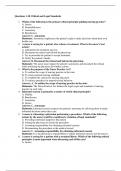
Questions 1-10: Ethical and Legal Standards
1. Which of the following is the primary ethical principle guiding nursing practice?
A. Justice
B. Nonmaleficence
C. Autonomy
D. Beneficence
Answer: C. Autonomy
Rationale: Autonomy emphasizes the patient's right to make decisions about their own
health care.
2. A nurse is caring for a patient who refuses a treatment. What is the nurse’s best
action?
A. Administer the treatment anyway.
B. Document the refusal and inform the physician.
C. Try to persuade the patient to accept treatment.
D. Notify the patient's family.
Answer: B. Document the refusal and inform the physician.
Rationale: The nurse must respect the patient’s autonomy and document the refusal
while notifying the physician for further actions.
3. What is the purpose of the Nurse Practice Act?
A. To outline the scope of nursing practice in the state
B. To create national nursing standards
C. To establish the criteria for nursing education
D. To enforce penalties for unprofessional behavior
Answer: A. To outline the scope of nursing practice in the state
Rationale: The Nurse Practice Act defines the legal scope and standards of nursing
practice in each state.
4. Informed consent is primarily a matter of which ethical principle?
A. Fidelity
B. Beneficence
C. Autonomy
D. Justice
Answer: C. Autonomy
Rationale: Informed consent respects the patient's autonomy by allowing them to make
informed decisions about their care.
5. A nurse is witnessing a physician performing a procedure. Which of the following
actions by the nurse would be considered a violation of legal standards?
A. Providing emotional support to the patient
B. Asking the physician to clarify the procedure
C. Assuming responsibility for obtaining informed consent
D. Documenting the procedure in the medical record
Answer: C. Assuming responsibility for obtaining informed consent
Rationale: It is the physician's responsibility to obtain informed consent, not the nurse's.
6. A nurse is caring for a patient with a terminal illness. Which of the following ethical
principles is most important when discussing end-of-life care?
A. Justice
, B. Fidelity
C. Beneficence
D. Nonmaleficence
Answer: C. Beneficence
Rationale: Beneficence involves acting in the best interest of the patient, especially in
end-of-life situations.
7. Which of the following statements best describes the concept of advocacy in
nursing?
A. Supporting the physician's decisions
B. Ensuring patient confidentiality
C. Representing the patient’s needs and preferences
D. Managing the patient’s care plan
Answer: C. Representing the patient’s needs and preferences
Rationale: Advocacy involves acting on behalf of the patient to ensure their needs and
preferences are addressed.
8. When a nurse is faced with an ethical dilemma, what is the first step in the decision-
making process?
A. Identify the options available
B. Gather relevant information
C. Determine the values at stake
D. Consider the outcomes of each option
Answer: B. Gather relevant information
Rationale: Gathering relevant information is essential to understand the context of the
ethical dilemma.
9. A nurse finds out that a colleague is diverting narcotics for personal use. What is the
nurse's best course of action?
A. Confront the colleague directly
B. Report the colleague to the supervisor
C. Ignore the situation
D. Counsel the colleague privately
Answer: B. Report the colleague to the supervisor
Rationale: The nurse has a professional obligation to report unethical behavior to ensure
patient safety.
10. What does the term "scope of practice" refer to in nursing?
A. The range of medical treatments a nurse can perform
B. The legal boundaries within which a nurse operates
C. The educational requirements for nursing practice
D. The ethical responsibilities of a nurse
Answer: B. The legal boundaries within which a nurse operates
Rationale: The scope of practice defines the actions and responsibilities a nurse is legally
permitted to perform.
Questions 11-20: Professional Behavior and Accountability
11. Which of the following behaviors is considered unprofessional in nursing?
A. Maintaining patient confidentiality
1. Which of the following is the primary ethical principle guiding nursing practice?
A. Justice
B. Nonmaleficence
C. Autonomy
D. Beneficence
Answer: C. Autonomy
Rationale: Autonomy emphasizes the patient's right to make decisions about their own
health care.
2. A nurse is caring for a patient who refuses a treatment. What is the nurse’s best
action?
A. Administer the treatment anyway.
B. Document the refusal and inform the physician.
C. Try to persuade the patient to accept treatment.
D. Notify the patient's family.
Answer: B. Document the refusal and inform the physician.
Rationale: The nurse must respect the patient’s autonomy and document the refusal
while notifying the physician for further actions.
3. What is the purpose of the Nurse Practice Act?
A. To outline the scope of nursing practice in the state
B. To create national nursing standards
C. To establish the criteria for nursing education
D. To enforce penalties for unprofessional behavior
Answer: A. To outline the scope of nursing practice in the state
Rationale: The Nurse Practice Act defines the legal scope and standards of nursing
practice in each state.
4. Informed consent is primarily a matter of which ethical principle?
A. Fidelity
B. Beneficence
C. Autonomy
D. Justice
Answer: C. Autonomy
Rationale: Informed consent respects the patient's autonomy by allowing them to make
informed decisions about their care.
5. A nurse is witnessing a physician performing a procedure. Which of the following
actions by the nurse would be considered a violation of legal standards?
A. Providing emotional support to the patient
B. Asking the physician to clarify the procedure
C. Assuming responsibility for obtaining informed consent
D. Documenting the procedure in the medical record
Answer: C. Assuming responsibility for obtaining informed consent
Rationale: It is the physician's responsibility to obtain informed consent, not the nurse's.
6. A nurse is caring for a patient with a terminal illness. Which of the following ethical
principles is most important when discussing end-of-life care?
A. Justice
, B. Fidelity
C. Beneficence
D. Nonmaleficence
Answer: C. Beneficence
Rationale: Beneficence involves acting in the best interest of the patient, especially in
end-of-life situations.
7. Which of the following statements best describes the concept of advocacy in
nursing?
A. Supporting the physician's decisions
B. Ensuring patient confidentiality
C. Representing the patient’s needs and preferences
D. Managing the patient’s care plan
Answer: C. Representing the patient’s needs and preferences
Rationale: Advocacy involves acting on behalf of the patient to ensure their needs and
preferences are addressed.
8. When a nurse is faced with an ethical dilemma, what is the first step in the decision-
making process?
A. Identify the options available
B. Gather relevant information
C. Determine the values at stake
D. Consider the outcomes of each option
Answer: B. Gather relevant information
Rationale: Gathering relevant information is essential to understand the context of the
ethical dilemma.
9. A nurse finds out that a colleague is diverting narcotics for personal use. What is the
nurse's best course of action?
A. Confront the colleague directly
B. Report the colleague to the supervisor
C. Ignore the situation
D. Counsel the colleague privately
Answer: B. Report the colleague to the supervisor
Rationale: The nurse has a professional obligation to report unethical behavior to ensure
patient safety.
10. What does the term "scope of practice" refer to in nursing?
A. The range of medical treatments a nurse can perform
B. The legal boundaries within which a nurse operates
C. The educational requirements for nursing practice
D. The ethical responsibilities of a nurse
Answer: B. The legal boundaries within which a nurse operates
Rationale: The scope of practice defines the actions and responsibilities a nurse is legally
permitted to perform.
Questions 11-20: Professional Behavior and Accountability
11. Which of the following behaviors is considered unprofessional in nursing?
A. Maintaining patient confidentiality