ANOREXIA CLINICAL REASONING CASE STUDY/Mandy
White, 16 years old-scored A+-
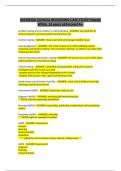
problem-solving and its relation to critical thinking - ANSWER: you need this to
achieve desired outcomes(results) and minimize risks
decision making - ANSWER: -how to prevent and manage mobility issues
clinical judgement - ANSWER: -the result/ outcome of critical thinking, clinical
reasoning, and decision making - the conclusion, decision, or opinion you make after
analyzing information
Clinical reasoning and decision making - ANSWER: the process you use to think about
patient problems in the clinical setting
critical thinking - ANSWER: -controlled and purposeful, using well reasoned
strategies to get the results you need
-complex process that changes depending on the context
-thinking with purpose with a goal of producing results
Explain what critical thinkers look like - ANSWER: -most critical thinkers have high
foreheads and furrowed brows
Assessment (ADPIE) - ANSWER: detecting/ noticing cues
Diagnosis (ADPIE) - ANSWER: analyzing and interpreting data
**NCLEX calls this generating hypotheses
Planning (ADPIE) - ANSWER: responding, predicting complications and considering
actions
Evaluating (ADIPE) - ANSWER: reflecting
***ADPIE might be repeated if needed
AAPIE - ANSWER: Assessment
Analysis
Planning
Implementation
Evaluation
**** calling the second phase analysis instead of diagnosing***
ADPIE - ANSWER: Assessment
Diagnosis
Planning
Implementation
, Evaluation
communication and how it relates to critical thinking - ANSWER: resolving conflicts,
collaborating with others, and engaging patients is important
Explain how to create a concept map - ANSWER: pick a topic, do a brainstorm, draw
map, connect the concepts and anything missing
Describe critical thinking as it relates to the scientific method - ANSWER: -you are
continuously collecting data to gain an understanding and check for changes in
circumstances
five key strategies to becoming a critical thinker - ANSWER: -gain insight and self
awareness
-build trust in relationships by adopting a code of conduct
-be committed to developing knowledge attitude and skills needed
-used evidence based references
-reflect on your reasoning and ask for feedback
Explain why having self-efficacy is central to developing critical thinking - ANSWER: -
having confidence in your ability to accomplish all that you need to achieve your
goals
Identify strategies to make the most of emotional intelligence - ANSWER: -recognize
your emotions and those of others
-discriminate between different feelings and label them appropriately
- use emotional information to guide thinking and behavior
-manage/ adjust your emotion and behavior to your goals
-connect with emotions
-accept true feelings
Explain why building trust in relationships and following a code of conduct are key to
promoting critical thinking - ANSWER: without trust you are more likely to have
superficial rather than meaningful discussions because people are afraid to speak
their mind
Name at least three habits that promote critical thinking - ANSWER: - affirm your
path
-become a systems thinker
-communicate effectively
three habits that impede critical thinking - ANSWER: - mine is better
-self focusing
-stereotyping
-need to be right
White, 16 years old-scored A+-
problem-solving and its relation to critical thinking - ANSWER: you need this to
achieve desired outcomes(results) and minimize risks
decision making - ANSWER: -how to prevent and manage mobility issues
clinical judgement - ANSWER: -the result/ outcome of critical thinking, clinical
reasoning, and decision making - the conclusion, decision, or opinion you make after
analyzing information
Clinical reasoning and decision making - ANSWER: the process you use to think about
patient problems in the clinical setting
critical thinking - ANSWER: -controlled and purposeful, using well reasoned
strategies to get the results you need
-complex process that changes depending on the context
-thinking with purpose with a goal of producing results
Explain what critical thinkers look like - ANSWER: -most critical thinkers have high
foreheads and furrowed brows
Assessment (ADPIE) - ANSWER: detecting/ noticing cues
Diagnosis (ADPIE) - ANSWER: analyzing and interpreting data
**NCLEX calls this generating hypotheses
Planning (ADPIE) - ANSWER: responding, predicting complications and considering
actions
Evaluating (ADIPE) - ANSWER: reflecting
***ADPIE might be repeated if needed
AAPIE - ANSWER: Assessment
Analysis
Planning
Implementation
Evaluation
**** calling the second phase analysis instead of diagnosing***
ADPIE - ANSWER: Assessment
Diagnosis
Planning
Implementation
, Evaluation
communication and how it relates to critical thinking - ANSWER: resolving conflicts,
collaborating with others, and engaging patients is important
Explain how to create a concept map - ANSWER: pick a topic, do a brainstorm, draw
map, connect the concepts and anything missing
Describe critical thinking as it relates to the scientific method - ANSWER: -you are
continuously collecting data to gain an understanding and check for changes in
circumstances
five key strategies to becoming a critical thinker - ANSWER: -gain insight and self
awareness
-build trust in relationships by adopting a code of conduct
-be committed to developing knowledge attitude and skills needed
-used evidence based references
-reflect on your reasoning and ask for feedback
Explain why having self-efficacy is central to developing critical thinking - ANSWER: -
having confidence in your ability to accomplish all that you need to achieve your
goals
Identify strategies to make the most of emotional intelligence - ANSWER: -recognize
your emotions and those of others
-discriminate between different feelings and label them appropriately
- use emotional information to guide thinking and behavior
-manage/ adjust your emotion and behavior to your goals
-connect with emotions
-accept true feelings
Explain why building trust in relationships and following a code of conduct are key to
promoting critical thinking - ANSWER: without trust you are more likely to have
superficial rather than meaningful discussions because people are afraid to speak
their mind
Name at least three habits that promote critical thinking - ANSWER: - affirm your
path
-become a systems thinker
-communicate effectively
three habits that impede critical thinking - ANSWER: - mine is better
-self focusing
-stereotyping
-need to be right