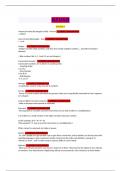
WGU C468 INFORMATION MANAGEMENT AND APPLICATION
OF TECHNOLOGY FINAL EXAM
Information literacy - ANSWER: Defined as the ability to recognize when information
is needed as well as the skills to find, evaluate and use needed information
effectively
Information - ANSWER: Term used to describe data that has been interpreted
Information science - ANSWER: Focus on how to gather, process and transform
information into knowledge. It also incorporates features from 5 other sciences
-communication science
-computer science
-social science
-library science
-cognitive science
Information systems - ANSWER: Using the EHR to document care of a patient with a
fractured femur is an example of using the EHR in which way
Simulation Technology Improving patient outcomes. - ANSWER: Allowing them
hands-on practice and immediate feedback of the skill being learned
Knowledge worker - ANSWER: Nurses in this type of role
-are continuous learners
-use technology to support and inform nursing practice
-generate knowledge as a product
Expert/Experienced Nurse - ANSWER: Expected to fully integrate informatics
throughout the course of his/her practice, not just for basic data entry and retrieval.
They also know how to pull trends out of data
Nursing informatics - ANSWER: Nursing informatics as a specialty does have its own
National certification exam
The use of technology and information to help support all aspects of nursing practice
Clinical practice guidelines - ANSWER: Clinical practice guidelines can allow for the
creation of nursing policies. True rooted in evidenced based research
Information technologies, not systems but functions within a system - ANSWER:
CPOE, bar code medication administration, and clinical decision support are all
examples of what
, Informatics affecting Nursing Practice - ANSWER: Clinical pathways and computer
generated care plans are examples of how informatics can affect nursing practice
True, examples of clinical decision support
The foundation of knowledge model - ANSWER: The basis for which knowledge is
used to meet the needs of the healthcare delivery system
It is derived from its 3 key elements of knowledge acquisition, knowledge processing
and knowledge dissemination
Data (not information until it has been analyzed) - ANSWER: A patients height,
weight, code status, and date of birth are all examples of what
Strategic planning, long-range - ANSWER: The development of a comprehensive long
range plan for guiding the activities and operations of an organization
They will need to be trained on the system - ANSWER: Why is it not important that
selection committee board members understand software and electronic processes
Strategic Planning - ANSWER: Strategic planning is not driven by short term goals as
Strategic Planning is a LONG TERM GOAL
Needs assessment - ANSWER: During which phase of the information life cycle
should the "musts" and "wants" be determined
Information Life Cycle Phases - ANSWER: 1. Needs assessment phase
2. System selection phase
3. System implementation phase
4. Maintenance phase
Project scope - ANSWER: Term that defines the size and details of a collaborative
effort
Project Implementation Team Responsibilities - ANSWER: Execution of system
changes, active involvement in user participation, knowledge of current workflows
System Implementation Role - ANSWER: Go-live planning, applying system changes
as needed, end-user training
Continuous - ANSWER: Term that best describes the life cycle of an information
system
EHR Essential Components - ANSWER: Evidence-based decision support, assessment
findings, vital signs, demographic data
EHR Function - ANSWER: Bar-code medication administration
OF TECHNOLOGY FINAL EXAM
Information literacy - ANSWER: Defined as the ability to recognize when information
is needed as well as the skills to find, evaluate and use needed information
effectively
Information - ANSWER: Term used to describe data that has been interpreted
Information science - ANSWER: Focus on how to gather, process and transform
information into knowledge. It also incorporates features from 5 other sciences
-communication science
-computer science
-social science
-library science
-cognitive science
Information systems - ANSWER: Using the EHR to document care of a patient with a
fractured femur is an example of using the EHR in which way
Simulation Technology Improving patient outcomes. - ANSWER: Allowing them
hands-on practice and immediate feedback of the skill being learned
Knowledge worker - ANSWER: Nurses in this type of role
-are continuous learners
-use technology to support and inform nursing practice
-generate knowledge as a product
Expert/Experienced Nurse - ANSWER: Expected to fully integrate informatics
throughout the course of his/her practice, not just for basic data entry and retrieval.
They also know how to pull trends out of data
Nursing informatics - ANSWER: Nursing informatics as a specialty does have its own
National certification exam
The use of technology and information to help support all aspects of nursing practice
Clinical practice guidelines - ANSWER: Clinical practice guidelines can allow for the
creation of nursing policies. True rooted in evidenced based research
Information technologies, not systems but functions within a system - ANSWER:
CPOE, bar code medication administration, and clinical decision support are all
examples of what
, Informatics affecting Nursing Practice - ANSWER: Clinical pathways and computer
generated care plans are examples of how informatics can affect nursing practice
True, examples of clinical decision support
The foundation of knowledge model - ANSWER: The basis for which knowledge is
used to meet the needs of the healthcare delivery system
It is derived from its 3 key elements of knowledge acquisition, knowledge processing
and knowledge dissemination
Data (not information until it has been analyzed) - ANSWER: A patients height,
weight, code status, and date of birth are all examples of what
Strategic planning, long-range - ANSWER: The development of a comprehensive long
range plan for guiding the activities and operations of an organization
They will need to be trained on the system - ANSWER: Why is it not important that
selection committee board members understand software and electronic processes
Strategic Planning - ANSWER: Strategic planning is not driven by short term goals as
Strategic Planning is a LONG TERM GOAL
Needs assessment - ANSWER: During which phase of the information life cycle
should the "musts" and "wants" be determined
Information Life Cycle Phases - ANSWER: 1. Needs assessment phase
2. System selection phase
3. System implementation phase
4. Maintenance phase
Project scope - ANSWER: Term that defines the size and details of a collaborative
effort
Project Implementation Team Responsibilities - ANSWER: Execution of system
changes, active involvement in user participation, knowledge of current workflows
System Implementation Role - ANSWER: Go-live planning, applying system changes
as needed, end-user training
Continuous - ANSWER: Term that best describes the life cycle of an information
system
EHR Essential Components - ANSWER: Evidence-based decision support, assessment
findings, vital signs, demographic data
EHR Function - ANSWER: Bar-code medication administration