TAM2601 EXAM OCTOBER 2024
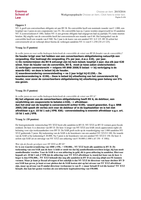
Question 1
Read the extract below and answer the following questions:
When educators get together to talk about their work, the conversation inevitably comes
round to the learners they are teaching – their habits, the challenges they are facing and
the challenges they pose as learners. One of the best resources on this topic is the video
by Michael Wesch, a cultural anthropologist at Kansas State University. In this video
(Wesch 2007), Michael asked his students a simple question: “What is it like being a student
today?” Student responses – at once provocative and disturbing – say a lot about the
current generation of college and university students and how educators can create
environments that would help them learn. Students seem to feel that they are not being
taught in the ways best suited to help them achieve deep, meaningful learning. They seek
engagement and connection…”.
1.1 Mention and describe the five characteristics of the millennial generation
learners.
(Woods, Wilson & Walkovich 2011). P.g 153
Based on the extract and the characteristics provided earlier about millennials,
1. Family-Centric and Work-Life Balance Oriented:
Millennial learners value a balance between personal life and academic or
professional work. They are willing to sacrifice high achievement or recognition if it
means gaining more flexibility in their schedules. In an educational context, this
means they appreciate structures that allow them time for personal and family
commitments while still achieving their academic goals.
2. Tech-Savvy and Intuitive with Technology:
Millennials have grown up with advancing technology, making them naturally adept
at using digital tools for learning. They easily adapt to new technologies like
smartphones, virtual classrooms, and interactive software, which can be integrated
into their learning experiences to keep them engaged and effective.
Question 1
Read the extract below and answer the following questions:
When educators get together to talk about their work, the conversation inevitably comes
round to the learners they are teaching – their habits, the challenges they are facing and
the challenges they pose as learners. One of the best resources on this topic is the video
by Michael Wesch, a cultural anthropologist at Kansas State University. In this video
(Wesch 2007), Michael asked his students a simple question: “What is it like being a student
today?” Student responses – at once provocative and disturbing – say a lot about the
current generation of college and university students and how educators can create
environments that would help them learn. Students seem to feel that they are not being
taught in the ways best suited to help them achieve deep, meaningful learning. They seek
engagement and connection…”.
1.1 Mention and describe the five characteristics of the millennial generation
learners.
(Woods, Wilson & Walkovich 2011). P.g 153
Based on the extract and the characteristics provided earlier about millennials,
1. Family-Centric and Work-Life Balance Oriented:
Millennial learners value a balance between personal life and academic or
professional work. They are willing to sacrifice high achievement or recognition if it
means gaining more flexibility in their schedules. In an educational context, this
means they appreciate structures that allow them time for personal and family
commitments while still achieving their academic goals.
2. Tech-Savvy and Intuitive with Technology:
Millennials have grown up with advancing technology, making them naturally adept
at using digital tools for learning. They easily adapt to new technologies like
smartphones, virtual classrooms, and interactive software, which can be integrated
into their learning experiences to keep them engaged and effective.