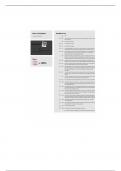
Date of Completion Feedback Log
Dec 16, 2021 8:03 PM 0:00 Patient
" 0:00 You checked scene safety. It was correct to check scene safety in order to maint
your own safety.
0:06 You introduced yourself.
Randy Adams " 0:41 You washed your hands.
" 0:51 You identified the patient.
Age: 28 years " 1:34 You asked the patient: Is it OK for your wife to be here, while we talk? It was corr
to let the patient give his consent for letting his wife be a part of the interview.
PTSD complicated by traumatic
Diagnosis:
brain injury " 1:46 The patient said: I'm not sure what I would do without Joy.\nYou answered: It sou
like your relationship with your wife is very important to you. \nYou used the
therapeutic technique of encouraging expression.
2:46 You asked the patient: I would like to ask you a series of questions about how yo
feeling to help me better understand how together we can start to plan your care
These are questions I ask all of the patients I see. May I ask you these questions
Score
" 3:07 The patient said: You'll have to ask Joy about answering the questions.\nYou
0 !!! answered: I'll have to ask Joy? \nYou used the therapeutic technique of restating
0
0
!!!
!!!
100% " 3:22 You said: I would like to ask you some questions related to your concussion that
help me to better assess you. May I ask you these questions?
" 3:42 The patient said: This is a lot. Why are you asking so many questions? I can't ans
this many questions.\nYou answered: It's important that I ask you these question
complete your assessment. \nYou used the therapeutic technique of giving
information.
" 4:52 You said: I would like to ask you a few questions and for you to draw a specific t
which will help me to better assess you. May I ask you these questions? The pat
said: Yes.
5:12 You said: I want you to draw a clock for me. First, put in all of the numbers where
go. Then, set the hands to ten past eleven. The patient said: Ok.
" 9:03 You completed the Mini-Cog© assessment tool. The tool is correctly completed.
" 10:19 You asked the patient: Can you tell me a little bit more about what's going on wit
you today? It was appropriate to ask the patient what was going on with him to g
an understanding of this.
" 10:31 The patient said: All of this won't change what happened.\nYou answered: What
your feelings about seeing a mental health provider? \nYou used the therapeutic
technique of encouraging expression.
" 10:38 You asked the patient: Over the past year, when did you feel your best? The patie
said: I felt my best when I was with my team in Afghanistan. It was appropriate to
the patient about when he felt his best.
" 11:23 You said: Is it okay if I ask a few questions related to any traumatic experiences y
may have encountered? There are four questions, and they will help to better cla
what might be causing some of your symptoms. The patient said: Ok. Go ahead
" 15:25 You completed the Primary Care PTSD screening assessment tool. The tool is
correctly completed.
" 18:22 You completed the ACE Part B. Symptom Check List (Lovell & Collins, 1998 JHT
assessment tool. The tool is correctly completed.
" 18:45 You educated about PTSD.
" 19:36 You called the provider. This is reasonable at this point.
It is important to assess how Randy is recovering from his head injury and to foc
Dec 16, 2021 8:03 PM 0:00 Patient
" 0:00 You checked scene safety. It was correct to check scene safety in order to maint
your own safety.
0:06 You introduced yourself.
Randy Adams " 0:41 You washed your hands.
" 0:51 You identified the patient.
Age: 28 years " 1:34 You asked the patient: Is it OK for your wife to be here, while we talk? It was corr
to let the patient give his consent for letting his wife be a part of the interview.
PTSD complicated by traumatic
Diagnosis:
brain injury " 1:46 The patient said: I'm not sure what I would do without Joy.\nYou answered: It sou
like your relationship with your wife is very important to you. \nYou used the
therapeutic technique of encouraging expression.
2:46 You asked the patient: I would like to ask you a series of questions about how yo
feeling to help me better understand how together we can start to plan your care
These are questions I ask all of the patients I see. May I ask you these questions
Score
" 3:07 The patient said: You'll have to ask Joy about answering the questions.\nYou
0 !!! answered: I'll have to ask Joy? \nYou used the therapeutic technique of restating
0
0
!!!
!!!
100% " 3:22 You said: I would like to ask you some questions related to your concussion that
help me to better assess you. May I ask you these questions?
" 3:42 The patient said: This is a lot. Why are you asking so many questions? I can't ans
this many questions.\nYou answered: It's important that I ask you these question
complete your assessment. \nYou used the therapeutic technique of giving
information.
" 4:52 You said: I would like to ask you a few questions and for you to draw a specific t
which will help me to better assess you. May I ask you these questions? The pat
said: Yes.
5:12 You said: I want you to draw a clock for me. First, put in all of the numbers where
go. Then, set the hands to ten past eleven. The patient said: Ok.
" 9:03 You completed the Mini-Cog© assessment tool. The tool is correctly completed.
" 10:19 You asked the patient: Can you tell me a little bit more about what's going on wit
you today? It was appropriate to ask the patient what was going on with him to g
an understanding of this.
" 10:31 The patient said: All of this won't change what happened.\nYou answered: What
your feelings about seeing a mental health provider? \nYou used the therapeutic
technique of encouraging expression.
" 10:38 You asked the patient: Over the past year, when did you feel your best? The patie
said: I felt my best when I was with my team in Afghanistan. It was appropriate to
the patient about when he felt his best.
" 11:23 You said: Is it okay if I ask a few questions related to any traumatic experiences y
may have encountered? There are four questions, and they will help to better cla
what might be causing some of your symptoms. The patient said: Ok. Go ahead
" 15:25 You completed the Primary Care PTSD screening assessment tool. The tool is
correctly completed.
" 18:22 You completed the ACE Part B. Symptom Check List (Lovell & Collins, 1998 JHT
assessment tool. The tool is correctly completed.
" 18:45 You educated about PTSD.
" 19:36 You called the provider. This is reasonable at this point.
It is important to assess how Randy is recovering from his head injury and to foc