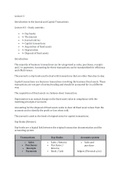
➔ Theory
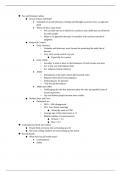
◆ A set of organizing principles to explain the complexities of relationships and families
◆ The big picture
➔ Symbolic Interactionism
◆ We create meaning based on our interactions with other people
● Ex. money – unless we both agree that money holds value and we can use it as
exchange for things we need, then it falls apart and has no meaning
◆ Family identity, traditions, and commitment emerge through interactions
➔ Family Systems Theory
◆ Families are inter-connected systems
◆ The family is greater than the sum of its parts
◆ Family members’ interactions create patterns of behavior
◆ Change in one part of the family system leads to change for everyone
● Then we try to restore equilibrium
◆ The core of Marriage and Family Therapy
◆ Systems researchers explore how family:
● Process information
● Deal with challenges
● Respond to crisis
◆ Understanding boundaries:
● Between the family and the outside world (who is the family)
○ Ex. ex-stepfamily members
● Around subsystems within the family
○ Parent-child, spousal, siblings
◆ Life Course Framework
● Out paths in life are affected by opportunities and constraints we encounter
○ Life events
○ Transitions – role changes
○ Turning point – fundamentally changes the course of our lives
● Highlights the importances of different types of time
○ Historical – life opportunities are dictated by the time period you’re alive
○ Chronological
○ Biological – As time passes, our bodies age
● Emphasizes the order of life transitions
○ We have a set of socially expected times for life transitions, which vary
from culture to culture or overtime
◆ Ex. marriage from mid-20s to mid 30s
◆ Transitions can happen “on time” or “off time”
● Family life course –there are typical stages including:
○ Adding and subtracting family members
◆ Marriage, death, birth, divorce
○ Child development
○ Changing connections to institutions
◆ Retirement
◆ A set of organizing principles to explain the complexities of relationships and families
◆ The big picture
➔ Symbolic Interactionism
◆ We create meaning based on our interactions with other people
● Ex. money – unless we both agree that money holds value and we can use it as
exchange for things we need, then it falls apart and has no meaning
◆ Family identity, traditions, and commitment emerge through interactions
➔ Family Systems Theory
◆ Families are inter-connected systems
◆ The family is greater than the sum of its parts
◆ Family members’ interactions create patterns of behavior
◆ Change in one part of the family system leads to change for everyone
● Then we try to restore equilibrium
◆ The core of Marriage and Family Therapy
◆ Systems researchers explore how family:
● Process information
● Deal with challenges
● Respond to crisis
◆ Understanding boundaries:
● Between the family and the outside world (who is the family)
○ Ex. ex-stepfamily members
● Around subsystems within the family
○ Parent-child, spousal, siblings
◆ Life Course Framework
● Out paths in life are affected by opportunities and constraints we encounter
○ Life events
○ Transitions – role changes
○ Turning point – fundamentally changes the course of our lives
● Highlights the importances of different types of time
○ Historical – life opportunities are dictated by the time period you’re alive
○ Chronological
○ Biological – As time passes, our bodies age
● Emphasizes the order of life transitions
○ We have a set of socially expected times for life transitions, which vary
from culture to culture or overtime
◆ Ex. marriage from mid-20s to mid 30s
◆ Transitions can happen “on time” or “off time”
● Family life course –there are typical stages including:
○ Adding and subtracting family members
◆ Marriage, death, birth, divorce
○ Child development
○ Changing connections to institutions
◆ Retirement