THE GENITOURINARY SYSTEM:
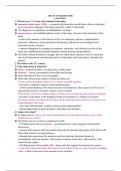
- Female more prone to uti because a shorter UTI
- oUreter: peristaltic contractions move urine toward bladder
- oContinence: As bladder fills, sympathetic stimulation relaxes the bladder muscle
and urinary sphincter contracts
- oMicturition: Parasympathetic nerves stimulate micturition reflex à bladder
contracts and urethral sphincter relaxes
UTI:
- Bladder is sterile
- Wipe from front to back
- Urinalysis (rapid screening)
- Leukocyte esterace test for wbc
- Bacteria
- Nitrites
- Clean catch for culture
- Types: complicated vs uncomplicated
- Sites: Lower UTI= cystitis; Upper UTI: Pyelonephritis
- Manifestation: painful urination, frequency, urgency, urinating in small volume. If
systemic: fever, nausea, vomit, flank pain and is classified as pyelonephritis
- Pharm: Uncomplicated: usually 3 days antibiotic trimethoprim or ciprofloxacin.
Complicated, diabetic, febrile, male treated 7-10 days such as phenazopyridine can be
used,
- Management:
- VS: temp (infection might be present)
- Pyridium turns urine orange/red color
- SEE TABLE 63.1
- Acronym for urinary dysfunction:
- DIAPPERS
- Delirium
- Infection of urinary tract
- Atrophic vaginitis, urethritis
- Pharmacologic agents (anticholinergics, sedatives, alcohol, analgesics, diuretics,
muscle relaxants, adrenergic agents)
- Psychological factors (depression, regression)
- Excessive urine production (increased intake, diabetes insipidus, diabetic
ketoacidosis)
- Restricted activity
- Stool impaction
- Painless hematuria is the most common presenting symptom of bladder cancer.
- Female more prone to uti because a shorter UTI
- oUreter: peristaltic contractions move urine toward bladder
- oContinence: As bladder fills, sympathetic stimulation relaxes the bladder muscle
and urinary sphincter contracts
- oMicturition: Parasympathetic nerves stimulate micturition reflex à bladder
contracts and urethral sphincter relaxes
UTI:
- Bladder is sterile
- Wipe from front to back
- Urinalysis (rapid screening)
- Leukocyte esterace test for wbc
- Bacteria
- Nitrites
- Clean catch for culture
- Types: complicated vs uncomplicated
- Sites: Lower UTI= cystitis; Upper UTI: Pyelonephritis
- Manifestation: painful urination, frequency, urgency, urinating in small volume. If
systemic: fever, nausea, vomit, flank pain and is classified as pyelonephritis
- Pharm: Uncomplicated: usually 3 days antibiotic trimethoprim or ciprofloxacin.
Complicated, diabetic, febrile, male treated 7-10 days such as phenazopyridine can be
used,
- Management:
- VS: temp (infection might be present)
- Pyridium turns urine orange/red color
- SEE TABLE 63.1
- Acronym for urinary dysfunction:
- DIAPPERS
- Delirium
- Infection of urinary tract
- Atrophic vaginitis, urethritis
- Pharmacologic agents (anticholinergics, sedatives, alcohol, analgesics, diuretics,
muscle relaxants, adrenergic agents)
- Psychological factors (depression, regression)
- Excessive urine production (increased intake, diabetes insipidus, diabetic
ketoacidosis)
- Restricted activity
- Stool impaction
- Painless hematuria is the most common presenting symptom of bladder cancer.