100% satisfaction guarantee Immediately available after payment Both online and in PDF No strings attached 4.6 TrustPilot
logo-home
Exam (elaborations)

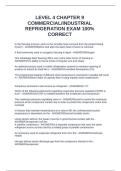
Glomerulonephritis and Hematutia Exam Practice Questions with complete Solutions 100% Pass

Rating
-
Sold
-
Pages
4
Grade
A+
Uploaded on
05-10-2024
Written in
2024/2025

Glomerulonephritis and Hematutia Exam Practice Questions with complete Solutions 100% Pass hematuria - Answers Five or more RBCs per hpf on freshly voided and centrifuged urine Origin of hematuria - Answers 1.Glomerular 2.Tubulointerstitial 3.Lower urinary tract Microscopic hematuria - Answers Is found in up to 5% of healthy children but in most cases is a transient finding and resolves on repeated testing. Persistent microscopic hematuria - Answers May indicate 1.Glomerular disease 2.Crystalluria 3.Inherited disorders 3a.Sickle cell trait/disease 3b.Polycystic Kidney disease Macroscopic hematuria - Answers Visible blood in urine Macroscopic hematuria may be seen in - Answers 1.Urolithiasis 2.Urinary Tract Infection(UTI) 3.Acute Glomerulonephritis(GN) Most common form of acute GN - Answers Postinfectious Glomerulonephritis ( PIGN) Most common form of Chronic GN - Answers Immunoglobulin A(IgA) Nephropathy Cardinal features of acute GN - Answers 1.Hematuria(Macro- or microscopic) 2.Proteinuria 3.Hypertension 4.Edema 5.Oliguria 6.Acute kidney injury (AKI) In what age PIGN most frequently occurs? - Answers In children 2-12 years of age is more common in boys What is the difference between an acute GN and PIGN? - Answers Manifestations of PIGN are typical of acute GN and most commonly develops on average 10 days after streptococcal pharyngitis and 4-6 weeks after impetigo. Does antibiotic treatment of streptococcal or other infections prevent or delay PIGN? - Answers No, it does not prevent or delay development of GN, but antibiotic treatment is warranted with active streptococcal infection. IgA nephropathy has a more variable presentation, name the forms it may take: - Answers 1.Acute GN 2.Asymptomatic microscopic hematuria ic presentation of recurrent macroscopic hematuria concurrent with an upper respiratory infection. Note that children with GN secondary to IgA vasculitis (Henoch-Schönlein purpura), lupus erythematosus, and vasculitis typically present with other systemic features of the respective condition. Rapidly progressive Glomerulonephritis (RPGN) - Answers A more severe form of acute GN with a rapid loss of kidney function over days to weeks Glomerular Epithelial cell proliferation with crescents - Answers RPGN What is crucial in case of RPGN? - Answers Early recognition and treatment is crucial in RPGN to prevent progression to ESKD. Alport Syndrome - Answers X-linked defect in Type IV collagen. Results in abnormal GBM in the kidneys and ears. Males with Alport syndrome presentation: - Answers 1.Painless microscopic or macroscopic hematuria 2.Progressive proteinuria 3.Hypertension 4.Sensorineural hearing loss Females with Alport syndrome presentation: - Answers Have more benign course with microscopic hematuria but in some case may develop ESKD. Thin Basement Membrane Disease ( benign familial hematuria) - Answers Autosomal dominant

Show more Read less
Institution
Glomerulonephritis
Course
Glomerulonephritis


Whoops! We can’t load your doc right now. Try again or contact support.

Written for

Institution
Glomerulonephritis
Course
Glomerulonephritis

Document information

Uploaded on
October 5, 2024
Number of pages
4
Written in
2024/2025
Type
Exam (elaborations)
Contains
Questions & answers

Content preview

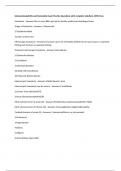
Glomerulonephritis and Hematutia Exam Practice Questions with complete Solutions 100% Pass

hematuria - Answers Five or more RBCs per hpf on freshly voided and centrifuged urine

Origin of hematuria - Answers 1.Glomerular

2.Tubulointerstitial

3.Lower urinary tract

Microscopic hematuria - Answers Is found in up to 5% of healthy children but in most cases is a transient
finding and resolves on repeated testing.

Persistent microscopic hematuria - Answers May indicate

1.Glomerular disease

2.Crystalluria

3.Inherited disorders

3a.Sickle cell trait/disease

3b.Polycystic Kidney disease

Macroscopic hematuria - Answers Visible blood in urine

Macroscopic hematuria may be seen in - Answers 1.Urolithiasis

2.Urinary Tract Infection(UTI)

3.Acute Glomerulonephritis(GN)

Most common form of acute GN - Answers Postinfectious Glomerulonephritis ( PIGN)

Most common form of Chronic GN - Answers Immunoglobulin A(IgA) Nephropathy

Cardinal features of acute GN - Answers 1.Hematuria(Macro- or microscopic)

2.Proteinuria

3.Hypertension

4.Edema

5.Oliguria

6.Acute kidney injury (AKI)
Get to know the seller

Seller avatar
Reputation scores are based on the amount of documents a seller has sold for a fee and the reviews they have received for those documents. There are three levels: Bronze, Silver and Gold. The better the reputation, the more your can rely on the quality of the sellers work.
TutorJosh Chamberlain College Of Nursing
View profile
Follow You need to be logged in order to follow users or courses
Sold
368
Member since
1 year
Number of followers
16
Documents
29812
Last sold
9 hours ago
Tutor Joshua

Here You will find all Documents and Package Deals Offered By Tutor Joshua.

3.6

59 reviews

5
21
4
15
3
12
2
0
1
11

Recently viewed by you

Why students choose Stuvia

Created by fellow students, verified by reviews

Quality you can trust: written by students who passed their tests and reviewed by others who've used these notes.

Didn't get what you expected? Choose another document

No worries! You can instantly pick a different document that better fits what you're looking for.

Pay as you like, start learning right away

No subscription, no commitments. Pay the way you're used to via credit card and download your PDF document instantly.

Student with book image

“Bought, downloaded, and aced it. It really can be that simple.”

Alisha Student

Frequently asked questions