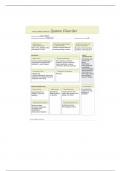
ACTIVE LEARNING TEMPLATE: System Disorder
Jessica Willard
STUDENT NAME _____________________________________
Anaphylaxis
DISORDER/DISEASE PROCESS __________________________________________________________ 30
REVIEW MODULE CHAPTER ___________
Alterations in Pathophysiology Related Health Promotion and
Health (Diagnosis) to Client Problem Disease Prevention
Rash, hives, swelling of lips A severe and potentially life Be aware of food and drug
and tongue or throat threatening allergic reaction sensitivity. Avoid exposure
ASSESSMENT SAFETY
CONSIDERATIONS
Risk Factors Expected Findings The trachea may
Previous anaphylaxisAllergies or Skin reactions, low blood close due to
asthmaOther conditionsFood, pressure, airway constriction, severe
medication, insect allergies weak rapid pulse, nausea, inflammation
vomiting or diarrhea, dizziness which could lead
to respiratory
obstructionSudden
loss of blood floe
Laboratory Tests Diagnostic Procedures to the brain and
Tryptase test, Skin test other organs could
5-hydroxyindoleacetic acid levels, cause systemic
Testing for food allergyTesting for vascular collapse
suspected insect sting
PATIENT-CENTERED CARE Complications
Nursing Care Medications Client Education An anaphylactic
reaction can stop
Assess patients for Epinephrine, Teach patient to wear breathing or
allergies or previous diphenhydramin medic alert acessory with heartbeat
reactions. e, albuterol allergy information
Therapeutic Procedures Interprofessional Care
Remove antigen, Nutritionist consult,
administer medications, dermatologist consult
cardiopulmonary
resuscitation,
endotracheal intubation
ACTIVE LEARNING TEMPLATES
Jessica Willard
STUDENT NAME _____________________________________
Anaphylaxis
DISORDER/DISEASE PROCESS __________________________________________________________ 30
REVIEW MODULE CHAPTER ___________
Alterations in Pathophysiology Related Health Promotion and
Health (Diagnosis) to Client Problem Disease Prevention
Rash, hives, swelling of lips A severe and potentially life Be aware of food and drug
and tongue or throat threatening allergic reaction sensitivity. Avoid exposure
ASSESSMENT SAFETY
CONSIDERATIONS
Risk Factors Expected Findings The trachea may
Previous anaphylaxisAllergies or Skin reactions, low blood close due to
asthmaOther conditionsFood, pressure, airway constriction, severe
medication, insect allergies weak rapid pulse, nausea, inflammation
vomiting or diarrhea, dizziness which could lead
to respiratory
obstructionSudden
loss of blood floe
Laboratory Tests Diagnostic Procedures to the brain and
Tryptase test, Skin test other organs could
5-hydroxyindoleacetic acid levels, cause systemic
Testing for food allergyTesting for vascular collapse
suspected insect sting
PATIENT-CENTERED CARE Complications
Nursing Care Medications Client Education An anaphylactic
reaction can stop
Assess patients for Epinephrine, Teach patient to wear breathing or
allergies or previous diphenhydramin medic alert acessory with heartbeat
reactions. e, albuterol allergy information
Therapeutic Procedures Interprofessional Care
Remove antigen, Nutritionist consult,
administer medications, dermatologist consult
cardiopulmonary
resuscitation,
endotracheal intubation
ACTIVE LEARNING TEMPLATES