ACTIVE LEARNING TEMPLATE: Nursing Skill
Jessica Willard
STUDENT NAME _____________________________________
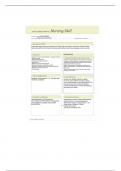
Fetal Heart Monitoring
SKILL NAME ____________________________________________________________________________ REVIEW MODULE CHAPTER ___________
Description of Skill
Fetal heart rate monitoring measures the heart rate and rhythm of the fetus. External Fetal
Monitoring (EFM) is the most commonly used method, which also assesses uterine activity.
Indications CONSIDERATIONS
-Oxytocin infusion (augmentation or induction of labor)
-Placenta previa Nursing Interventions (pre, intra, post)
-Maternal complications -Verify the time and date on the monitor are accurate.
-Intrauterine growth restriction -Palpate mother's abdomen to asses the uterus and
-Active labor -determine the location of the fetus's back to ensure
-Meconium-stained amniotic fluid proper placement of transducer.
-Abruptio placentae: suspected or actual -Apply ultrasound gel to transducer and place the
-Abnormal nonstress test or contraction stress test sensor at the location of the fetus's back, securing it
-Abnormal uterine contractions with a belt.
-Fetal distress -Place Tocotransducer at the fundus of the uterus,
securing it with a belt.
Outcomes/Evaluation
Client Education
Adequate FHR between 110 - 160 bpm with
moderate variability -Empty your bladder before we begin.
-You can move with the monitor in place.
-If you need to walk or use the bathroom, we
can disconnect the monitor temporarily.
-Using an EFM does not mean something is
wrong with your baby.
Potential Complications Nursing Interventions
-Misinterpretation of FHR patterns -Discontinue oxytocin if being administered
-Non-reassuring FHR patterns (bradycardia, -Assist mother to a side-lying position
minimal/absent variability, late/variable -Administer oxygen via facemask 8 - 10 L
decelerations) -Give bolus of isotonic IV fluids
-Notify the provider
-Continue monitoring FHR
ACTIVE LEARNING TEMPLATES
Jessica Willard
STUDENT NAME _____________________________________
Fetal Heart Monitoring
SKILL NAME ____________________________________________________________________________ REVIEW MODULE CHAPTER ___________
Description of Skill
Fetal heart rate monitoring measures the heart rate and rhythm of the fetus. External Fetal
Monitoring (EFM) is the most commonly used method, which also assesses uterine activity.
Indications CONSIDERATIONS
-Oxytocin infusion (augmentation or induction of labor)
-Placenta previa Nursing Interventions (pre, intra, post)
-Maternal complications -Verify the time and date on the monitor are accurate.
-Intrauterine growth restriction -Palpate mother's abdomen to asses the uterus and
-Active labor -determine the location of the fetus's back to ensure
-Meconium-stained amniotic fluid proper placement of transducer.
-Abruptio placentae: suspected or actual -Apply ultrasound gel to transducer and place the
-Abnormal nonstress test or contraction stress test sensor at the location of the fetus's back, securing it
-Abnormal uterine contractions with a belt.
-Fetal distress -Place Tocotransducer at the fundus of the uterus,
securing it with a belt.
Outcomes/Evaluation
Client Education
Adequate FHR between 110 - 160 bpm with
moderate variability -Empty your bladder before we begin.
-You can move with the monitor in place.
-If you need to walk or use the bathroom, we
can disconnect the monitor temporarily.
-Using an EFM does not mean something is
wrong with your baby.
Potential Complications Nursing Interventions
-Misinterpretation of FHR patterns -Discontinue oxytocin if being administered
-Non-reassuring FHR patterns (bradycardia, -Assist mother to a side-lying position
minimal/absent variability, late/variable -Administer oxygen via facemask 8 - 10 L
decelerations) -Give bolus of isotonic IV fluids
-Notify the provider
-Continue monitoring FHR
ACTIVE LEARNING TEMPLATES