Master in de Bedrijfscommunicatie
Consumer behaviour
Summary 2019-2020
, Disclaimer: this summary is based on:
- The lectures given by Aiste Grubliauskiene, PhD at the KU Leuven in 2019
- The slides accompanying the lectures
- Papers discussed during the lectures. The titles and authors of those papers are clearly stated.
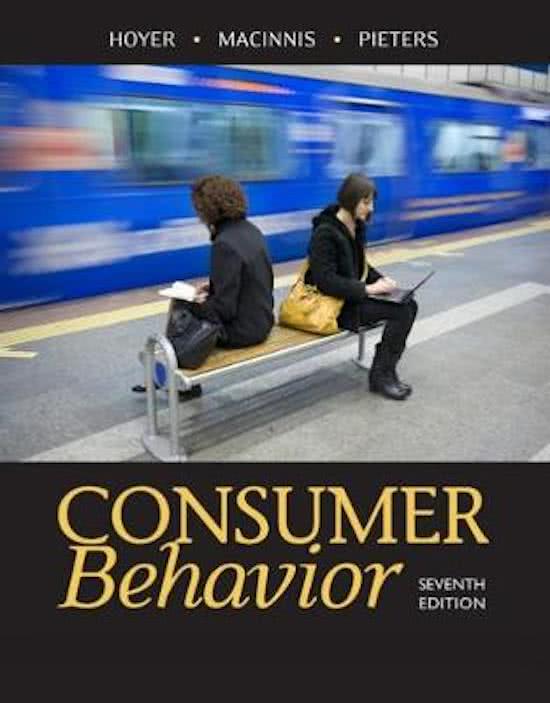
- Consumer Behavior, written by Hoyer, Macinnis, and Pieters:
Hoyer, Wayne D, MacInnis, Deborah J, and Pieters, Rik. Consumer Behavior. 7th ed. Boston, MA: Cengage
Learning, 2018. Print.
1
,Introduction and experiments ................................................................................................................................ 8
Definition ............................................................................................................................................................ 8
Studying consumer behavior .............................................................................................................................. 9
Consumer behavior research methods ............................................................................................................ 10
Experiments .................................................................................................................................................. 10
Experiments vs. surveys:............................................................................................................................... 11
Lecture 2: Motivation ........................................................................................................................................... 13
Drivers of motivation ........................................................................................................................................ 13
Personal relevance (page 48) ....................................................................................................................... 13
Perceived risk ................................................................................................................................................ 17
Paper: The “Shaken Self”: Product Choices as a Means of Restoring Self-View Confidence (Gao, Wheeler,
Shiv) .................................................................................................................................................................. 18
Study 2 .......................................................................................................................................................... 18
Study 3 .......................................................................................................................................................... 19
Paper: Tempt Me Just a Little Bit More: The Effect of Prior Food Temptation Actionability on Goal Activation
and Consumption (Geyskens, Dewitte, Pandelaere, Warlop) .......................................................................... 21
Study 2 .......................................................................................................................................................... 22
Study 3A ........................................................................................................................................................ 23
Study 3B ........................................................................................................................................................ 23
Conclusion .................................................................................................................................................... 24
Other studies: children ................................................................................................................................. 24
Lecture 3: Memory and Knowledge ..................................................................................................................... 25
Memory ............................................................................................................................................................ 25
Knowledge ........................................................................................................................................................ 26
Content ......................................................................................................................................................... 26
Structure ....................................................................................................................................................... 28
Flexibility ....................................................................................................................................................... 29
Memory and retrieval ....................................................................................................................................... 31
Paper: It’s the Mind-Set That Matters: The Role of Construal Level and Message Framing in Influencing
Consumer Efficacy and Conservation Behaviors (White, MacDonnell, Dahl) ................................................... 32
Paper: Inhibited from Bowling Alone (Ratner, Hamilton)................................................................................. 36
Study 3 .......................................................................................................................................................... 38
Study 4 .......................................................................................................................................................... 38
Study 5 .......................................................................................................................................................... 39
Lecture 4: Attitudes Based on High Effort ............................................................................................................ 40
Attitude ............................................................................................................................................................. 40
Characteristics of attitudes: .......................................................................................................................... 40
Approaches to attitude formation and change ............................................................................................ 40
Cognitive foundations of attitudes ............................................................................................................... 41
2
, How cognitively based attitudes are influenced .......................................................................................... 44
Affective (emotional) foundations of attitudes (p. 139-141) ....................................................................... 45
How affectively based attitudes are influenced ........................................................................................... 46
When do attitudes predict behaviour? ........................................................................................................ 47
Attitude toward the ad (Aad) (p. 144) .......................................................................................................... 48
Paper: A Room with a Viewpoint: Using Social Norms to Motivate Environmental Conservation in Hotels
(Goldstein, Cialdini, Griskevicius) ..................................................................................................................... 48
Reusing towels .............................................................................................................................................. 48
Paper: A Terror Management Perspective on the Persuasiveness of Fear Appeals (Shehryar, Hunt) ............. 51
Terror management theory .......................................................................................................................... 51
Drinking and driving...................................................................................................................................... 51
Study 1: Mortality salience vs. not ............................................................................................................... 52
Study 2: Delay ............................................................................................................................................... 53
Discussion ..................................................................................................................................................... 54
Lecture 5: Social Influence .................................................................................................................................... 55
Sources of influence ......................................................................................................................................... 55
Opinion leaders............................................................................................................................................. 56
Reference groups as sources of influence ........................................................................................................ 56
Types of reference groups ............................................................................................................................ 57
Characteristics of reference groups .............................................................................................................. 57
Reference groups affect consumer socialization .......................................................................................... 58
Normative influence ......................................................................................................................................... 59
How normative influence can affect consumer behavior ............................................................................ 59
Normative influence strength....................................................................................................................... 60
Informational Influence .................................................................................................................................... 60
Factors affection informational influence strength ...................................................................................... 61
Descriptive dimensions of information ........................................................................................................ 61
Word of mouth ............................................................................................................................................. 61
Paper: Is Happiness Shared Doubled and Sadness Shared Halved? Social Influence on Enjoyment of Hedonic
Experiences (Raghunathan, Corfman) .............................................................................................................. 62
How do others’ opinions about shared stimuli affect the enjoyment of the shared stimuli? ...................... 62
Congruence ................................................................................................................................................... 63
Experiment 1................................................................................................................................................. 63
Experiment 2................................................................................................................................................. 64
Additional ..................................................................................................................................................... 64
Discussion ..................................................................................................................................................... 65
Conspicuous consumption ................................................................................................................................ 65
Conspicuous consumption as a signal of wealth .......................................................................................... 65
Conspicuous consumption more broadly ..................................................................................................... 65
3
, Why do people engage in conspicuous consumption? ................................................................................ 65
Conspicuous consumption ............................................................................................................................ 66
Social cost of dishonest signaling ................................................................................................................. 66
Paper: Signaling Status with Luxury Goods: The Role of Brand Prominence (Jee Han, Nunes, Drèze) ............ 67
Study 1 .......................................................................................................................................................... 67
Study 2 .......................................................................................................................................................... 68
Study 3 .......................................................................................................................................................... 69
Study 4 .......................................................................................................................................................... 70
Lecture 6: Attitudes Based on Low Effort ............................................................................................................. 72
Approaches to attitude formation and change ................................................................................................ 72
Low-effort situation .......................................................................................................................................... 72
Unconscious influences .................................................................................................................................... 73
Cognitive bases ................................................................................................................................................. 73
Cognitive bases of attitudes ......................................................................................................................... 73
Characteristics of communication that influences cognitive attitudes ........................................................ 73
Affective bases .................................................................................................................................................. 74
Mere exposure effect ................................................................................................................................... 74
Classical and evaluative conditioning ........................................................................................................... 75
Attitude toward the ad ................................................................................................................................. 77
Mood ............................................................................................................................................................ 77
Factors influencing affective attitudes ............................................................................................................. 77
Sexual messages ........................................................................................................................................... 79
Attitude measurement ..................................................................................................................................... 81
Direct: self-report ......................................................................................................................................... 81
Indirect: projective techniques or choice ..................................................................................................... 82
Papers ............................................................................................................................................................... 83
Evolutionary approach.................................................................................................................................. 83
Adaptations .................................................................................................................................................. 83
Paper: Fear and Loving in Las Vegas: Evolution, Emotion, and Persuasion (Griskevicius, Goldstein,
Mortensen, Sundie, Cialdini, Kenrick) ............................................................................................................... 85
Different theoretical approaches ................................................................................................................. 85
Fear and loving ............................................................................................................................................. 85
Experiment 1A and 1B .................................................................................................................................. 86
Experiment 2................................................................................................................................................. 87
Paper: Consumer’s Use of Persuasion Knowledge: The Effects of Accessibility and Cognitive Capacity on
Perceptions of an Influence Agent (Campbell, Kirmani) ................................................................................... 88
Persuasion knowledge .................................................................................................................................. 88
Objectives ..................................................................................................................................................... 88
Cognitive capacity ......................................................................................................................................... 89
4
, Accessibility of ulterior motives.................................................................................................................... 89
Hypothesis .................................................................................................................................................... 89
Four scenario studies .................................................................................................................................... 89
Lecture 7: Decision Making Based on High Effort................................................................................................. 92
High-effort consumer decisions ........................................................................................................................ 92
Types of decisions in high-effort situations .................................................................................................. 93
Thought-based/cognition-based decisions....................................................................................................... 94
Types of cognitive choice models ................................................................................................................. 94
Decision based on brands (p. 216) ............................................................................................................... 94
Decisions based on product attributes (p. 217)............................................................................................ 95
Decisions based on gains and losses (p. 218) ............................................................................................... 95
Feeling-based decisions .................................................................................................................................... 97
Appraisals and feelings (p. 220) .................................................................................................................... 97
Affective forecasts and choices .................................................................................................................... 98
Imagery (p. 221)............................................................................................................................................ 98
What affects decisions? .................................................................................................................................... 98
Consumer characteristics ............................................................................................................................. 98
Decision characteristics .............................................................................................................................. 100
Group decision making ............................................................................................................................... 100
Paper: System 1 and System 2 Thinking (Kahneman)..................................................................................... 101
Paper: In Search of Homo Economicus: Cognitive Noise and the Role of Emotion in Preference Consistency
(Lee, Amir, Ariely) ........................................................................................................................................... 101
Paper: When Choice is Demotivating: Can One Desire Too Much of a Good Thing? (Iyengar, Lepper) ......... 105
Choice overload .......................................................................................................................................... 106
Lecture 8: Decision Making Based on Low Effort ............................................................................................... 110
Low-effort judgment processes ...................................................................................................................... 110
Low-effort decision making processes ........................................................................................................... 110
Unconscious low-effort decision-making ................................................................................................... 110
Conscious low-effort decision-making........................................................................................................ 110
Learning choice tactics.................................................................................................................................... 111
Low-effort thought-based decision-making ................................................................................................... 112
Performance as a simplifying strategy ........................................................................................................ 112
Habit as a simplifying strategy .................................................................................................................... 112
Brand loyalty as a simplifying strategy ....................................................................................................... 113
Normative influence as a simplifying strategy ............................................................................................ 113
Price as a simplifying strategy..................................................................................................................... 114
Low-effort feeling-based decision-making ..................................................................................................... 115
Feelings as a simplifying strategy ............................................................................................................... 115
Brand familiarity ......................................................................................................................................... 115
5
Consumer behaviour
Summary 2019-2020
, Disclaimer: this summary is based on:
- The lectures given by Aiste Grubliauskiene, PhD at the KU Leuven in 2019
- The slides accompanying the lectures
- Papers discussed during the lectures. The titles and authors of those papers are clearly stated.
- Consumer Behavior, written by Hoyer, Macinnis, and Pieters:
Hoyer, Wayne D, MacInnis, Deborah J, and Pieters, Rik. Consumer Behavior. 7th ed. Boston, MA: Cengage
Learning, 2018. Print.
1
,Introduction and experiments ................................................................................................................................ 8
Definition ............................................................................................................................................................ 8
Studying consumer behavior .............................................................................................................................. 9
Consumer behavior research methods ............................................................................................................ 10
Experiments .................................................................................................................................................. 10
Experiments vs. surveys:............................................................................................................................... 11
Lecture 2: Motivation ........................................................................................................................................... 13
Drivers of motivation ........................................................................................................................................ 13
Personal relevance (page 48) ....................................................................................................................... 13
Perceived risk ................................................................................................................................................ 17
Paper: The “Shaken Self”: Product Choices as a Means of Restoring Self-View Confidence (Gao, Wheeler,
Shiv) .................................................................................................................................................................. 18
Study 2 .......................................................................................................................................................... 18
Study 3 .......................................................................................................................................................... 19
Paper: Tempt Me Just a Little Bit More: The Effect of Prior Food Temptation Actionability on Goal Activation
and Consumption (Geyskens, Dewitte, Pandelaere, Warlop) .......................................................................... 21
Study 2 .......................................................................................................................................................... 22
Study 3A ........................................................................................................................................................ 23
Study 3B ........................................................................................................................................................ 23
Conclusion .................................................................................................................................................... 24
Other studies: children ................................................................................................................................. 24
Lecture 3: Memory and Knowledge ..................................................................................................................... 25
Memory ............................................................................................................................................................ 25
Knowledge ........................................................................................................................................................ 26
Content ......................................................................................................................................................... 26
Structure ....................................................................................................................................................... 28
Flexibility ....................................................................................................................................................... 29
Memory and retrieval ....................................................................................................................................... 31
Paper: It’s the Mind-Set That Matters: The Role of Construal Level and Message Framing in Influencing
Consumer Efficacy and Conservation Behaviors (White, MacDonnell, Dahl) ................................................... 32
Paper: Inhibited from Bowling Alone (Ratner, Hamilton)................................................................................. 36
Study 3 .......................................................................................................................................................... 38
Study 4 .......................................................................................................................................................... 38
Study 5 .......................................................................................................................................................... 39
Lecture 4: Attitudes Based on High Effort ............................................................................................................ 40
Attitude ............................................................................................................................................................. 40
Characteristics of attitudes: .......................................................................................................................... 40
Approaches to attitude formation and change ............................................................................................ 40
Cognitive foundations of attitudes ............................................................................................................... 41
2
, How cognitively based attitudes are influenced .......................................................................................... 44
Affective (emotional) foundations of attitudes (p. 139-141) ....................................................................... 45
How affectively based attitudes are influenced ........................................................................................... 46
When do attitudes predict behaviour? ........................................................................................................ 47
Attitude toward the ad (Aad) (p. 144) .......................................................................................................... 48
Paper: A Room with a Viewpoint: Using Social Norms to Motivate Environmental Conservation in Hotels
(Goldstein, Cialdini, Griskevicius) ..................................................................................................................... 48
Reusing towels .............................................................................................................................................. 48
Paper: A Terror Management Perspective on the Persuasiveness of Fear Appeals (Shehryar, Hunt) ............. 51
Terror management theory .......................................................................................................................... 51
Drinking and driving...................................................................................................................................... 51
Study 1: Mortality salience vs. not ............................................................................................................... 52
Study 2: Delay ............................................................................................................................................... 53
Discussion ..................................................................................................................................................... 54
Lecture 5: Social Influence .................................................................................................................................... 55
Sources of influence ......................................................................................................................................... 55
Opinion leaders............................................................................................................................................. 56
Reference groups as sources of influence ........................................................................................................ 56
Types of reference groups ............................................................................................................................ 57
Characteristics of reference groups .............................................................................................................. 57
Reference groups affect consumer socialization .......................................................................................... 58
Normative influence ......................................................................................................................................... 59
How normative influence can affect consumer behavior ............................................................................ 59
Normative influence strength....................................................................................................................... 60
Informational Influence .................................................................................................................................... 60
Factors affection informational influence strength ...................................................................................... 61
Descriptive dimensions of information ........................................................................................................ 61
Word of mouth ............................................................................................................................................. 61
Paper: Is Happiness Shared Doubled and Sadness Shared Halved? Social Influence on Enjoyment of Hedonic
Experiences (Raghunathan, Corfman) .............................................................................................................. 62
How do others’ opinions about shared stimuli affect the enjoyment of the shared stimuli? ...................... 62
Congruence ................................................................................................................................................... 63
Experiment 1................................................................................................................................................. 63
Experiment 2................................................................................................................................................. 64
Additional ..................................................................................................................................................... 64
Discussion ..................................................................................................................................................... 65
Conspicuous consumption ................................................................................................................................ 65
Conspicuous consumption as a signal of wealth .......................................................................................... 65
Conspicuous consumption more broadly ..................................................................................................... 65
3
, Why do people engage in conspicuous consumption? ................................................................................ 65
Conspicuous consumption ............................................................................................................................ 66
Social cost of dishonest signaling ................................................................................................................. 66
Paper: Signaling Status with Luxury Goods: The Role of Brand Prominence (Jee Han, Nunes, Drèze) ............ 67
Study 1 .......................................................................................................................................................... 67
Study 2 .......................................................................................................................................................... 68
Study 3 .......................................................................................................................................................... 69
Study 4 .......................................................................................................................................................... 70
Lecture 6: Attitudes Based on Low Effort ............................................................................................................. 72
Approaches to attitude formation and change ................................................................................................ 72
Low-effort situation .......................................................................................................................................... 72
Unconscious influences .................................................................................................................................... 73
Cognitive bases ................................................................................................................................................. 73
Cognitive bases of attitudes ......................................................................................................................... 73
Characteristics of communication that influences cognitive attitudes ........................................................ 73
Affective bases .................................................................................................................................................. 74
Mere exposure effect ................................................................................................................................... 74
Classical and evaluative conditioning ........................................................................................................... 75
Attitude toward the ad ................................................................................................................................. 77
Mood ............................................................................................................................................................ 77
Factors influencing affective attitudes ............................................................................................................. 77
Sexual messages ........................................................................................................................................... 79
Attitude measurement ..................................................................................................................................... 81
Direct: self-report ......................................................................................................................................... 81
Indirect: projective techniques or choice ..................................................................................................... 82
Papers ............................................................................................................................................................... 83
Evolutionary approach.................................................................................................................................. 83
Adaptations .................................................................................................................................................. 83
Paper: Fear and Loving in Las Vegas: Evolution, Emotion, and Persuasion (Griskevicius, Goldstein,
Mortensen, Sundie, Cialdini, Kenrick) ............................................................................................................... 85
Different theoretical approaches ................................................................................................................. 85
Fear and loving ............................................................................................................................................. 85
Experiment 1A and 1B .................................................................................................................................. 86
Experiment 2................................................................................................................................................. 87
Paper: Consumer’s Use of Persuasion Knowledge: The Effects of Accessibility and Cognitive Capacity on
Perceptions of an Influence Agent (Campbell, Kirmani) ................................................................................... 88
Persuasion knowledge .................................................................................................................................. 88
Objectives ..................................................................................................................................................... 88
Cognitive capacity ......................................................................................................................................... 89
4
, Accessibility of ulterior motives.................................................................................................................... 89
Hypothesis .................................................................................................................................................... 89
Four scenario studies .................................................................................................................................... 89
Lecture 7: Decision Making Based on High Effort................................................................................................. 92
High-effort consumer decisions ........................................................................................................................ 92
Types of decisions in high-effort situations .................................................................................................. 93
Thought-based/cognition-based decisions....................................................................................................... 94
Types of cognitive choice models ................................................................................................................. 94
Decision based on brands (p. 216) ............................................................................................................... 94
Decisions based on product attributes (p. 217)............................................................................................ 95
Decisions based on gains and losses (p. 218) ............................................................................................... 95
Feeling-based decisions .................................................................................................................................... 97
Appraisals and feelings (p. 220) .................................................................................................................... 97
Affective forecasts and choices .................................................................................................................... 98
Imagery (p. 221)............................................................................................................................................ 98
What affects decisions? .................................................................................................................................... 98
Consumer characteristics ............................................................................................................................. 98
Decision characteristics .............................................................................................................................. 100
Group decision making ............................................................................................................................... 100
Paper: System 1 and System 2 Thinking (Kahneman)..................................................................................... 101
Paper: In Search of Homo Economicus: Cognitive Noise and the Role of Emotion in Preference Consistency
(Lee, Amir, Ariely) ........................................................................................................................................... 101
Paper: When Choice is Demotivating: Can One Desire Too Much of a Good Thing? (Iyengar, Lepper) ......... 105
Choice overload .......................................................................................................................................... 106
Lecture 8: Decision Making Based on Low Effort ............................................................................................... 110
Low-effort judgment processes ...................................................................................................................... 110
Low-effort decision making processes ........................................................................................................... 110
Unconscious low-effort decision-making ................................................................................................... 110
Conscious low-effort decision-making........................................................................................................ 110
Learning choice tactics.................................................................................................................................... 111
Low-effort thought-based decision-making ................................................................................................... 112
Performance as a simplifying strategy ........................................................................................................ 112
Habit as a simplifying strategy .................................................................................................................... 112
Brand loyalty as a simplifying strategy ....................................................................................................... 113
Normative influence as a simplifying strategy ............................................................................................ 113
Price as a simplifying strategy..................................................................................................................... 114
Low-effort feeling-based decision-making ..................................................................................................... 115
Feelings as a simplifying strategy ............................................................................................................... 115
Brand familiarity ......................................................................................................................................... 115
5