NR304 - EDAPTS EXAM WITH VERIFIED SOLUTION
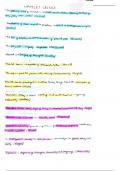
Peripheral Vascular Assessment: Peripheral Vascular System
week1
peripheral vascular system
all arteries and veins that are outside the heart
> delivering oxygen and nutrients to the cells
> transporting cellular waste products to the organs for neutralization or removal
Noncardiac sources of emboli
> aneurysms (permanent, localized outpouching or dilation of the vessel wall)
> ulcerated atherosclerotic plaque
> recent endovascular procedures
> venous thrombi
> hypovolemia + hyperviscosity and hypercoagulability.
Tromboangitis obliterans (Buerger's disease) .
[no relation to atherosclerosis]
characterized by segmental, recurring inflammation in the small and medium arteries
and veins in the arms and legs (superficial vein thrombosis) > men under the age of 45
Raynaud's phenomenon
[not related to atherosclerosis]
occurring mainly in the fingers and toes due to episodic vasospasms of the small
cutaneous (surface) arteries in isolation (primary) or with an underlying disease
(secondary) > women between 15-40
Which of the following clinical manifestations are common to both the client with
Buerger's disease and the client with Raynaud's phenomenon?
Color changes of fingers and toes
Gangrenous ulcers on fingertips
, Intolerance to cold
Early manifestations of PVD
[aching, throbbing, burning, cramping]
The appearance of small, spider-like veins in the lower extremities or feet. The spider
veins gradually become
Distorted and dilated and assume the characteristic tortuous pattern of varicose veins.
> duplex ultrasound is used to visualize the veins and blood flow to determine the cause
and severity of the condition
Peripheral Venous Disease Progression
> Telangiectasias (Spider Veins) = small and reddish-purple throughout; superficial
(incompetent valves)
> Reticular Varicose Veins = enlarged, but smaller than varicose veins, and that do not
bulge (first indicator of having chronic venous insufficiency (CVI))
> Venous nodes = Reticular varices continue to dilate and distort Larger and are visibly
raised above the skin surface
> Chronic Venous Insufficiency = Skin turns white or reddish-brown/Skin becomes thin
and leather-like. Skin is more susceptible to trauma
> Stage Final - Trophic Ulcers or Varicose Eczema- Increased pressure from swelling
and waste products of cellular metabolism increase the development of leg ulcers
Virchow's triad- venous thrombosis
> venous stasis caused by inactivity
> injury to the endothelium of the vein due to the effects of venous stasis and pressure
> the blood becomes hypercoagulable
Arterial Versus Venous Insufficiency
[Both PAD and PVD can cause either acute or chronic interruption in blood flow and
thus create pain and complications for the client]
Peripheral Vascular Assessment: Peripheral Vascular System
week1
peripheral vascular system
all arteries and veins that are outside the heart
> delivering oxygen and nutrients to the cells
> transporting cellular waste products to the organs for neutralization or removal
Noncardiac sources of emboli
> aneurysms (permanent, localized outpouching or dilation of the vessel wall)
> ulcerated atherosclerotic plaque
> recent endovascular procedures
> venous thrombi
> hypovolemia + hyperviscosity and hypercoagulability.
Tromboangitis obliterans (Buerger's disease) .
[no relation to atherosclerosis]
characterized by segmental, recurring inflammation in the small and medium arteries
and veins in the arms and legs (superficial vein thrombosis) > men under the age of 45
Raynaud's phenomenon
[not related to atherosclerosis]
occurring mainly in the fingers and toes due to episodic vasospasms of the small
cutaneous (surface) arteries in isolation (primary) or with an underlying disease
(secondary) > women between 15-40
Which of the following clinical manifestations are common to both the client with
Buerger's disease and the client with Raynaud's phenomenon?
Color changes of fingers and toes
Gangrenous ulcers on fingertips
, Intolerance to cold
Early manifestations of PVD
[aching, throbbing, burning, cramping]
The appearance of small, spider-like veins in the lower extremities or feet. The spider
veins gradually become
Distorted and dilated and assume the characteristic tortuous pattern of varicose veins.
> duplex ultrasound is used to visualize the veins and blood flow to determine the cause
and severity of the condition
Peripheral Venous Disease Progression
> Telangiectasias (Spider Veins) = small and reddish-purple throughout; superficial
(incompetent valves)
> Reticular Varicose Veins = enlarged, but smaller than varicose veins, and that do not
bulge (first indicator of having chronic venous insufficiency (CVI))
> Venous nodes = Reticular varices continue to dilate and distort Larger and are visibly
raised above the skin surface
> Chronic Venous Insufficiency = Skin turns white or reddish-brown/Skin becomes thin
and leather-like. Skin is more susceptible to trauma
> Stage Final - Trophic Ulcers or Varicose Eczema- Increased pressure from swelling
and waste products of cellular metabolism increase the development of leg ulcers
Virchow's triad- venous thrombosis
> venous stasis caused by inactivity
> injury to the endothelium of the vein due to the effects of venous stasis and pressure
> the blood becomes hypercoagulable
Arterial Versus Venous Insufficiency
[Both PAD and PVD can cause either acute or chronic interruption in blood flow and
thus create pain and complications for the client]