BARUCH COLLEGE – DEPARTMENT OF ECONOMICS & FINANCE
Professor Chris Droussiotis
LECTURE 6
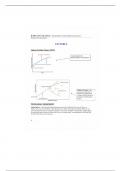
Modern Portfolio Theory (MPT):
CHALLENGED BY
BEHAVIORAL ECONOMICS
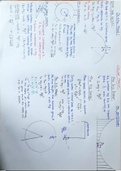
Efficient Frontier is the
intersection of the Set of
Portfolios with Minimum
Variance (MVS) and set of
portfolios with Maximum
Return
The Keynesian “Animal Spirits”
Animal spirits” is the term John Maynard Keynes used in his 1936 book The General Theory of
Employment, Interest and Money to describe emotion or affect which influences human behavior and
can be measured in terms of consumer confidence. Trust is also included or produced by “animal spirits”.
Several articles and at least two books with a focus on "animal spirits" were published in 2008 and 2009
as a part of the Keynesian resurgence.
41
, BARUCH COLLEGE – DEPARTMENT OF ECONOMICS & FINANCE
Professor Chris Droussiotis
The original passage by Keynes reads:
"Even apart from the instability due to speculation, there is the instability due to the characteristic of
human nature that a large proportion of our positive activities depend on spontaneous optimism rather
than mathematical expectations, whether moral or hedonistic or economic. Most, probably, of our
decisions to do something positive, the full consequences of which will be drawn out over many days to
come, can only be taken as the result of animal spirits - a spontaneous urge to action rather than
inaction, and not as the outcome of a weighted average of quantitative benefits multiplied by
quantitative probabilities."
Keynes seems to be referencing David Hume's term for spontaneous motivation. The term itself is
drawn from the Latin spiritus animales which may be interpreted as the spirit (or fluid) that drives
human thought, feeling and action.
NEW
THE EFFICIENT MARKET HYPOTHESIS AND BEHAVIORAL FINANCE (Chapters
8 and 9)
Wall Street Article – November 3, 2009 – “Crisis Compels Economists to Reach New Paradigm”
LEVERAGE CYCLE
Chapter 8
Random Walks and the Efficient Market Hypothesis
Example - $100, predicting the stock will go to $110 in 3 days - if everyone uses the
same model, no one is willing to sell – the net effect would be that the stock jumps to
$110.
The theory of movement of the stock is that it moves on new information, which by
definition should be unpredictable, therefore the movements of the stock should be
unpredictable – this is the essence of the argument that stock prices should follow a
RANDOM WALK – that is, that price changes should be random and unpredictable.
The notions that all stocks already reflect all available information is referred to as the
EFFICIENT MARKET HYPOTHESIS (EMH).
Example: “found a $20 bill on the ground” story
42
Professor Chris Droussiotis
LECTURE 6
Modern Portfolio Theory (MPT):
CHALLENGED BY
BEHAVIORAL ECONOMICS
Efficient Frontier is the
intersection of the Set of
Portfolios with Minimum
Variance (MVS) and set of
portfolios with Maximum
Return
The Keynesian “Animal Spirits”
Animal spirits” is the term John Maynard Keynes used in his 1936 book The General Theory of
Employment, Interest and Money to describe emotion or affect which influences human behavior and
can be measured in terms of consumer confidence. Trust is also included or produced by “animal spirits”.
Several articles and at least two books with a focus on "animal spirits" were published in 2008 and 2009
as a part of the Keynesian resurgence.
41
, BARUCH COLLEGE – DEPARTMENT OF ECONOMICS & FINANCE
Professor Chris Droussiotis
The original passage by Keynes reads:
"Even apart from the instability due to speculation, there is the instability due to the characteristic of
human nature that a large proportion of our positive activities depend on spontaneous optimism rather
than mathematical expectations, whether moral or hedonistic or economic. Most, probably, of our
decisions to do something positive, the full consequences of which will be drawn out over many days to
come, can only be taken as the result of animal spirits - a spontaneous urge to action rather than
inaction, and not as the outcome of a weighted average of quantitative benefits multiplied by
quantitative probabilities."
Keynes seems to be referencing David Hume's term for spontaneous motivation. The term itself is
drawn from the Latin spiritus animales which may be interpreted as the spirit (or fluid) that drives
human thought, feeling and action.
NEW
THE EFFICIENT MARKET HYPOTHESIS AND BEHAVIORAL FINANCE (Chapters
8 and 9)
Wall Street Article – November 3, 2009 – “Crisis Compels Economists to Reach New Paradigm”
LEVERAGE CYCLE
Chapter 8
Random Walks and the Efficient Market Hypothesis
Example - $100, predicting the stock will go to $110 in 3 days - if everyone uses the
same model, no one is willing to sell – the net effect would be that the stock jumps to
$110.
The theory of movement of the stock is that it moves on new information, which by
definition should be unpredictable, therefore the movements of the stock should be
unpredictable – this is the essence of the argument that stock prices should follow a
RANDOM WALK – that is, that price changes should be random and unpredictable.
The notions that all stocks already reflect all available information is referred to as the
EFFICIENT MARKET HYPOTHESIS (EMH).
Example: “found a $20 bill on the ground” story
42