BNNS501 First Exam With
Complete Solution
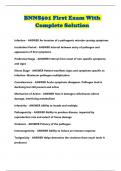
Infection - ANSWER An invasion of a pathogenic microbe causing symptoms
Incubation Period - ANSWER Interval between entry of pathogen and
appearance of first symptoms
Prodromal Stage - ANSWER Interval from onset of non-specific symptoms
and signs
Illness Stage - ANSWER Patient manifests signs and symptoms specific to
infection. Maximum pathogen multiplication.
Convalescence - ANSWER Acute symptoms disappear. Pathogen load is
declining but still present and active
Mechanism of Action - ANSWER How it damages cells/tissues (direct
damage, interfering metabolism)
Infectivity - ANSWER Ability to invade and multiply
Pathogenicity - ANSWER Ability to produce disease, impacted by
reproduction rate and extent of tissue damage
Virulence - ANSWER Potency of the pathogen
Immunogenicity - ANSWER Ability to induce an immune response
Toxigenicity - ANSWER Helps determine the virulence (how much toxin it
produces)
,Acute Lytic Infection - ANSWER Cold, Mumps and Influenza
Subclinical Infection - ANSWER No recognisable signs and symptoms
Latent Infection - ANSWER Patient makes an apparent recovery, but virus has
not been completely eliminated
Chronic Infection - ANSWER Virus remains in the host- production of new
viruses is at a low level but continuous
Normal Flora - ANSWER Microorganisms that are normally found inhabiting
our body
Transient Flora - ANSWER Microorganisms that temporarily inhabit or do not
normally inhabit our body
Keratinocytes - ANSWER Produce Keratin which protects from heat, microbes
and chemicals
Melanocytes - ANSWER Produce and process Melanin which absorbs UV
Merkel Cell - ANSWER Detects light, touch etc
Langehern Cell - ANSWER Ingest unwanted invaders
Active Transport - ANSWER Substances move across the membrane against
their concentration gradients with the input of ATP energy
Aerobic Respiration - ANSWER The most efficient method of ATP production
that uses Oxygen. Produces around 30 ATP molecules
Anabolism - ANSWER Building larger molecules from smaller molecules
Anaerobic Respiration - ANSWER ATP production method when insufficient
oxygen available. Only produces 2 molecules of ATP
, ATP - ANSWER Temporary energy storage in cells, energy released by
breaking bond of third phosphate
Catabolism - ANSWER Breaking down larger molecules into smaller
molecules
Cell Membrane - ANSWER Covers the cytoplasm of the cell and controls
cellular movement, connects cells and allows cells to recognise each other
Connective Tissue - ANSWER Tissue that binds tissues together, supports and
strengthens and insulates some internal organs
Endocytosis - ANSWER Materials move into the cell via membrane vesicles
Epithelial Tissue - ANSWER Tissue type that covers most internal and external
organs
Exocytosis - ANSWER Vesicles fuse with the cell membrane to release
contents out of the cell
Facilitated Diffusion - ANSWER Protein carriers move specific molecules
across the membrane down their concentration gradients
Filtration - ANSWER Movement of fluids and dissolved substances across the
membrane by force of hydrostatic pressure
Membrane Pumps - ANSWER Push substances against their gradients across
the membrane
Metabolism - ANSWER Refers to all chemical reactions that occurs in the
body. Contribute to homeostasis by harvesting chemical energy
Muscle Tissue - ANSWER Tissue types that generate the force required to
make a structure move
Complete Solution
Infection - ANSWER An invasion of a pathogenic microbe causing symptoms
Incubation Period - ANSWER Interval between entry of pathogen and
appearance of first symptoms
Prodromal Stage - ANSWER Interval from onset of non-specific symptoms
and signs
Illness Stage - ANSWER Patient manifests signs and symptoms specific to
infection. Maximum pathogen multiplication.
Convalescence - ANSWER Acute symptoms disappear. Pathogen load is
declining but still present and active
Mechanism of Action - ANSWER How it damages cells/tissues (direct
damage, interfering metabolism)
Infectivity - ANSWER Ability to invade and multiply
Pathogenicity - ANSWER Ability to produce disease, impacted by
reproduction rate and extent of tissue damage
Virulence - ANSWER Potency of the pathogen
Immunogenicity - ANSWER Ability to induce an immune response
Toxigenicity - ANSWER Helps determine the virulence (how much toxin it
produces)
,Acute Lytic Infection - ANSWER Cold, Mumps and Influenza
Subclinical Infection - ANSWER No recognisable signs and symptoms
Latent Infection - ANSWER Patient makes an apparent recovery, but virus has
not been completely eliminated
Chronic Infection - ANSWER Virus remains in the host- production of new
viruses is at a low level but continuous
Normal Flora - ANSWER Microorganisms that are normally found inhabiting
our body
Transient Flora - ANSWER Microorganisms that temporarily inhabit or do not
normally inhabit our body
Keratinocytes - ANSWER Produce Keratin which protects from heat, microbes
and chemicals
Melanocytes - ANSWER Produce and process Melanin which absorbs UV
Merkel Cell - ANSWER Detects light, touch etc
Langehern Cell - ANSWER Ingest unwanted invaders
Active Transport - ANSWER Substances move across the membrane against
their concentration gradients with the input of ATP energy
Aerobic Respiration - ANSWER The most efficient method of ATP production
that uses Oxygen. Produces around 30 ATP molecules
Anabolism - ANSWER Building larger molecules from smaller molecules
Anaerobic Respiration - ANSWER ATP production method when insufficient
oxygen available. Only produces 2 molecules of ATP
, ATP - ANSWER Temporary energy storage in cells, energy released by
breaking bond of third phosphate
Catabolism - ANSWER Breaking down larger molecules into smaller
molecules
Cell Membrane - ANSWER Covers the cytoplasm of the cell and controls
cellular movement, connects cells and allows cells to recognise each other
Connective Tissue - ANSWER Tissue that binds tissues together, supports and
strengthens and insulates some internal organs
Endocytosis - ANSWER Materials move into the cell via membrane vesicles
Epithelial Tissue - ANSWER Tissue type that covers most internal and external
organs
Exocytosis - ANSWER Vesicles fuse with the cell membrane to release
contents out of the cell
Facilitated Diffusion - ANSWER Protein carriers move specific molecules
across the membrane down their concentration gradients
Filtration - ANSWER Movement of fluids and dissolved substances across the
membrane by force of hydrostatic pressure
Membrane Pumps - ANSWER Push substances against their gradients across
the membrane
Metabolism - ANSWER Refers to all chemical reactions that occurs in the
body. Contribute to homeostasis by harvesting chemical energy
Muscle Tissue - ANSWER Tissue types that generate the force required to
make a structure move