Lecture 1 – Introduction and overview PATHS model
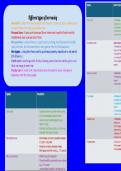
PATHS model
PATHS is problem-solving procedure. There are steps, but it’s ok to go back to previous steps
and make updates.
Problem definition
Analysis of causes
Test your model
Help (develop an intervention)
Success (evaluatie if intervention helped)
Why use PATHS?
Many interventions don’t work, so we need a structured approach.
1) Problem definition
To solve a problem, you must first identify it.
1. What is the problem?
2. Why is it a problem?
3. For whom is it a problem?
4. What are the possible causes of the problem?
5. What is the target group of the intervention?
6. What are the key aspects of the problem?
a) Is the problem applied?
b) Is the problem concrete (measurable)?
c) Does is have (social) psychological aspects?
d) Is the problem solvable?
Example:
Many inner-city residents of Tilburg have complained to the city council about the amount of
litter they find on the streets, especially in the weekends [who and what]. Littering is
perceived as a nuisance, could attract undesired animals, and reduce tourism [why]. Littering
is an ongoing problem and might have increased since bars, pubs, and music venues, attract
increasing numbers of visitors in the weekends [possible cause]. The city council is reluctant
to hire more street cleaners because of the extra costs involved [who and why]. The main
question is how littering can be prevented by pedestrians in the Tilburg city center [target
group]. Littering is an observable and measurable behavior [applied, concrete], that seems
possible to influence with some intervention [solvable]. Littering is likely influenced by norms,
imitation, expectations of punishment [social psychological aspects].
Research to arrive at a problem definition:
• Interviews with parties involved
• Background materials (reports, statistics)
• Scientific literature
• Observation
,2) Analysis of causes
Wrong explanation → wrong treatment
1) Specify outcome variable
• Relevant to the problem
- Problem gets more or less if variable changes
- Behavior, attitude, emotion, or psychological variable
• Specific
Fit with problem definiton
• Continuous
Dichotomous variables can be converted to proportions of target group.
• There is a difference between the outcome variable and the described end state
- Goal = less bullying in the work-place
- Outcome variable = frequency of bullying in the work-place
2) Diverge: generate multiple explanations based on…
• Free association
- Problem association: What could cause this problem?
- Concept association: This problem is an instance of X, is it caused by things that cause
X?
- Perspective taking: How does it look for the people involved?
• Interviews and observation
• Psychological theories
- Topical strategy: What causes this phenomenon?
- Conceptual strategy: What causes this category of behavior?
- General theory strategy: What causes behavior?
3) Converge: reduce the best explanations
• Remove redunant (overlapping) explanations
• Remove irrelevant explanations
• Remove invalid explanations
• Remove implausible explanations
4) Describe best explanation(s)
This it the basis for the next step.
3) Test your model
Actually, develop and then test your process model.
Example of process model (theory of planned behavior)
Limitations:
• Explains only 20-30% of variance in behavior
• Where do the beliefs come from?
• General, all behaviorals explained by same factors
• Poor fit for habitial, impulsive, or reflexive behaviors
• Just common sense?
, 1) Put outcome variable on the right
2) Include causal variables on the left
Prioritize those that can be influenced
3) Describe relationships between variables
• Focus on most important relationships
• Are relationships direct, indirect or moderating?
• Give each relationship a direction (+ or -)
• Avoid circular models
4) Test your model
• Verify relationships against empirical research
• Search literature for direction and strength of each relationship
If no research for specific variables, then search for relation between similar variables
or more general constructs.
• Try to find meta-analysis
Topical strategy, conceptual strategy, general theory strategy
• Collect data (empirical study)
• Consult experts
• After testing: all relations have a sign and an estimated magnitude (effect size r)
• Complications: literature presents contradictory evidence and show small effect sizes
Steps of building a process model
1) List explanations and the variables involved
2) Check that all variables are (social) psychological, specific, concrete, continuous
3) Start with outcome and move to the left by asking what causes each variable
4) Draw arrows between variables and indicate direction of relationship (+, -)
5) Make relationship between variables not too remote (insert mediating variables)
6) For each variable consider if effect is
- Direct or indirect (mediation)
- Moderating (reinforcing/undermining)
7) Work each causal path out in some detail
Are the causes related?
8) Model should probably have no more than 10 variables (excl. outcome)
9) Model should probably have no more than 4 steps between the outcome and the
most distal causes
4) Help (develop an intervention)
1) Select best variables to influences (target variables)
• Make a balance table
- Put all variables in a table
- Estimate modifiability (how easy to change?)
- Estimate effect size (how big effect on outcome?)
- Pick target variable (modifiable and large effect size)
• Check: could influencing this variable have undesirable side effects?
PATHS model
PATHS is problem-solving procedure. There are steps, but it’s ok to go back to previous steps
and make updates.
Problem definition
Analysis of causes
Test your model
Help (develop an intervention)
Success (evaluatie if intervention helped)
Why use PATHS?
Many interventions don’t work, so we need a structured approach.
1) Problem definition
To solve a problem, you must first identify it.
1. What is the problem?
2. Why is it a problem?
3. For whom is it a problem?
4. What are the possible causes of the problem?
5. What is the target group of the intervention?
6. What are the key aspects of the problem?
a) Is the problem applied?
b) Is the problem concrete (measurable)?
c) Does is have (social) psychological aspects?
d) Is the problem solvable?
Example:
Many inner-city residents of Tilburg have complained to the city council about the amount of
litter they find on the streets, especially in the weekends [who and what]. Littering is
perceived as a nuisance, could attract undesired animals, and reduce tourism [why]. Littering
is an ongoing problem and might have increased since bars, pubs, and music venues, attract
increasing numbers of visitors in the weekends [possible cause]. The city council is reluctant
to hire more street cleaners because of the extra costs involved [who and why]. The main
question is how littering can be prevented by pedestrians in the Tilburg city center [target
group]. Littering is an observable and measurable behavior [applied, concrete], that seems
possible to influence with some intervention [solvable]. Littering is likely influenced by norms,
imitation, expectations of punishment [social psychological aspects].
Research to arrive at a problem definition:
• Interviews with parties involved
• Background materials (reports, statistics)
• Scientific literature
• Observation
,2) Analysis of causes
Wrong explanation → wrong treatment
1) Specify outcome variable
• Relevant to the problem
- Problem gets more or less if variable changes
- Behavior, attitude, emotion, or psychological variable
• Specific
Fit with problem definiton
• Continuous
Dichotomous variables can be converted to proportions of target group.
• There is a difference between the outcome variable and the described end state
- Goal = less bullying in the work-place
- Outcome variable = frequency of bullying in the work-place
2) Diverge: generate multiple explanations based on…
• Free association
- Problem association: What could cause this problem?
- Concept association: This problem is an instance of X, is it caused by things that cause
X?
- Perspective taking: How does it look for the people involved?
• Interviews and observation
• Psychological theories
- Topical strategy: What causes this phenomenon?
- Conceptual strategy: What causes this category of behavior?
- General theory strategy: What causes behavior?
3) Converge: reduce the best explanations
• Remove redunant (overlapping) explanations
• Remove irrelevant explanations
• Remove invalid explanations
• Remove implausible explanations
4) Describe best explanation(s)
This it the basis for the next step.
3) Test your model
Actually, develop and then test your process model.
Example of process model (theory of planned behavior)
Limitations:
• Explains only 20-30% of variance in behavior
• Where do the beliefs come from?
• General, all behaviorals explained by same factors
• Poor fit for habitial, impulsive, or reflexive behaviors
• Just common sense?
, 1) Put outcome variable on the right
2) Include causal variables on the left
Prioritize those that can be influenced
3) Describe relationships between variables
• Focus on most important relationships
• Are relationships direct, indirect or moderating?
• Give each relationship a direction (+ or -)
• Avoid circular models
4) Test your model
• Verify relationships against empirical research
• Search literature for direction and strength of each relationship
If no research for specific variables, then search for relation between similar variables
or more general constructs.
• Try to find meta-analysis
Topical strategy, conceptual strategy, general theory strategy
• Collect data (empirical study)
• Consult experts
• After testing: all relations have a sign and an estimated magnitude (effect size r)
• Complications: literature presents contradictory evidence and show small effect sizes
Steps of building a process model
1) List explanations and the variables involved
2) Check that all variables are (social) psychological, specific, concrete, continuous
3) Start with outcome and move to the left by asking what causes each variable
4) Draw arrows between variables and indicate direction of relationship (+, -)
5) Make relationship between variables not too remote (insert mediating variables)
6) For each variable consider if effect is
- Direct or indirect (mediation)
- Moderating (reinforcing/undermining)
7) Work each causal path out in some detail
Are the causes related?
8) Model should probably have no more than 10 variables (excl. outcome)
9) Model should probably have no more than 4 steps between the outcome and the
most distal causes
4) Help (develop an intervention)
1) Select best variables to influences (target variables)
• Make a balance table
- Put all variables in a table
- Estimate modifiability (how easy to change?)
- Estimate effect size (how big effect on outcome?)
- Pick target variable (modifiable and large effect size)
• Check: could influencing this variable have undesirable side effects?