
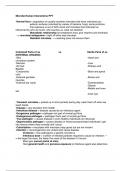
Microbe-Human Interactions PPT
-Normal flora = population of usually harmless microbes that have colonized you
exterior surfaces colonized by variety of bacteria, fungi, some protozoa
first exposure is out of birth canal and microbes that colonized us
influenced by who we touch, who touches us, what we eat/drink
Mutualistic relationship (ie breakdown food, give vitamins and minerals)
—> microbial antagonism = fight off other bad microbes
Resident microbes —> washing does not remove them
Colonized Parts of us vs Sterile Parts of us
(INTERNAL ORGANS)
-Skin -Heart and
circulatory system
-Mucosa -Liver
-GI tract -Kidneys and
Bladder
-Conjunctiva -Brain and spinal
cord
-External genitalia -Bones and
muscles
-External ear canal -Ovaries/testies
-Glands
-Middle and inner
ear
-Inner eye
-Transient microbes = picked up in short periods during day, wash them off when we
wash hands
-Disease = any deviation from health
-Infectious disease = disease caused by an infectious agent
-Exogenous pathogen = pathogen not part of normal gut flora
-Endogenous pathogen = pathogen that’s part of normal gut flora
-True pathogen = causes disease in even healthy individuals (ie influenza)
-Opportunistic pathogen = causes disease in immunocompromised individuals / get
into tissues where they normally don’t occur
-Colonization = inoculated with microbes (may grow) but are not virulent
-Infection = microorganisms are virulent and cause disease
Virulence = how pathogenic a specific microbe is
Infectious dose = number of infected particles required to cause an infection —
> the larger the dose, the faster the onset of the disease if it occurs
Must gain correct portal of entry
Host general health and previous exposure to infectious agent also determine
-Normal flora = population of usually harmless microbes that have colonized you
exterior surfaces colonized by variety of bacteria, fungi, some protozoa
first exposure is out of birth canal and microbes that colonized us
influenced by who we touch, who touches us, what we eat/drink
Mutualistic relationship (ie breakdown food, give vitamins and minerals)
—> microbial antagonism = fight off other bad microbes
Resident microbes —> washing does not remove them
Colonized Parts of us vs Sterile Parts of us
(INTERNAL ORGANS)
-Skin -Heart and
circulatory system
-Mucosa -Liver
-GI tract -Kidneys and
Bladder
-Conjunctiva -Brain and spinal
cord
-External genitalia -Bones and
muscles
-External ear canal -Ovaries/testies
-Glands
-Middle and inner
ear
-Inner eye
-Transient microbes = picked up in short periods during day, wash them off when we
wash hands
-Disease = any deviation from health
-Infectious disease = disease caused by an infectious agent
-Exogenous pathogen = pathogen not part of normal gut flora
-Endogenous pathogen = pathogen that’s part of normal gut flora
-True pathogen = causes disease in even healthy individuals (ie influenza)
-Opportunistic pathogen = causes disease in immunocompromised individuals / get
into tissues where they normally don’t occur
-Colonization = inoculated with microbes (may grow) but are not virulent
-Infection = microorganisms are virulent and cause disease
Virulence = how pathogenic a specific microbe is
Infectious dose = number of infected particles required to cause an infection —
> the larger the dose, the faster the onset of the disease if it occurs
Must gain correct portal of entry
Host general health and previous exposure to infectious agent also determine


