,HSY2601 Assignment 4 (COMPLETE ANSWERS)
Semester 2 2024 - DUE 30 September 2024 ; 100%
TRUSTED Complete, trusted solutions and
explanations.
Discuss the reasons for the unequal relations between black
and white people in the 19th-century US context after the
abolition of slavery and beyond. Recommended Readings: • The
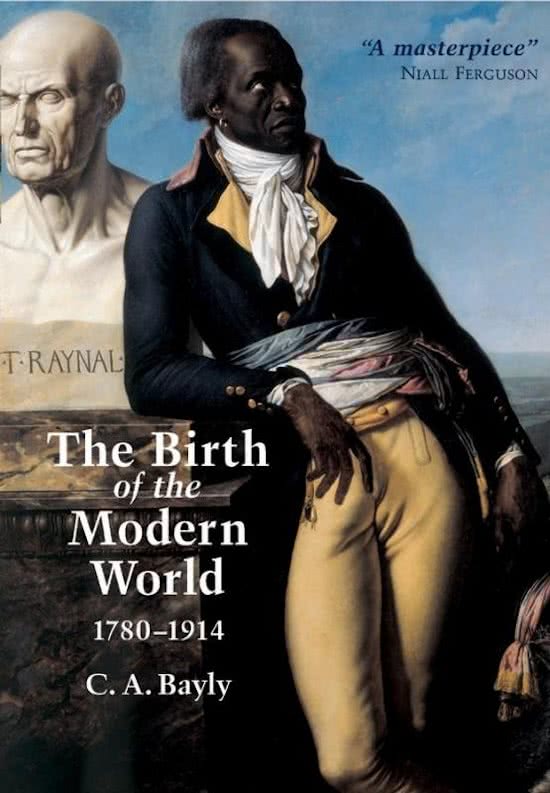
birth of the modern world, : global connections and
comparisons / C.A. Bayly. • Study Guide: HSY2601 HSY2601:
THEMES IN 19TH CENTURY HISTORY: POWER AND THE
WESTERN WORLD. 4 OR
The unequal relations between Black and white people in the
19th-century U.S. after the abolition of slavery can be traced to
multiple factors that emerged during and after Reconstruction,
with deep roots in the legacy of slavery, racial ideologies, and
economic and political interests. Here's a discussion on the key
reasons:
1. Legacy of Slavery
Despite the abolition of slavery in 1865 with the 13th
Amendment, the deeply entrenched social and economic
structures of the U.S. were built upon the exploitation of Black
people. White supremacy had been justified by decades of
slavery, where African Americans were seen as inferior and
subjugated. The end of slavery did not dismantle these
attitudes; rather, they continued in new forms such as
sharecropping and tenant farming. The promise of equality,
, especially with the 14th and 15th Amendments, remained
unfulfilled as Black people were still treated as second-class
citizens.
2. Economic Dependence and Exploitation
The Southern economy was devastated after the Civil War, but
it still relied heavily on agricultural production. Former enslaved
people became sharecroppers or tenant farmers, bound by
debt and contracts that kept them in economic subservience.
Sharecropping became a means to reassert control over Black
labor without legal slavery, ensuring the continuity of white
landowners' dominance over the economic system.
3. Reconstruction Failures and White Backlash
The Reconstruction period (1865-1877) saw some progress with
the involvement of Black people in politics and government.
However, the failure to provide sustainable land reforms (e.g.,
"40 acres and a mule") meant that Black people did not gain
economic independence. By the late 1870s, Northern political
will to enforce Reconstruction policies waned, leading to the
rise of white supremacist groups like the Ku Klux Klan. The
withdrawal of federal troops from the South and the
Compromise of 1877 resulted in the erosion of the rights Black
Americans had briefly enjoyed.
4. Institutionalized Racism and Jim Crow Laws
The rise of Jim Crow laws in the late 19th century
institutionalized racial segregation and reinforced the unequal
Semester 2 2024 - DUE 30 September 2024 ; 100%
TRUSTED Complete, trusted solutions and
explanations.
Discuss the reasons for the unequal relations between black
and white people in the 19th-century US context after the
abolition of slavery and beyond. Recommended Readings: • The
birth of the modern world, : global connections and
comparisons / C.A. Bayly. • Study Guide: HSY2601 HSY2601:
THEMES IN 19TH CENTURY HISTORY: POWER AND THE
WESTERN WORLD. 4 OR
The unequal relations between Black and white people in the
19th-century U.S. after the abolition of slavery can be traced to
multiple factors that emerged during and after Reconstruction,
with deep roots in the legacy of slavery, racial ideologies, and
economic and political interests. Here's a discussion on the key
reasons:
1. Legacy of Slavery
Despite the abolition of slavery in 1865 with the 13th
Amendment, the deeply entrenched social and economic
structures of the U.S. were built upon the exploitation of Black
people. White supremacy had been justified by decades of
slavery, where African Americans were seen as inferior and
subjugated. The end of slavery did not dismantle these
attitudes; rather, they continued in new forms such as
sharecropping and tenant farming. The promise of equality,
, especially with the 14th and 15th Amendments, remained
unfulfilled as Black people were still treated as second-class
citizens.
2. Economic Dependence and Exploitation
The Southern economy was devastated after the Civil War, but
it still relied heavily on agricultural production. Former enslaved
people became sharecroppers or tenant farmers, bound by
debt and contracts that kept them in economic subservience.
Sharecropping became a means to reassert control over Black
labor without legal slavery, ensuring the continuity of white
landowners' dominance over the economic system.
3. Reconstruction Failures and White Backlash
The Reconstruction period (1865-1877) saw some progress with
the involvement of Black people in politics and government.
However, the failure to provide sustainable land reforms (e.g.,
"40 acres and a mule") meant that Black people did not gain
economic independence. By the late 1870s, Northern political
will to enforce Reconstruction policies waned, leading to the
rise of white supremacist groups like the Ku Klux Klan. The
withdrawal of federal troops from the South and the
Compromise of 1877 resulted in the erosion of the rights Black
Americans had briefly enjoyed.
4. Institutionalized Racism and Jim Crow Laws
The rise of Jim Crow laws in the late 19th century
institutionalized racial segregation and reinforced the unequal