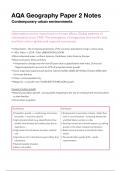
AQA Geography Paper 2 Notes
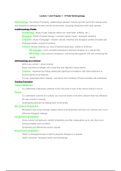
Contemporary urban environments
Urbanisation and its importance in human affairs. Global patterns of
urbanisation since 1945. The emergence of megacities and world cities
and their role in global and regional economies.
• Urbanisation - the increasing proportion of the country's population living in urban areas
• 1950- 746m -> 2014- 3.9bn URBAN POPULATION
• Most urbanised areas: northern America, Caribbean, Latin America, Europe
• Most rural areas: Africa and Asia
• Projected to change over the next 50 years due to globalisation with India, China and
Nigeria expected to account for 37% of projected urban growth
• Some areas have experienced decline: Detroit, Buffalo (2000-2014) New Orleans (2005 after
Hurricane Katrina)
• Tokyo: most populated city
• Megacity - a city with over 10,000,000 TEN MILLION people
Causes of urban growth
• Natural population growth - young adults migrating to the city for employment and education/
to start families
• Rural-urban migration
Push factors Pull factors
• Population growth -> overfarming, soil erosion, • Employment in secondary industry - better than
low yields -> economic decline work in rural industries - increasing demand for
• Agricultural problems e.g. deserti cstion (low unskilled labour workers in cities
rainfall), land divided into smaller plots due to • Earning money from informal secters e.g. selliing
ingeritance, goods on the street, transport, prostitution
• High levels of local disease and poor medical • Better social provisions to provide for basic
care needs
• Agriculture is for international export rather than • Perceived better quality of life - media
subsistence representation
• Natural hazards/ disasters
• Wars/ civil con ict
fl fi
, Urbanisation, suburbanisation, counter-urbanisation, urban resurgence.
Urbanisation - the increasing proportion of the country's population living in urban areas
Suburbanisation - the outward growth of urban development which has taken over surrounding
villages and rural areas
• Increased in part as a result of private car ownership and integrated transport systems
• Transport increased the concept of the ‘commuter town’
• Ribbon development- houses built next to existing infrastructure
• The lack of regulation of development in the 1930s in the UK resulted in ribbon development
which led to the Green belt
• 1950s/60s - large development of social housing in suburbs (often brutalist architecture)
• 1970s - focus on house ownership which led to the building of housing estates on the urban
fringe
• Suburbs are perceived to be quiet, less congested, less polluted, and crime-free. They also
bene t from the green belt/ woodlands
HOWEVER
• Suburbanisation can cause increased social segregation within cities as richer people move
out and poorer people remain in the city - particularly seen in America
• Sometimes this is racialised resulting in white ight
• Funding is diverted away from inner city areas to fund suburban projects, leaving the inner city
areas deprived
Counterurbanisation- the migration of people from major urban cities to rural areas OR smaller
urban settlements
• Grows rural areas within the rural areas beyond the main city
• People want to ‘escape the city’ e.g the crime, pollution, dirt
• They want to live in a clean, peaceful area
• The land is often cheaper and so rural areas can sometimes become commuter tows
• Since covid WORK FROM HOME culture has increased
• As af uence rises, demand for second homes/ retirement homes has increased
• Farmers may sell land as they struggle to generate wealth through agriculture
• Modern housing estates are built on the edge of rural areas, and smaller industries on the
main roads
• Tension may arise between insiders and outsiders
• Local services may be closed down and replaced by larger TNCs
• Other services such as bus services, schools, post of ces, churches etc have closed down
BECAUSE af uent newcomers to the area can STILL AFFORD AND ACCESS URBAN SERVICE
• Evidence for counter-urbanisation includes:
• Increasing use of rural (local) train stations which have parking (think Cockfosters station)
flfi fl fl fi
, • Increased house prices
• Construction of new homes
• Conversion of farm buildings to new buildings
• Social and demographic changes caused by counter urbanisation
• Out-migration of village-born people moving for education or employment
• The decline of elderly born population because of death
• In-migration of wealthy middle-class people who want to start a family
Urban resurgence - refers to the regeneration of an area that has suffered a PERIOD OF
DECLINE
• Mostly happens as a result of regeneration schemes
• Especially seen in former industrial towns which suffered from industrial decline between
1970s and 1980s e.g. London, Manchester, Newcastle, Birmingham etc…
• Industrial architecture may be kept but repurposed for commercial use e.g. Battersea power
station
• Urban resurgence can be seen in Stratford which experienced years of decline as the area
experienced urban dereliction as a result of deindustrialisation. Most of the land was
brown eld and the buildings were abandoned. The redevelopment/regeneration for the 2012
games signi cantly changed this and people started to move BACK into the urban area
• Encouraged by the idea of ‘City living’ which TNCs encourage e.g. apple, amazon, Facebook,
Google, EE
• Some people argue that urban resurgence encourages further inequalities within the urban
areas, as some people (who may be less af uent) may never have left the area in the rst place
(e.g. Focus E15 mums)
• Loss of ‘downtown’ with traditional businesses is sometimes referred to as ‘Dead Heart
syndrome’
Economic, social, technological, political and demographic processes
associated with urbanisation and urban growth.
Urban sprawl
• Urban sprawl is described as the spread of an urban area into the surrounding countryside/
rural areas
• Linked to suburbanisation
• Uncontrolled, unplanned
Effects of urban sprawl
• More infrastructure is required to serve the population e.g. roads, wires, cables, and pipes ->
less economically ef cient compared to compact urban areas
• Causes habitat/ wildlife loss
fi fi fi fl fi
, • Causes high levels of congestion and pollution due to commuters into the city -> car-
dependant lifestyle causing an increase in fossil fuels -> aligns with URBAN HEAT ISLAND
• Loss of farmland and fresh produce
• Loss of green space
• High impact on water quality and quantity - impermeable surfaces = lack of aquifers and
freshwater -> increased ood risk
• Decentralisation -> the movement of industries outwards from the centre of the city
• Some people believe this is responsible for homogenisation, especially in the USA where
out-of-town/ edge city shopping malls and leisure complexes are.
• New self-contained settlements develop beyond the original city = EDGE CITY
Shortage of housing in LICs / informal settlements (bidonvilles, favelas, bustees)
• Results in an increase in informal and inadequate housing developing often at the edge of a
city with LOW-VALUE LAND prone to environmental hazards such as landslides or ooding
(HAITI)
• High levels of noise, air and water pollution
• Settlements lack basic infrastructure
• 2013 - 863 million in squatter settlements but this may be inaccurate
• 2000-2014: MDG 7 320 people living in informal settlements gained access to water sources
Shortage of affordable housing in HICs/High-income areas
• Rise in demand for housing -> rise in the cost of housing (supply and demand)
• This has worsened since COVID and the cost of living crisis/ recession (2008, 2022)
• London house prices rose by 50% between 2010-2015
• In part caused by gentri cation and the buying of property by wealthy investors
Lack of urban services and waste disposal
• Maintenance of the infrastructure is limited -> traf c, polluted water, ooding, spread of
disease etc…
• 2015: only 5% of PIPED water reached informal settlements in 42 Indian cities
• Ethiopia only able to cope with 2/3 of rubbish - rest is dumped on the streets -> health hazards
• Many LICs will use community recycling (tires-> sandals, washing machine doors -> used as
bowls, food waste is composted, metal tin cans converted into tools)
Lack of employment/ unemployment
• Pressure to create jobs for young professionals moving to urban areas
• Underemployment - when a person does a job they are overquali ed for
• May occur for migrants
Transport problems
fifl fi fi fl fl
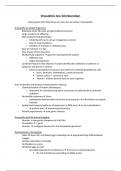
Contemporary urban environments
Urbanisation and its importance in human affairs. Global patterns of
urbanisation since 1945. The emergence of megacities and world cities
and their role in global and regional economies.
• Urbanisation - the increasing proportion of the country's population living in urban areas
• 1950- 746m -> 2014- 3.9bn URBAN POPULATION
• Most urbanised areas: northern America, Caribbean, Latin America, Europe
• Most rural areas: Africa and Asia
• Projected to change over the next 50 years due to globalisation with India, China and
Nigeria expected to account for 37% of projected urban growth
• Some areas have experienced decline: Detroit, Buffalo (2000-2014) New Orleans (2005 after
Hurricane Katrina)
• Tokyo: most populated city
• Megacity - a city with over 10,000,000 TEN MILLION people
Causes of urban growth
• Natural population growth - young adults migrating to the city for employment and education/
to start families
• Rural-urban migration
Push factors Pull factors
• Population growth -> overfarming, soil erosion, • Employment in secondary industry - better than
low yields -> economic decline work in rural industries - increasing demand for
• Agricultural problems e.g. deserti cstion (low unskilled labour workers in cities
rainfall), land divided into smaller plots due to • Earning money from informal secters e.g. selliing
ingeritance, goods on the street, transport, prostitution
• High levels of local disease and poor medical • Better social provisions to provide for basic
care needs
• Agriculture is for international export rather than • Perceived better quality of life - media
subsistence representation
• Natural hazards/ disasters
• Wars/ civil con ict
fl fi
, Urbanisation, suburbanisation, counter-urbanisation, urban resurgence.
Urbanisation - the increasing proportion of the country's population living in urban areas
Suburbanisation - the outward growth of urban development which has taken over surrounding
villages and rural areas
• Increased in part as a result of private car ownership and integrated transport systems
• Transport increased the concept of the ‘commuter town’
• Ribbon development- houses built next to existing infrastructure
• The lack of regulation of development in the 1930s in the UK resulted in ribbon development
which led to the Green belt
• 1950s/60s - large development of social housing in suburbs (often brutalist architecture)
• 1970s - focus on house ownership which led to the building of housing estates on the urban
fringe
• Suburbs are perceived to be quiet, less congested, less polluted, and crime-free. They also
bene t from the green belt/ woodlands
HOWEVER
• Suburbanisation can cause increased social segregation within cities as richer people move
out and poorer people remain in the city - particularly seen in America
• Sometimes this is racialised resulting in white ight
• Funding is diverted away from inner city areas to fund suburban projects, leaving the inner city
areas deprived
Counterurbanisation- the migration of people from major urban cities to rural areas OR smaller
urban settlements
• Grows rural areas within the rural areas beyond the main city
• People want to ‘escape the city’ e.g the crime, pollution, dirt
• They want to live in a clean, peaceful area
• The land is often cheaper and so rural areas can sometimes become commuter tows
• Since covid WORK FROM HOME culture has increased
• As af uence rises, demand for second homes/ retirement homes has increased
• Farmers may sell land as they struggle to generate wealth through agriculture
• Modern housing estates are built on the edge of rural areas, and smaller industries on the
main roads
• Tension may arise between insiders and outsiders
• Local services may be closed down and replaced by larger TNCs
• Other services such as bus services, schools, post of ces, churches etc have closed down
BECAUSE af uent newcomers to the area can STILL AFFORD AND ACCESS URBAN SERVICE
• Evidence for counter-urbanisation includes:
• Increasing use of rural (local) train stations which have parking (think Cockfosters station)
flfi fl fl fi
, • Increased house prices
• Construction of new homes
• Conversion of farm buildings to new buildings
• Social and demographic changes caused by counter urbanisation
• Out-migration of village-born people moving for education or employment
• The decline of elderly born population because of death
• In-migration of wealthy middle-class people who want to start a family
Urban resurgence - refers to the regeneration of an area that has suffered a PERIOD OF
DECLINE
• Mostly happens as a result of regeneration schemes
• Especially seen in former industrial towns which suffered from industrial decline between
1970s and 1980s e.g. London, Manchester, Newcastle, Birmingham etc…
• Industrial architecture may be kept but repurposed for commercial use e.g. Battersea power
station
• Urban resurgence can be seen in Stratford which experienced years of decline as the area
experienced urban dereliction as a result of deindustrialisation. Most of the land was
brown eld and the buildings were abandoned. The redevelopment/regeneration for the 2012
games signi cantly changed this and people started to move BACK into the urban area
• Encouraged by the idea of ‘City living’ which TNCs encourage e.g. apple, amazon, Facebook,
Google, EE
• Some people argue that urban resurgence encourages further inequalities within the urban
areas, as some people (who may be less af uent) may never have left the area in the rst place
(e.g. Focus E15 mums)
• Loss of ‘downtown’ with traditional businesses is sometimes referred to as ‘Dead Heart
syndrome’
Economic, social, technological, political and demographic processes
associated with urbanisation and urban growth.
Urban sprawl
• Urban sprawl is described as the spread of an urban area into the surrounding countryside/
rural areas
• Linked to suburbanisation
• Uncontrolled, unplanned
Effects of urban sprawl
• More infrastructure is required to serve the population e.g. roads, wires, cables, and pipes ->
less economically ef cient compared to compact urban areas
• Causes habitat/ wildlife loss
fi fi fi fl fi
, • Causes high levels of congestion and pollution due to commuters into the city -> car-
dependant lifestyle causing an increase in fossil fuels -> aligns with URBAN HEAT ISLAND
• Loss of farmland and fresh produce
• Loss of green space
• High impact on water quality and quantity - impermeable surfaces = lack of aquifers and
freshwater -> increased ood risk
• Decentralisation -> the movement of industries outwards from the centre of the city
• Some people believe this is responsible for homogenisation, especially in the USA where
out-of-town/ edge city shopping malls and leisure complexes are.
• New self-contained settlements develop beyond the original city = EDGE CITY
Shortage of housing in LICs / informal settlements (bidonvilles, favelas, bustees)
• Results in an increase in informal and inadequate housing developing often at the edge of a
city with LOW-VALUE LAND prone to environmental hazards such as landslides or ooding
(HAITI)
• High levels of noise, air and water pollution
• Settlements lack basic infrastructure
• 2013 - 863 million in squatter settlements but this may be inaccurate
• 2000-2014: MDG 7 320 people living in informal settlements gained access to water sources
Shortage of affordable housing in HICs/High-income areas
• Rise in demand for housing -> rise in the cost of housing (supply and demand)
• This has worsened since COVID and the cost of living crisis/ recession (2008, 2022)
• London house prices rose by 50% between 2010-2015
• In part caused by gentri cation and the buying of property by wealthy investors
Lack of urban services and waste disposal
• Maintenance of the infrastructure is limited -> traf c, polluted water, ooding, spread of
disease etc…
• 2015: only 5% of PIPED water reached informal settlements in 42 Indian cities
• Ethiopia only able to cope with 2/3 of rubbish - rest is dumped on the streets -> health hazards
• Many LICs will use community recycling (tires-> sandals, washing machine doors -> used as
bowls, food waste is composted, metal tin cans converted into tools)
Lack of employment/ unemployment
• Pressure to create jobs for young professionals moving to urban areas
• Underemployment - when a person does a job they are overquali ed for
• May occur for migrants
Transport problems
fifl fi fi fl fl