9/11/24, 9:34 Managing Human Capital C202 Notes to
AM Pass Test
Managing Human Capital C202 Notes to
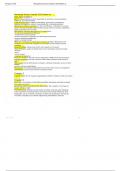
Pass Test Chapter 1
HRM- the organizational function responsible for attracting, hiring, developing,
rewarding, and retaining talent
6 HRM functional areas- staffing, health/safety, performance management,
employee management relations, rewards/benefits, training/development
HRM systems influence performance- improves efficiency, contributes to revenue
growth, increase employee understanding, develop enhance employee capabilities
(helps employees focus on things
HRM Systems influence performance of an organization
-by improving organizational efficiency
-contributing to revenue growth
-enhancing employee capabilities and talents(goal attainment)
-increase employee engagement
-ability to manage change
HRMs role in executing an organization's business strategy- HRM policies and
strategies must match with competitive environment and immediate business
conditions
Business strategy- defines how the firm will compete in the market
Talent Philosophy- system of beliefs about how its employees should be treated
-diversity
-ethics
-time of careers
-viewment of employees
Employee Handbook- document of the organization's HRM policies and procedures
that help employees learn the company's HRM (helps employees easily research
topics
HRM is performed by professionals, managers, individual employees, service centers,
outside
vendors, employer organizations
HRM Systems- technology based platforms that help human resource management
professionals securely house sensitive employee records
Chapter 2
3 specific ways HR can support organizations should it choose to shift its culture-
Chapter 5
Sourcing- is the process of identifying qualified individuals and labor markets
from which to recruit
Recruiting- refers to activities that affect either the numbers or the type of
people willing to apply
The Relationship between sourcing and recruiting- sourcing uses analytical
skills to generate recruiting leads. Sourcing and recruiting influences what
employees can do. Internal recruiting- are fast and inexpensive internal job
recruiting- employers can directly apply being overlooked is reduced
about:bl 1
, 9/11/24, 9:34 Managing Human Capital C202 Notes to
AM Pass Test
External recruiting- has job fairs, job boards, offshoring to rehire
candidates. Realistic Job Preview- presents an honest and accurate
picture
-minimizes losses
-Sharing only appropriate info
-maintaining confidentiality
-providing timely info
-Talent from competitors
-misleading recruits about the nature of the job
Chapter 9
Direct compensation- the pay an employee receives in the form of
wages, salary, bonuses, commissions
Indirect compensation- benefits consist of all the tangible and financially valued
rewards
that are not included in direct compensation, including free meals, vacation
time, health insurance
Base Pay- reflects the size and scope of employees
responsibilities Indirect Pay is also benefits
Non Financial Compensation- employees rewards and incentives that are
not financial in nature
Fixed Pay- pay employees a set amount regardless of performance
VS
Variable Pay- base some or all of an employee's compensation on
employees, teams, or organization
Variable Pay- will pay based on what is done or how it is performed (
reinforces the competitive advantage)
Drawbacks of variable pay- performances must meet needs and or exceed
standard Fair Labor Standards Act FMLA- passed in 1938 to stimulate
economic recovery from the Great Depression- Federal LAw sets standards
for minimum wage, overtime pay, equal pay
Equal Pay Act- prohibits against gender based way discrimination
Workers Comp is administered on a state-by-state basis and overseen
by a state governing board
Chapter 10
Pay-For-Performance- (also called merit pay)- reward employees based on
some specific measures of their individual performance
4 Reasons Organizations give trying to performance-
-recognize and reward high performers
-increase the likelihood of achieving corporate goods
-improve productivity
about:bl 2
AM Pass Test
Managing Human Capital C202 Notes to
Pass Test Chapter 1
HRM- the organizational function responsible for attracting, hiring, developing,
rewarding, and retaining talent
6 HRM functional areas- staffing, health/safety, performance management,
employee management relations, rewards/benefits, training/development
HRM systems influence performance- improves efficiency, contributes to revenue
growth, increase employee understanding, develop enhance employee capabilities
(helps employees focus on things
HRM Systems influence performance of an organization
-by improving organizational efficiency
-contributing to revenue growth
-enhancing employee capabilities and talents(goal attainment)
-increase employee engagement
-ability to manage change
HRMs role in executing an organization's business strategy- HRM policies and
strategies must match with competitive environment and immediate business
conditions
Business strategy- defines how the firm will compete in the market
Talent Philosophy- system of beliefs about how its employees should be treated
-diversity
-ethics
-time of careers
-viewment of employees
Employee Handbook- document of the organization's HRM policies and procedures
that help employees learn the company's HRM (helps employees easily research
topics
HRM is performed by professionals, managers, individual employees, service centers,
outside
vendors, employer organizations
HRM Systems- technology based platforms that help human resource management
professionals securely house sensitive employee records
Chapter 2
3 specific ways HR can support organizations should it choose to shift its culture-
Chapter 5
Sourcing- is the process of identifying qualified individuals and labor markets
from which to recruit
Recruiting- refers to activities that affect either the numbers or the type of
people willing to apply
The Relationship between sourcing and recruiting- sourcing uses analytical
skills to generate recruiting leads. Sourcing and recruiting influences what
employees can do. Internal recruiting- are fast and inexpensive internal job
recruiting- employers can directly apply being overlooked is reduced
about:bl 1
, 9/11/24, 9:34 Managing Human Capital C202 Notes to
AM Pass Test
External recruiting- has job fairs, job boards, offshoring to rehire
candidates. Realistic Job Preview- presents an honest and accurate
picture
-minimizes losses
-Sharing only appropriate info
-maintaining confidentiality
-providing timely info
-Talent from competitors
-misleading recruits about the nature of the job
Chapter 9
Direct compensation- the pay an employee receives in the form of
wages, salary, bonuses, commissions
Indirect compensation- benefits consist of all the tangible and financially valued
rewards
that are not included in direct compensation, including free meals, vacation
time, health insurance
Base Pay- reflects the size and scope of employees
responsibilities Indirect Pay is also benefits
Non Financial Compensation- employees rewards and incentives that are
not financial in nature
Fixed Pay- pay employees a set amount regardless of performance
VS
Variable Pay- base some or all of an employee's compensation on
employees, teams, or organization
Variable Pay- will pay based on what is done or how it is performed (
reinforces the competitive advantage)
Drawbacks of variable pay- performances must meet needs and or exceed
standard Fair Labor Standards Act FMLA- passed in 1938 to stimulate
economic recovery from the Great Depression- Federal LAw sets standards
for minimum wage, overtime pay, equal pay
Equal Pay Act- prohibits against gender based way discrimination
Workers Comp is administered on a state-by-state basis and overseen
by a state governing board
Chapter 10
Pay-For-Performance- (also called merit pay)- reward employees based on
some specific measures of their individual performance
4 Reasons Organizations give trying to performance-
-recognize and reward high performers
-increase the likelihood of achieving corporate goods
-improve productivity
about:bl 2