STUDY UNIT 2.2: WORKING CAPITAL MANAGEMENT
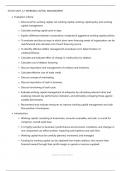
Evaluation criteria:
Discuss terms: working capital, net working capital, working capital policy and working
capital management.
Calculate working capital cycle in days.
Explain difference between conservative, moderate & aggressive working capital policies.
To evaluate and discuss ways in which short-term financing needs of organisation can be
met/financed and calculate cost of each financing source.
To identify effective debtor management procedures (incl. determination of
creditworthiness).
Calculate and evaluate effect of change in credit policy for debtors.
Calculate cost of debtors factoring.
Discuss importance and management of creditors and inventory.
Calculate effective cost of trade credit.
Discuss concept of overtrading.
Discuss importance of cash in business.
Discuss functioning of cash cycle.
Evaluate working capital management of enterprise by calculating relevant ratios and
analysing relevant key performance indicators, and ultimately comparing these against
suitable benchmarks.
Recommend and evaluate measures to improve working capital management and cash
flow position of enterprise.
Introduction:
Working capital, consisting of inventories, accounts receivable, and cash, is crucial for
company's overall asset base.
It is highly sensitive to business's performance and economic conditions, and changes in
one component can affect another, impacting cash balances and cash flow.
Working capital must be carefully planned, monitored, and managed.
Funding for working capital can be obtained from trade creditors, who receive their
financial reward through their profit margin on goods or services supplied.
Created in Effie (Trial)
, Remaining working capital is financed by interest-bearing debt raised by company, and
bank overdrafts when funding requirements fluctuate.
Working capital policy involves making decisions on optimal level of investments and
financing of current assets.
Forecasting working capital requirements is of particular importance in formulating
working capital policy.
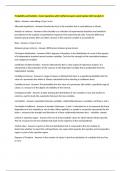
What is working capital?
Net working capital is difference between firm's current assets (investments) and current
liabilities (funding).
Current assets are expected to be converted into cash within year, while current liabilities
include accounts payable, accrued expenses, operating cash, and short-term debt.
Liquidity refers to firm's ability to meet its current liabilities.
Higher firm's current assets generally leads to higher liquidity, but it comes at cost.
Composition of working capital impacts cash flows, liquidity, and risk.
Increase in cash is different from increase in inventory, as inventory investments do not
generally yield returns and result in costs.
Stable cash flows can reduce investment in net working capital, while volatile cash flows
may require additional current assets.
Reliable suppliers can reduce inventory investments, and quick access to bank financing
can minimize liquidity risk.
Created in Effie (Trial)
, Objective of working capital policy:
Working capital is crucial for firm's efficiency, as low levels expose it to risk.
Low levels can lead to stockouts, loss of profit margin, debtors' purchase elsewhere, and
cash commitments.
Optimal working capital policy balances return and risk exposure, ensuring firm's financial
stability.
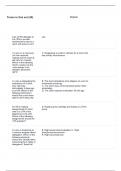
Working capital cycle:
Created in Effie (Trial)
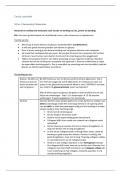
Evaluation criteria:
Discuss terms: working capital, net working capital, working capital policy and working
capital management.
Calculate working capital cycle in days.
Explain difference between conservative, moderate & aggressive working capital policies.
To evaluate and discuss ways in which short-term financing needs of organisation can be
met/financed and calculate cost of each financing source.
To identify effective debtor management procedures (incl. determination of
creditworthiness).
Calculate and evaluate effect of change in credit policy for debtors.
Calculate cost of debtors factoring.
Discuss importance and management of creditors and inventory.
Calculate effective cost of trade credit.
Discuss concept of overtrading.
Discuss importance of cash in business.
Discuss functioning of cash cycle.
Evaluate working capital management of enterprise by calculating relevant ratios and
analysing relevant key performance indicators, and ultimately comparing these against
suitable benchmarks.
Recommend and evaluate measures to improve working capital management and cash
flow position of enterprise.
Introduction:
Working capital, consisting of inventories, accounts receivable, and cash, is crucial for
company's overall asset base.
It is highly sensitive to business's performance and economic conditions, and changes in
one component can affect another, impacting cash balances and cash flow.
Working capital must be carefully planned, monitored, and managed.
Funding for working capital can be obtained from trade creditors, who receive their
financial reward through their profit margin on goods or services supplied.
Created in Effie (Trial)
, Remaining working capital is financed by interest-bearing debt raised by company, and
bank overdrafts when funding requirements fluctuate.
Working capital policy involves making decisions on optimal level of investments and
financing of current assets.
Forecasting working capital requirements is of particular importance in formulating
working capital policy.
What is working capital?
Net working capital is difference between firm's current assets (investments) and current
liabilities (funding).
Current assets are expected to be converted into cash within year, while current liabilities
include accounts payable, accrued expenses, operating cash, and short-term debt.
Liquidity refers to firm's ability to meet its current liabilities.
Higher firm's current assets generally leads to higher liquidity, but it comes at cost.
Composition of working capital impacts cash flows, liquidity, and risk.
Increase in cash is different from increase in inventory, as inventory investments do not
generally yield returns and result in costs.
Stable cash flows can reduce investment in net working capital, while volatile cash flows
may require additional current assets.
Reliable suppliers can reduce inventory investments, and quick access to bank financing
can minimize liquidity risk.
Created in Effie (Trial)
, Objective of working capital policy:
Working capital is crucial for firm's efficiency, as low levels expose it to risk.
Low levels can lead to stockouts, loss of profit margin, debtors' purchase elsewhere, and
cash commitments.
Optimal working capital policy balances return and risk exposure, ensuring firm's financial
stability.
Working capital cycle:
Created in Effie (Trial)