SCHOOL NURSE
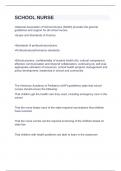
•National Association of School Nurses (NASN) provides the general
guidelines and support for all school nurses.
•Scope and Standards of Practice
•Standards of professional practice.
•Professional performance standards.
•Ethical practice, confidentiality of student health info, cultural competence,
effective communication and interprof collaboration, continuing ed, self-eval,
appropriate utilization of resources, school health program management and
policy development, leadership in school and community
The American Academy of Pediatrics (AAP) guidelines state that school
nurses should ensure the following:
That children get the health care they need, including emergency care in the
school
That the nurse keeps track of the state-required vaccinations that children
have received
That the nurse carries out the required screening of the children based on
state law
That children with health problems are able to learn in the classroom
, NASN and AAP recommends that school nurses:
Be registered nurses licensed through the State Board of Nursing who also
have bachelor's degrees in nursing
Also support state school nurse certification
National Board for Certification of School Nurses (NBCSN)
Educational Credentials of School Nurses
No general laws regarding the educational background of school nurses
Some states require registered nurses, but licensed practical nurses are also
seen in some schools
Only about 50% of all US states require some form of additional study for
school nurse specialty certification
Advanced-practice nurses also may work in the school setting
Roles and functions of School Nurses
•Give comprehensive nursing care to the children and the staff at the school.
•Coordinate the health education program of the school.
•National Association of School Nurses (NASN) provides the general
guidelines and support for all school nurses.
•Scope and Standards of Practice
•Standards of professional practice.
•Professional performance standards.
•Ethical practice, confidentiality of student health info, cultural competence,
effective communication and interprof collaboration, continuing ed, self-eval,
appropriate utilization of resources, school health program management and
policy development, leadership in school and community
The American Academy of Pediatrics (AAP) guidelines state that school
nurses should ensure the following:
That children get the health care they need, including emergency care in the
school
That the nurse keeps track of the state-required vaccinations that children
have received
That the nurse carries out the required screening of the children based on
state law
That children with health problems are able to learn in the classroom
, NASN and AAP recommends that school nurses:
Be registered nurses licensed through the State Board of Nursing who also
have bachelor's degrees in nursing
Also support state school nurse certification
National Board for Certification of School Nurses (NBCSN)
Educational Credentials of School Nurses
No general laws regarding the educational background of school nurses
Some states require registered nurses, but licensed practical nurses are also
seen in some schools
Only about 50% of all US states require some form of additional study for
school nurse specialty certification
Advanced-practice nurses also may work in the school setting
Roles and functions of School Nurses
•Give comprehensive nursing care to the children and the staff at the school.
•Coordinate the health education program of the school.