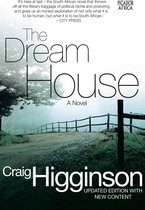
The Dream House Essay
Kate Jones
Topic 3
“The landscape of the novel is in transition and in a middle space between ruin and
regeneration, which seemed to me a fitting image for contemporary South Africa.” - Craig
Higginson
Explore how The Dream House is shaped by the concept of transitional or “middle spaces”
in terms of its narrative and its characters’ development.
The characters, context and storyline of The Dream House are in a state of transition and
change. Patricia transitions from believing that the past is unimportant to realising that one
must examine and learn from the past in order to look towards the future. Looksmart feels
as if he does not belong with his birth mother, nor with Patricia. In addition, it is revealed that
he is in a position where he knows only part of the truth about Grace’s death: a “middle
space” before the full truth. Dwaleni is undergoing the transition from a traditional farmhouse
to a gated community, reflecting the state of South Africa as it recovers from the apartheid
era.
Patricia’s development as a character occurs owing to Looksmart’s visit and her subsequent
realisation of the importance of the past and the relativity of the truth. Initially, Patricia
believes that “the past doesn’t amount to much in the end” but Looksmart’s visit forces her
to reconsider her views. As she learns the truth about the past, Richard and most importantly
herself, she begins to transition from simply accepting that Grace “was taunting the dog” to
questioning her recollection of events and endeavouring to “find the truth for [her]self”.
Through her discussions with both Looksmart and Beauty, Patricia begins to accept that
there is a “mystery that must run through all things” and that the truth is subjective and
personal. Patricia’s development and transition are key factors in the novel.
Like Patricia, Looksmart undergoes a transition, however he remains in an in-between state
at the end of the narrative. Looksmart returns to Dwaleni “out of hate”, to inflict pain on
Patricia, because he believes that Patricia is at fault for Grace’s death. He remembers that
Patricia “wanted to protect [her] seats” rather than save Grace, and that she saw Grace as
“slightly less than human”. As Patricia acknowledges that “maybe [she] got it wrong”,
Kate Jones
Topic 3
“The landscape of the novel is in transition and in a middle space between ruin and
regeneration, which seemed to me a fitting image for contemporary South Africa.” - Craig
Higginson
Explore how The Dream House is shaped by the concept of transitional or “middle spaces”
in terms of its narrative and its characters’ development.
The characters, context and storyline of The Dream House are in a state of transition and
change. Patricia transitions from believing that the past is unimportant to realising that one
must examine and learn from the past in order to look towards the future. Looksmart feels
as if he does not belong with his birth mother, nor with Patricia. In addition, it is revealed that
he is in a position where he knows only part of the truth about Grace’s death: a “middle
space” before the full truth. Dwaleni is undergoing the transition from a traditional farmhouse
to a gated community, reflecting the state of South Africa as it recovers from the apartheid
era.
Patricia’s development as a character occurs owing to Looksmart’s visit and her subsequent
realisation of the importance of the past and the relativity of the truth. Initially, Patricia
believes that “the past doesn’t amount to much in the end” but Looksmart’s visit forces her
to reconsider her views. As she learns the truth about the past, Richard and most importantly
herself, she begins to transition from simply accepting that Grace “was taunting the dog” to
questioning her recollection of events and endeavouring to “find the truth for [her]self”.
Through her discussions with both Looksmart and Beauty, Patricia begins to accept that
there is a “mystery that must run through all things” and that the truth is subjective and
personal. Patricia’s development and transition are key factors in the novel.
Like Patricia, Looksmart undergoes a transition, however he remains in an in-between state
at the end of the narrative. Looksmart returns to Dwaleni “out of hate”, to inflict pain on
Patricia, because he believes that Patricia is at fault for Grace’s death. He remembers that
Patricia “wanted to protect [her] seats” rather than save Grace, and that she saw Grace as
“slightly less than human”. As Patricia acknowledges that “maybe [she] got it wrong”,