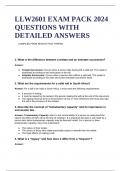
LLW2601 EXAM PACK 2024
QUESTIONS WITH
DETAILED ANSWERS
COMPILED FROM RECENT PAST PAPERS
1. What is the difference between a testate and an intestate succession?
Answer:
● Testate Succession: Occurs when a person dies having left a valid will. The estate is
distributed according to the instructions in the will.
● Intestate Succession: Occurs when a person dies without a valid will. The estate is
distributed according to the rules set by law (intestate succession laws).
2. What are the requirements for a valid will in South Africa?
Answer: For a will to be valid in South Africa, it must meet the following requirements:
● It must be in writing.
● It must be signed by the testator (the person making the will) at the end of the document.
● The signing must be done in the presence of two or more witnesses who must also sign
the will in the presence of the testator.
3. Describe the concept of "testamentary capacity" and its importance in
succession law.
Answer: Testamentary Capacity refers to the mental ability of a person to understand the
nature and effect of their will at the time of making it. It is important because a will made by a
person who lacks testamentary capacity may be deemed invalid. For a person to have
testamentary capacity, they must understand:
● The nature of their estate.
● The claims of those who might reasonably expect to benefit from the estate.
● The legal effects of making a will.
4. What is a "legacy" and how does it differ from a "bequest"?
Answer:
QUESTIONS WITH
DETAILED ANSWERS
COMPILED FROM RECENT PAST PAPERS
1. What is the difference between a testate and an intestate succession?
Answer:
● Testate Succession: Occurs when a person dies having left a valid will. The estate is
distributed according to the instructions in the will.
● Intestate Succession: Occurs when a person dies without a valid will. The estate is
distributed according to the rules set by law (intestate succession laws).
2. What are the requirements for a valid will in South Africa?
Answer: For a will to be valid in South Africa, it must meet the following requirements:
● It must be in writing.
● It must be signed by the testator (the person making the will) at the end of the document.
● The signing must be done in the presence of two or more witnesses who must also sign
the will in the presence of the testator.
3. Describe the concept of "testamentary capacity" and its importance in
succession law.
Answer: Testamentary Capacity refers to the mental ability of a person to understand the
nature and effect of their will at the time of making it. It is important because a will made by a
person who lacks testamentary capacity may be deemed invalid. For a person to have
testamentary capacity, they must understand:
● The nature of their estate.
● The claims of those who might reasonably expect to benefit from the estate.
● The legal effects of making a will.
4. What is a "legacy" and how does it differ from a "bequest"?
Answer: