Experimental designs
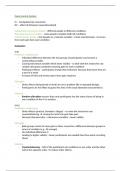
IV – manipulated by researcher.
DV – effect of behaviour (operationalised)
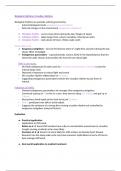
Independent measures design – different people in different conditions
Repeated measures design – same people complete both/all conditions
Matched pairs design – test people on a relevant variable > create matched pairs +1 person
from each pair does each condition.
Evaluation
IMD
Problems/ weaknesses
- Individual difference between the two groups of participants may become a
confounding variable.
- Causing extraneous variable which lower validity – to deal with this researcher use
random allocation.(randomly choosing ppts for each condition)
- Participant effects – participants change their behaviour because they know they are
a part of a study
- Increase of time and money spent more ppts required.
Strengths
- Order effects (being bored or tired) are not a problem like in repeated designs.
- Participants are less likely to guess the aims of the study (demand characteristics)
Solution
- Random allocation ensures that each participants has the same chance of being in
one condition of the IV as another.
RMD
Problems/ weaknesses
- Order effects (practice, boredom, fatigue) – to solve this researcher use
counterbalancing varying the order the ppts take part.
- Demand characteristics > extraneous variables > lower validity
Strengths
- Both groups consist of same ppts so there cannot be a difference between groups in
terms of variables (e.g., IQ average)
- No individual differences 3
- Leading to higher validity > fewer participants are needed (less time spent recruiting
them)
Solution
- Counterbalancing – half of the participants do conditions in one order and the other
half in the opposite order. To reduce order effects.
IV – manipulated by researcher.
DV – effect of behaviour (operationalised)
Independent measures design – different people in different conditions
Repeated measures design – same people complete both/all conditions
Matched pairs design – test people on a relevant variable > create matched pairs +1 person
from each pair does each condition.
Evaluation
IMD
Problems/ weaknesses
- Individual difference between the two groups of participants may become a
confounding variable.
- Causing extraneous variable which lower validity – to deal with this researcher use
random allocation.(randomly choosing ppts for each condition)
- Participant effects – participants change their behaviour because they know they are
a part of a study
- Increase of time and money spent more ppts required.
Strengths
- Order effects (being bored or tired) are not a problem like in repeated designs.
- Participants are less likely to guess the aims of the study (demand characteristics)
Solution
- Random allocation ensures that each participants has the same chance of being in
one condition of the IV as another.
RMD
Problems/ weaknesses
- Order effects (practice, boredom, fatigue) – to solve this researcher use
counterbalancing varying the order the ppts take part.
- Demand characteristics > extraneous variables > lower validity
Strengths
- Both groups consist of same ppts so there cannot be a difference between groups in
terms of variables (e.g., IQ average)
- No individual differences 3
- Leading to higher validity > fewer participants are needed (less time spent recruiting
them)
Solution
- Counterbalancing – half of the participants do conditions in one order and the other
half in the opposite order. To reduce order effects.