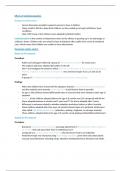
Effects of Institutionalisation
Background information
- Former Romanian president required woman to have 5 children
- Many couldn’t afford to keep their children, so they ended up in large institutions/ poor
conditions
- After 1989 many of the children were adopted by British families
Institutionalism in the context of attachment refers to the effects of growing up in an orphanage or
children’s home. Children who are raised in these institutions often suffer from a lack of emotional
care, which means that children are unable to form attachments.
Romanian orphan study's
Rutter et Al’s research
Procedure
- Rutter and colleagues followed a group of 165 Romanian orphans for many years
- The orphans had been adopted by families in the UK
- Aim = to investigate the extent to which good care could make up for poor early experiences
- Physical, cognitive & emotional development was assessed at ages 4,6,11,15 and 22-25
years.
- A group of 52 children from the UK adopted served as the control group.
Findings
- When the children first arrived half the adoptees showed delayed intellectual development
and the majority were severely undernourished (could lead to delay in growth)
- At age 11 the children showed differential rates of recovery that were related to their age of
adoption
- Mean iq of the children adopted before the age of 6 months was 102 compared with 86 for
those adopted between 6 months and 2 years and 77 for those adopted after 2 years
- difference in outcome related to whether adoption took place before or after 6 months,
- those children adopted after they were six months showed signs of a particular attachment
style called disinhibited attachment (attention- seeking, clinginess, no stranger anxiety).
- Those children adopted before the age of 6 months rarely displayed disinhibited attachment
Zeanah et Al’s research
Procedure
- Bucharest early intervention project, assessing attachment in 95 Romanian children aged 12-
31 months who had spent their lives in institutional care
- compared to a control group of 50 children who had never lived in an institution
- Attachment type was measured using the strange situation, carers were also asked about
unusual social behaviour including clingy, attention seeking behaviour directed at all adults
Background information
- Former Romanian president required woman to have 5 children
- Many couldn’t afford to keep their children, so they ended up in large institutions/ poor
conditions
- After 1989 many of the children were adopted by British families
Institutionalism in the context of attachment refers to the effects of growing up in an orphanage or
children’s home. Children who are raised in these institutions often suffer from a lack of emotional
care, which means that children are unable to form attachments.
Romanian orphan study's
Rutter et Al’s research
Procedure
- Rutter and colleagues followed a group of 165 Romanian orphans for many years
- The orphans had been adopted by families in the UK
- Aim = to investigate the extent to which good care could make up for poor early experiences
- Physical, cognitive & emotional development was assessed at ages 4,6,11,15 and 22-25
years.
- A group of 52 children from the UK adopted served as the control group.
Findings
- When the children first arrived half the adoptees showed delayed intellectual development
and the majority were severely undernourished (could lead to delay in growth)
- At age 11 the children showed differential rates of recovery that were related to their age of
adoption
- Mean iq of the children adopted before the age of 6 months was 102 compared with 86 for
those adopted between 6 months and 2 years and 77 for those adopted after 2 years
- difference in outcome related to whether adoption took place before or after 6 months,
- those children adopted after they were six months showed signs of a particular attachment
style called disinhibited attachment (attention- seeking, clinginess, no stranger anxiety).
- Those children adopted before the age of 6 months rarely displayed disinhibited attachment
Zeanah et Al’s research
Procedure
- Bucharest early intervention project, assessing attachment in 95 Romanian children aged 12-
31 months who had spent their lives in institutional care
- compared to a control group of 50 children who had never lived in an institution
- Attachment type was measured using the strange situation, carers were also asked about
unusual social behaviour including clingy, attention seeking behaviour directed at all adults