Phobias
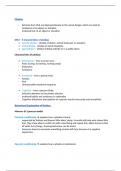
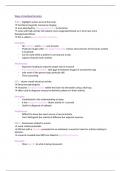
- Extreme fears that are disproportionate to the actual danger, which can lead to
avoidance of an object or situation.
- Irrational fear of an object or situation.
DSM – 5 characteristics of phobias
Specific phobia – phobia of object, animal body part or situation
Social phobia – phobia of social situations.
Agoraphobia – phobia of being outside or in a public place.
Characteristics of phobias
Behavioural – how a person acts.
- Panic (crying, screaming, running away)
- Endurance
- Avoidance
Emotional – how a person feels.
- Anxiety
- Fear
- Unreasonable emotional response
Cognitive – how a person thinks.
- Selective attention to the phobic stimulus
- Irrational beliefs and resistance to rationality
- Cognitive distortions (perceptions of a person may be inaccurate and unrealistic)
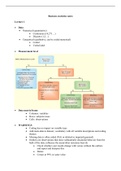
Behavioural Explanation of Phobias
Mowrer 2 process model
Classical conditioning explains how a phobia is learnt.
- supported by Watson and Raynor little albert study: 9-month-old baby who shows little
fear. They show albert a white rat with a loud bang and repeat this, albert learns to fear
all white furry things, showing behaviour can be learnt.
- Someone learns to associate something neutral with fear because of a negative
experience.
Operant conditioning explains how a phobia is maintained.
- Extreme fears that are disproportionate to the actual danger, which can lead to
avoidance of an object or situation.
- Irrational fear of an object or situation.
DSM – 5 characteristics of phobias
Specific phobia – phobia of object, animal body part or situation
Social phobia – phobia of social situations.
Agoraphobia – phobia of being outside or in a public place.
Characteristics of phobias
Behavioural – how a person acts.
- Panic (crying, screaming, running away)
- Endurance
- Avoidance
Emotional – how a person feels.
- Anxiety
- Fear
- Unreasonable emotional response
Cognitive – how a person thinks.
- Selective attention to the phobic stimulus
- Irrational beliefs and resistance to rationality
- Cognitive distortions (perceptions of a person may be inaccurate and unrealistic)
Behavioural Explanation of Phobias
Mowrer 2 process model
Classical conditioning explains how a phobia is learnt.
- supported by Watson and Raynor little albert study: 9-month-old baby who shows little
fear. They show albert a white rat with a loud bang and repeat this, albert learns to fear
all white furry things, showing behaviour can be learnt.
- Someone learns to associate something neutral with fear because of a negative
experience.
Operant conditioning explains how a phobia is maintained.