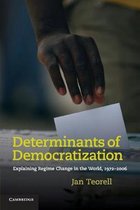
Teorell Introduction
● Four theories of democratisation:
○ Modernization theory (Lipset 1959)
→ democratization in the last three decades is the result of economic development,
deepened industrialisation and educational expansion
○ Transition paradigm (Carothers 2002)
→ democracy has been brought about from above through the strategic skills of elite
actors manoeuvering under profound uncertainty
○ Social forces
→ democracy has been triggered by mass mobilisation from below, most notably by
the working class
○ New economic approach
→ democratic institutions have been granted by the rich as a concession to the poor.
Factors driving and not driving the third wave
● Media proliferation is the most prominent mechanism behind modernisation.
○ democracy-promoting effects of the media cannot materialise under
○ authoritarian conditions
○ for the media to work as a safeguard for democracy, some freedom of the
press has to be established
● Economic upturns help sustain autocracies, whereas economic crises trigger
transitions toward democracy
○ deteriorating economic conditions help fuel the mobilisation of mass protest
against the regime
● Democratisation is rooted in economic and social conditions not only within the
boundaries of the nation state, but also within the international system
● Teorell: the importance of colonialism in the history of the developing world may have
been exaggerated
Institutions under authoritarianism
● Different dictatorships have different institutional setups
● Military dictatorships are more prone to democratise than single-party regimes
● Competition in multiparty autocracies is a dual battle, where the incumbent elites and
the opposition compete for votes in the electoral arena and struggle over the very
rules that shape this arena.
● End result: change in either the opposition’s or the regime’s favoured direction,
making autocratic multiparty competition an inherently unstable equilibrium
● These unstable dynamics tend to push multiparty autocracies in the direction of
democratisation
○ elections: arena where rival party factions can voice grievances
● Intraregime divisions may improve the incentives for what may be divided opposition
parties to join forces and challenge the ruling party under a unified banner.
Theoretical implications
● Structural theories are not very successful at explaining short-term democratisation
1
, ● Processes of socioeconomic modernisation played a role during the third wave, but
not in the way originally conceived by Lipset. Rather than pushing countries toward
democracy, modernisation hindered the from sliding back toward autocracy.
● The social forces tradition is right in stressing a key influence by the general public as
it successfully mobilises against the regime
● However: protests in Africa and Asia during the third wave loose blend of actors from
various spheres of society, not distinguishable in terms of a specific social class
● A successful future theory of democratisation needs to incorporate elements from all
these three approaches:
○ structural conditions
○ strategic interaction among elite actors
○ popular mobilisation from below
Gandhi: Political Institutions Under Dictatorship
Chapter 1: The World of Dictatorial Institutions
1.1 Introduction
● Dictatorial rulers are quite inventive in how they organise their rule
● Many dictatorships allow for multiple parties, picking and choosing the types of
parties to ban
● Three types of dictators:
○ monarchical
○ military
○ civilian
1.2 What is dictatorship?
● Dictatorship is the opposite of democracy
● Absence of attributes associated with democracy
1.2.1 Historical usage
● Tyranny was not initially linked to the concept of dictatorship
● The term dictatorship originated in ancient Rome.
● Original meaning dictatorship: rule by a leader who was selected by the Consul in
Rome to govern during periods of emergency when external war or internal rebellion
threatened the existence of the polity. The dictator was authorised to use whatever
power was deemed necessary to deal with the crisis at hand with the goal of
restoring the old constitutional order
● Sulla, a Roman general revived the institution of dictatorship in 82 BC in an attempt
to legitimate his rule
● Differences between traditional dictatorships and Sulla’s regime:
○ His dictatorship was established by the use of military force
○ Sulla’s dictatorship involveled the complete placement of power (military,
executive, legislative, judicial) in one man to remake the political order
● But Sulla still adhered to the term limitations attached to the title of dictator
● In 44 BC Caesar accepted the title of ‘dictator for life’ → dictatorship not temporary
anymore
2
, ● In the nineteenth century the term dictatorship no longer referred to rule by just one
man but to rule by a group
● After 1917 the term dictatorship was used to refer to not just a group but to an entire
class
● The emphasis on the distinction between democracy and dictatorship is a
twentieth-century phenomenon
● Machiavelli was the first to distinguish between government of the assembly, thereby
setting monarchy apart from other forms of regime
● Autonomous norms→ democratic forms of government in which laws are made by
the same people to whom they apply
● Autonomous norms→ Lawmakers differ from those to whom the law is addressed
● Dictatorship was a residual category/ defined only in terms of what it is not
1.2.2 Contemporary Controversies
● Dictatorships are defined here as regimes in which rulers acquire power by means
other than competitive elections ( → minimal definition)
● Linz’s four defining elements of authoritarianism:
○ limited political pluralism
○ distinctive mentalities rather than a guiding ideology
○ little political mobilisation
○ leader who exercises power predictably even within ill-defined limits
● Why elections?
○ Elections are the reason why political actors are expected to behave
differently and produce different outcomes in democracy and dictatorship
○ Even if dictators have other democratic institutions, they are still dictators
1.3 Who are the dictators?
● Identifying the head of government within a dictatorship is difficult because
dictatorships frequently have multiple executive figures
● Gandhi: the effective head of government is identified as:
○ general-secretaries of the communist party in dictatorships, except in the case
of Deng Xiaoping in China
○ king or presidents in noncommunist dictatorships
○ another individual or the institutionalised military if sources agree that the
nominal head of government is not effectively in charge
● Three types of dictators:
○ monarchs
○ military rulers
○ civilian dictators
● Why do we distinguish these three types of dictators?
→ unique types of threats to dictators and the institutional methods by which they
deal with them and organise their rule
1.3.1 Monarchs
● Family members play a crucial role in making decisions on important matters, as
seen with the issue of succession
● Monarchs are not constrained by parliaments or courts but rather by family factions
and kin networks. Hence, rule by one has become rule by family.
1.3.2 Military dictators
3
● Four theories of democratisation:
○ Modernization theory (Lipset 1959)
→ democratization in the last three decades is the result of economic development,
deepened industrialisation and educational expansion
○ Transition paradigm (Carothers 2002)
→ democracy has been brought about from above through the strategic skills of elite
actors manoeuvering under profound uncertainty
○ Social forces
→ democracy has been triggered by mass mobilisation from below, most notably by
the working class
○ New economic approach
→ democratic institutions have been granted by the rich as a concession to the poor.
Factors driving and not driving the third wave
● Media proliferation is the most prominent mechanism behind modernisation.
○ democracy-promoting effects of the media cannot materialise under
○ authoritarian conditions
○ for the media to work as a safeguard for democracy, some freedom of the
press has to be established
● Economic upturns help sustain autocracies, whereas economic crises trigger
transitions toward democracy
○ deteriorating economic conditions help fuel the mobilisation of mass protest
against the regime
● Democratisation is rooted in economic and social conditions not only within the
boundaries of the nation state, but also within the international system
● Teorell: the importance of colonialism in the history of the developing world may have
been exaggerated
Institutions under authoritarianism
● Different dictatorships have different institutional setups
● Military dictatorships are more prone to democratise than single-party regimes
● Competition in multiparty autocracies is a dual battle, where the incumbent elites and
the opposition compete for votes in the electoral arena and struggle over the very
rules that shape this arena.
● End result: change in either the opposition’s or the regime’s favoured direction,
making autocratic multiparty competition an inherently unstable equilibrium
● These unstable dynamics tend to push multiparty autocracies in the direction of
democratisation
○ elections: arena where rival party factions can voice grievances
● Intraregime divisions may improve the incentives for what may be divided opposition
parties to join forces and challenge the ruling party under a unified banner.
Theoretical implications
● Structural theories are not very successful at explaining short-term democratisation
1
, ● Processes of socioeconomic modernisation played a role during the third wave, but
not in the way originally conceived by Lipset. Rather than pushing countries toward
democracy, modernisation hindered the from sliding back toward autocracy.
● The social forces tradition is right in stressing a key influence by the general public as
it successfully mobilises against the regime
● However: protests in Africa and Asia during the third wave loose blend of actors from
various spheres of society, not distinguishable in terms of a specific social class
● A successful future theory of democratisation needs to incorporate elements from all
these three approaches:
○ structural conditions
○ strategic interaction among elite actors
○ popular mobilisation from below
Gandhi: Political Institutions Under Dictatorship
Chapter 1: The World of Dictatorial Institutions
1.1 Introduction
● Dictatorial rulers are quite inventive in how they organise their rule
● Many dictatorships allow for multiple parties, picking and choosing the types of
parties to ban
● Three types of dictators:
○ monarchical
○ military
○ civilian
1.2 What is dictatorship?
● Dictatorship is the opposite of democracy
● Absence of attributes associated with democracy
1.2.1 Historical usage
● Tyranny was not initially linked to the concept of dictatorship
● The term dictatorship originated in ancient Rome.
● Original meaning dictatorship: rule by a leader who was selected by the Consul in
Rome to govern during periods of emergency when external war or internal rebellion
threatened the existence of the polity. The dictator was authorised to use whatever
power was deemed necessary to deal with the crisis at hand with the goal of
restoring the old constitutional order
● Sulla, a Roman general revived the institution of dictatorship in 82 BC in an attempt
to legitimate his rule
● Differences between traditional dictatorships and Sulla’s regime:
○ His dictatorship was established by the use of military force
○ Sulla’s dictatorship involveled the complete placement of power (military,
executive, legislative, judicial) in one man to remake the political order
● But Sulla still adhered to the term limitations attached to the title of dictator
● In 44 BC Caesar accepted the title of ‘dictator for life’ → dictatorship not temporary
anymore
2
, ● In the nineteenth century the term dictatorship no longer referred to rule by just one
man but to rule by a group
● After 1917 the term dictatorship was used to refer to not just a group but to an entire
class
● The emphasis on the distinction between democracy and dictatorship is a
twentieth-century phenomenon
● Machiavelli was the first to distinguish between government of the assembly, thereby
setting monarchy apart from other forms of regime
● Autonomous norms→ democratic forms of government in which laws are made by
the same people to whom they apply
● Autonomous norms→ Lawmakers differ from those to whom the law is addressed
● Dictatorship was a residual category/ defined only in terms of what it is not
1.2.2 Contemporary Controversies
● Dictatorships are defined here as regimes in which rulers acquire power by means
other than competitive elections ( → minimal definition)
● Linz’s four defining elements of authoritarianism:
○ limited political pluralism
○ distinctive mentalities rather than a guiding ideology
○ little political mobilisation
○ leader who exercises power predictably even within ill-defined limits
● Why elections?
○ Elections are the reason why political actors are expected to behave
differently and produce different outcomes in democracy and dictatorship
○ Even if dictators have other democratic institutions, they are still dictators
1.3 Who are the dictators?
● Identifying the head of government within a dictatorship is difficult because
dictatorships frequently have multiple executive figures
● Gandhi: the effective head of government is identified as:
○ general-secretaries of the communist party in dictatorships, except in the case
of Deng Xiaoping in China
○ king or presidents in noncommunist dictatorships
○ another individual or the institutionalised military if sources agree that the
nominal head of government is not effectively in charge
● Three types of dictators:
○ monarchs
○ military rulers
○ civilian dictators
● Why do we distinguish these three types of dictators?
→ unique types of threats to dictators and the institutional methods by which they
deal with them and organise their rule
1.3.1 Monarchs
● Family members play a crucial role in making decisions on important matters, as
seen with the issue of succession
● Monarchs are not constrained by parliaments or courts but rather by family factions
and kin networks. Hence, rule by one has become rule by family.
1.3.2 Military dictators
3