The Handmaid’s Tale AO5 Key Critics
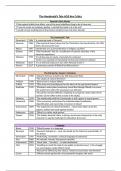
Atwood’s Own Words
‘If the regime forbids love affairs, one of the most rebellious thing to do is have one’
‘If I was to create an imaginary garden, I wanted the toads in it to be real’
‘I would not put anything into it that human societies have not done already’
The Handmaid’s Tale
Ehrenriech 1986 ‘A colouring book of Oceania’
Hancock 1986 ‘[The Historical Notes] show that the Third Reich, the Fourth Reich, the Fifth
Reich, did not last for-ever’
Rigney 1987 [Handmaids are a] personification of religious sacrifice’
Dodson 1997 ‘[The Handmaid’s Tale is] a recollection of specific atrocities of the
American experience’
Stokwisz 1999 ‘It’s all too easy to create a humanity for someone’
‘Janine is an example of impending mental and emotional collapse’
Wollaston 2017 ‘It’s as relevant today as it was when Atwood wrote it’
Simons 2017 ‘A grotesque parody of Biblical familial practices’
The Patriarchy/ Sexism/ Feminism
Ehrenriech 1986 ‘Gilead is fortress of patriarchy, Old Testament Style’
‘The utopia of cultural feminism’
Freibert 1990 ‘Nick serves to release Offred’
Gullick 1991 ‘[The aunts are] mouthpieces for the ideas of the patriarchal leaders’
Andriano 1992 ‘[Pieixoto’s sexist jokes] ominously reveal that though Gilead is no more,
the seeds from which the weed grew are still alive’
‘[To call the narrator Offred] is implicitly to accept the sexist order of the
society’ {So he refers to her as June in his study}
Stokwisz 1999 ‘The relationship with the Commander is still a game of sexual power’
Cavalcanti 2000 ‘[The ceremony] synthesises the institutionalised humiliation,
objectification and ownership of women in Gilead’
Greenwood 2009 ‘The arguments of cultural feminists […] have been taken up by the
regime, twisted and used against women’
Pettersson 2010 ‘Offred is a rather weak person’
Onyett 2016 ‘The lesbian feminist Moira, a daring, street-smart improvisor, is the only
character to openly challenge the Gileadean theocracy’
Language
Beran 1990 ‘Offred’s power is in language’
Banerjee 1990 ‘Atwood’s dystopia is [...] put into doubt by the historical superficiality of
the fiction’
Verwaayen 1995 ‘Authorizing, normative, univocal language of patriarchy’
Mur 2009 ‘An intimate, female, first-person narrative’
Greenwood 2009 ‘Linear time – ‘his-story’ – is male-dominated’
Clist 2013 ‘Unwilling to resist the state in any public or physical way […] the struggle
can only happen inside Offred’s head’
‘Atwood lets Offred slip into silence, historical uncertainty and freedom’
Currie ‘Offred controls patriarchy’s most powerful weapon: the word’
Atwood’s Own Words
‘If the regime forbids love affairs, one of the most rebellious thing to do is have one’
‘If I was to create an imaginary garden, I wanted the toads in it to be real’
‘I would not put anything into it that human societies have not done already’
The Handmaid’s Tale
Ehrenriech 1986 ‘A colouring book of Oceania’
Hancock 1986 ‘[The Historical Notes] show that the Third Reich, the Fourth Reich, the Fifth
Reich, did not last for-ever’
Rigney 1987 [Handmaids are a] personification of religious sacrifice’
Dodson 1997 ‘[The Handmaid’s Tale is] a recollection of specific atrocities of the
American experience’
Stokwisz 1999 ‘It’s all too easy to create a humanity for someone’
‘Janine is an example of impending mental and emotional collapse’
Wollaston 2017 ‘It’s as relevant today as it was when Atwood wrote it’
Simons 2017 ‘A grotesque parody of Biblical familial practices’
The Patriarchy/ Sexism/ Feminism
Ehrenriech 1986 ‘Gilead is fortress of patriarchy, Old Testament Style’
‘The utopia of cultural feminism’
Freibert 1990 ‘Nick serves to release Offred’
Gullick 1991 ‘[The aunts are] mouthpieces for the ideas of the patriarchal leaders’
Andriano 1992 ‘[Pieixoto’s sexist jokes] ominously reveal that though Gilead is no more,
the seeds from which the weed grew are still alive’
‘[To call the narrator Offred] is implicitly to accept the sexist order of the
society’ {So he refers to her as June in his study}
Stokwisz 1999 ‘The relationship with the Commander is still a game of sexual power’
Cavalcanti 2000 ‘[The ceremony] synthesises the institutionalised humiliation,
objectification and ownership of women in Gilead’
Greenwood 2009 ‘The arguments of cultural feminists […] have been taken up by the
regime, twisted and used against women’
Pettersson 2010 ‘Offred is a rather weak person’
Onyett 2016 ‘The lesbian feminist Moira, a daring, street-smart improvisor, is the only
character to openly challenge the Gileadean theocracy’
Language
Beran 1990 ‘Offred’s power is in language’
Banerjee 1990 ‘Atwood’s dystopia is [...] put into doubt by the historical superficiality of
the fiction’
Verwaayen 1995 ‘Authorizing, normative, univocal language of patriarchy’
Mur 2009 ‘An intimate, female, first-person narrative’
Greenwood 2009 ‘Linear time – ‘his-story’ – is male-dominated’
Clist 2013 ‘Unwilling to resist the state in any public or physical way […] the struggle
can only happen inside Offred’s head’
‘Atwood lets Offred slip into silence, historical uncertainty and freedom’
Currie ‘Offred controls patriarchy’s most powerful weapon: the word’