Resistance
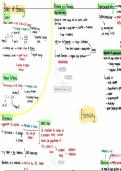
Basics in a Thermistor
superconductivity prope
of
Electricity
-
Resistance ↳ tem
Temp
+
Current superconductor -
mater
Elections ofcurrentvibrate with the atoms within
Electriccurrent -
flow
rateof of their flow y belo
↳ charge current I
resistance has
I temp vibratemore
I e.g. Mercury
- -
measured more
measured in Amperes (A) using
(A) Ammeter
- Current
↑ temp resistance crit.temp. 4.2K
Q It I connected
=
1
50 through
a
=
=
charge (c) <time(s)
·votivecopperminanofimpshvenganseen
series m
-
· In electrical wires - currentis flow of
erons s
an
> Application ofsuperconduct
·
conventional current- >
positive flow of negative charge
electrons
·
useful for large current requ
↳ positive strong magnetic
·
to
negative
terminal reduction of
energ
·
Potential Difference ↳ used in:
I
·
MRI scanners
done unitof
charge
work
per -
measured in volts
·
Transformers & gen
↳ voltmetre
work done (5) using - MOTOR
4.b*V w
↳> connected
through Electromagnets
=
·
parallel
i
·
Microchips
charge (1) -
power electrical cable
Resistance Electricity
7
to current OHMS LAW
·
opposition
shared in ohms
-
↑ For conductor to remain at
resistance ↓
·
voltage one volt
per
=
a constant temp, current
↓ ampere
current should be to
proportional
D.D. across it.
I constantconstant
resistance]
measured in m
e.g. copper our G00D
·
coNBUCiOR
-
resistance
=
ofa
temp ①
( ·property
m
Resistance ofa conductor ratio PD:current
Resistivity describin
properly
·
->
ofthe
-
in it ·
all materials have resistance tow
Basics in a Thermistor
superconductivity prope
of
Electricity
-
Resistance ↳ tem
Temp
+
Current superconductor -
mater
Elections ofcurrentvibrate with the atoms within
Electriccurrent -
flow
rateof of their flow y belo
↳ charge current I
resistance has
I temp vibratemore
I e.g. Mercury
- -
measured more
measured in Amperes (A) using
(A) Ammeter
- Current
↑ temp resistance crit.temp. 4.2K
Q It I connected
=
1
50 through
a
=
=
charge (c) <time(s)
·votivecopperminanofimpshvenganseen
series m
-
· In electrical wires - currentis flow of
erons s
an
> Application ofsuperconduct
·
conventional current- >
positive flow of negative charge
electrons
·
useful for large current requ
↳ positive strong magnetic
·
to
negative
terminal reduction of
energ
·
Potential Difference ↳ used in:
I
·
MRI scanners
done unitof
charge
work
per -
measured in volts
·
Transformers & gen
↳ voltmetre
work done (5) using - MOTOR
4.b*V w
↳> connected
through Electromagnets
=
·
parallel
i
·
Microchips
charge (1) -
power electrical cable
Resistance Electricity
7
to current OHMS LAW
·
opposition
shared in ohms
-
↑ For conductor to remain at
resistance ↓
·
voltage one volt
per
=
a constant temp, current
↓ ampere
current should be to
proportional
D.D. across it.
I constantconstant
resistance]
measured in m
e.g. copper our G00D
·
coNBUCiOR
-
resistance
=
ofa
temp ①
( ·property
m
Resistance ofa conductor ratio PD:current
Resistivity describin
properly
·
->
ofthe
-
in it ·
all materials have resistance tow