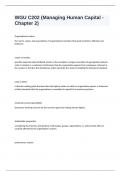
WGU C202 (Managing Human Capital -
Chapter 2)
Organizational culture
the norms, values, and assumptions of organizational members that guide members' attitudes and
behaviors
Codes of conduct
specifies expected and prohibited actions in the workplace and gives examples of appropriate behavior.
code of conduct is a statement of behaviors that the organization expects from employees; inherent in
the conduct is the idea that disciplinary action would be the result of violating the behavioral standard.
code of ethics
a decision making guide that describes the highest values to which an organization aspires. a statement
of ideal standards that the organization is committed to uphold in its business practices.
Corporate social responsibility
businesses showing concern for the common good and valuing human dignity
stakeholder perspective
considering the interests and opinions of all people, groups, organizations, or systems that affect or
could be affected by the organization's actions
performance culture
, focuses on hiring, retaining, developing, motivating, and making work assignments based on
performance data and results
high performance work systems
high involvement or high commitment organizations
Seven elements:
1, Employment security
2. Selective hiring of new talent
3. Self-managed teams and decentralization of decision making as the basic principles of organizational
design
4. Comparatively high compensation contingent on organizational performance
5. Extensive training
6. Reduced status distinctions and barriers, including dress, language, office arrangements, and wage
differences across levels
7. Extensive sharing of financial and performance information throughout the organization
Ethics
the standards of moral behavior that define socially accepted behaviors that are right as opposed to
wrong
utilitarian standard
the ethical action best balances good over harm
rights standard
Chapter 2)
Organizational culture
the norms, values, and assumptions of organizational members that guide members' attitudes and
behaviors
Codes of conduct
specifies expected and prohibited actions in the workplace and gives examples of appropriate behavior.
code of conduct is a statement of behaviors that the organization expects from employees; inherent in
the conduct is the idea that disciplinary action would be the result of violating the behavioral standard.
code of ethics
a decision making guide that describes the highest values to which an organization aspires. a statement
of ideal standards that the organization is committed to uphold in its business practices.
Corporate social responsibility
businesses showing concern for the common good and valuing human dignity
stakeholder perspective
considering the interests and opinions of all people, groups, organizations, or systems that affect or
could be affected by the organization's actions
performance culture
, focuses on hiring, retaining, developing, motivating, and making work assignments based on
performance data and results
high performance work systems
high involvement or high commitment organizations
Seven elements:
1, Employment security
2. Selective hiring of new talent
3. Self-managed teams and decentralization of decision making as the basic principles of organizational
design
4. Comparatively high compensation contingent on organizational performance
5. Extensive training
6. Reduced status distinctions and barriers, including dress, language, office arrangements, and wage
differences across levels
7. Extensive sharing of financial and performance information throughout the organization
Ethics
the standards of moral behavior that define socially accepted behaviors that are right as opposed to
wrong
utilitarian standard
the ethical action best balances good over harm
rights standard